The artificial intelligence wave hit us fast. One day we AI were experimenting with basic chatbots, and the next, AI systems were writing code, drafting marketing campaigns, diagnosing medical conditions, and managing financial portfolios. It feels like we stepped into the future overnight.
Along with that massive leap in capability comes a very real, uncomfortable truth: AI is getting messy. We are seeing convincing deepfakes that can ruin reputations in seconds, automated phishing attacks that fool even tech-savvy employees, hidden biases in hiring algorithms, and massive uncertainty about where our personal data actually goes when we type it into a prompt box.
If you run a business or work with technology in Europe, you know the wild west era of AI is coming to an end. The European Union’s AI Act is officially shifting from a high-level theoretical discussion into everyday operational reality.
This framework isn’t designed to kill technological progress. The goal is far more practical: build a clear set of guardrails so we can use powerful AI tools without losing control over privacy, safety, and basic human trust.
Understanding the Risk-Based Approach
The EU AI Act doesn’t treat all technology with the same heavy hand. A basic spam filter shouldn’t have to jump through the same legal hoops as an automated system deciding who gets a mortgage or a job interview. To keep things fair, the EU organized AI into four main risk levels.
       [ Unacceptable Risk ]  --> Strictly Prohibited
                 |
         [ High Risk ]        --> Heavy Compliance & Oversight
                 |
        [ Limited Risk ]      --> Transparency Rules (Labels/Disclosures)
                 |
        [ Minimal Risk ]      --> Free Use / No Extra Rules
- Unacceptable Risk (Prohibited): Systems that explicitly manipulate human behavior to cause harm, exploit vulnerable groups, or perform indiscriminate social scoring are banned outright. If a tool acts like something out of a dystopian sci-fi novel, it has no place in the market.
- High-Risk AI: This is where the regulatory spotlight shines brightest. High-risk systems include AI used in critical infrastructure, medical devices, educational grading, law enforcement, recruitment, and essential public services. If a mistake by the AI can significantly disrupt or harm someone’s life, the company using it must meet rigorous safety, documentation, and human-oversight standards.
- Limited Risk: These applications center on transparency. If your customers are interacting with a chatbot, or if you are publishing synthetic audio or video, you must clearly tell people they are dealing with an artificial system.
- Minimal or No Risk: This category covers the vast majority of everyday AI tools, like smart spam filters, video games with AI opponents, or basic inventory management systems. These face few to no extra regulatory demands.
Why Regulating AI Matters to Real People
It is easy to glaze over when reading legal texts, but the real-world motivations behind these rules affect us daily.
Deepfakes and the Trust Crisis
Generative media tools can now clone a CEO’s voice from a 30-second audio clip or fabricate realistic video footage of public figures. Beyond political manipulation, small businesses are getting scammed by voice-cloned phone calls requesting emergency wire transfers. The Act mandates clear digital watermarking and labeling for AI-generated media to restore a baseline of digital trust.
Cybersecurity and the Tech Arms Race
Security teams use machine learning to catch unusual network behavior in real time. Unfortunately, bad actors use those exact same tools to automate spear-phishing emails, probe corporate firewalls for hidden bugs, and trick employees into leaking sensitive credentials. Security is no longer just an IT headache—it is a core business survival metric.
Bias and Everyday Fairness
Algorithms learn from historical data, and historical data contains human prejudice. When companies use unmonitored AI screeners for resumes, the software can accidentally filter out qualified candidates based on age, gender, or background. Proper regulation forces teams to audit their training data before biased output harms real job seekers.
What Business Leaders Must Do Today

If your team uses AI in Europe—The EU AI Act: What It Really Means for Businesses, Innovation, and Everyday Life
Artificial intelligence isn’t coming—it’s already sitting in our offices, running on our phones, and helping shape our daily decisions. From doctors diagnosing diseases and banks calculating loan risks to marketing teams pumping out campaign copies, AI has quietly blended into the background of modern life.
It is brilliant, fast, and occasionally terrifying.
As these tools grow sharper, so do our collective headaches. Deepfakes look uncannily real. Biased algorithms quietly discriminate. Cybercriminals use AI to write scarily convincing phishing emails. Privacy is constantly walking a tightrope.
To keep this digital Wild West from going off the rails, the European Union has stepped in with a massive blueprint: The EU AI Act.
As this regulatory framework rolls out, companies operating in or targeting the European market are realizing that playing with AI now comes with real-world rules. The goal isn’t to kill off innovation; it’s to make sure that as tech speeds ahead, it doesn’t accidentally run us over.
How the EU AI Act Actually Works
The EU isn’t trying to police every piece of code with the exact same hammer. Instead, the law relies on a simple, pragmatic rule: the higher the risk to human lives and rights, the stricter the rules.
Instead of treating a harmless spam filter like a self-driving car, the framework categorizes AI applications into four distinct levels of risk.
       [ UNACCEPTABLE RISK ]  -->  Strictly Banned
                 │
         [ HIGH RISK ]        -->  Heavy Rules & Audits
                 │
        [ LIMITED RISK ]      -->  Transparency Mandates
                 │
        [ MINIMAL RISK ]      -->  Free to Operate
1. Unacceptable Risk (The Zero-Tolerance Zone)

Some applications are considered plain dangerous to a free society and are outright banned. This includes:
- Cognitive behavioral manipulation that targets vulnerable groups (like voice-activated toys that encourage dangerous behavior in kids).
- Social scoring systems where governments or companies rank citizens based on their behavior or personal traits.
- Biometric categorization systems that guess someone’s political views, religion, or sexual orientation.
- Untargeted scraping of facial images from the web or CCTV footage to build facial recognition databases.
2. High-Risk AI (The Heavily Guarded Zone)
These are tools that directly affect people’s lives, health, livelihoods, or civil liberties. Think of AI used in:
- Medical equipment and surgical assistants.
- Recruitment tools that filter job applications.
- Credit scoring models that determine who gets a mortgage.
- Border control, policing, and justice administration.
- Critical infrastructure like electricity grids and water management.
If your tool falls here, you don’t get a pass just because it’s smart. You must prove it is safe, unbiased, secure, and constantly monitored by human eyes.
3. Limited Risk (The “Be Honest” Zone)

This category focuses heavily on transparency. If people are interacting with a machine, they have a right to know it.
- Chatbots must clearly state they aren’t human.
- Generative AI text, audio, and images must be labeled as machine-made.
- Deepfakes and manipulated media must carry explicit disclaimers.
4. Minimal or No Risk (The Playground)
The vast majority of AI systems in use today fall here—think spam filters, AI-powered video games, or customer recommendation engines on shopping sites. These tools face almost no extra legal burdens, keeping the floor open for everyday business software.
Why Is Europe Pushing So Hard for Regulation?
It’s easy to look at regulatory laws as administrative red tape, but these rules weren’t written in a vacuum. They exist because real-world AI applications are already breaking things.
The Deepfake Dilemma
We’ve all seen them: realistic videos of politicians saying things they never said, synthetic voice clones scammings elderly parents out of money, or manipulated images derailing real-world news. Generative AI makes creating fake reality ridiculously easy and dirt cheap.
The EU AI Act takes aim at this by forcing developers to bake digital watermarks and clear disclaimers directly into synthetic media.
[ Generative Engine ] ──> [ Audio/Image Output ] ──> [ Mandatory Digital Watermark ]
                                                              │
                                                     (Informs the Public)
The Dark Side of AI-Driven Cybersecurity
Security is now a game of AI vs. AI. Defense teams use machine learning to spot weird network behavior and stop data breaches in real-time. But hackers are using the exact same technology to scout network vulnerabilities, write smarter code, and pull off personalized social-engineering attacks at a scale never seen before.
Bias and Black-Box Decisions
When an AI system decides who gets hired, who gets a loan, or who gets paroled, a hidden algorithmic bias can ruin lives. Because deep-learning models often act like “black boxes”—where even their creators can’t explain why the model reached a specific output—accountability becomes a massive problem. The Act demands that high-risk systems be explainable and auditable.
What This Means for Businesses: The Reality Check

If your organization builds, sells, or even just uses AI tools within the EU, “we didn’t know” won’t be a valid defense. Compliance is fast becoming a core operational discipline, right alongside financial auditing and cybersecurity.
To stay compliant and protect your brand, business operations should align across these core functional areas:
| Operational Area | Action Required Under the Act |
| System Classification | Map out every AI tool in use and categorize it by risk level. |
| Data Governance | Ensure training data is clean, legally sourced, non-biased, and GDPR-compliant. |
| Technical Documentation | Maintain detailed technical logs explaining how the model was trained and tested. |
| Human Oversight | Design a workflow where a human can stop, override, or reverse AI outputs. |
| Cybersecurity Safeguards | Harden systems against data poisoning, adversarial attacks, and unauthorized access. |
| Vendor Audits | Verify that third-party software vendors comply with EU AI requirements. |
A Practical Guide to AI Governance

Getting compliant doesn’t require tearing down your business model. It requires structure. Here is how grounded, practical organizations are handling AI governance without drowning in paperwork.
┌─────────────────────────────────────────────────────────────────┐
│                    AI GOVERNANCE LIFECYCLE                      │
├──────────────┬──────────────┬──────────────┬────────────────────┤
│ 1. INVENTORY │ 2. RISK AUDIT│ 3. OVERSIGHT │ 4. DATA PROTECTION │
│ Find all tools│ Categorize  │ Add human    │ Guard sensitive    │
│ in use       │ risk levels  │ review steps │ company data       │
└──────────────┴──────────────┴──────────────┴────────────────────┘
Step 1: Build a Real AI Inventory
You can’t govern what you don’t know exists. Many executives are shocked to discover how much “shadow AI” is running in their companies. Marketers use unsanctioned text generators, developers use AI coding assistants, and HR uses automated screeners.
- Action: Run an internal audit. Survey every department. Catalog every tool, script, and API integration.
Step 2: Establish Human-in-the-Loop Oversight
AI should suggest, assist, and calculate—but for major choices, a human must make the final call.
- Action: Never let an automated system fire an employee, reject a loan, or publish critical public information without a qualified human reviewing the decision first.
Step 3: Lock Down Your Data Privacy
Employees often paste confidential business data, customer lists, or proprietary source code into public AI models without realizing those inputs might be used to train future public versions of the software.
- Action: Create clear, explicit corporate policies on what data can and cannot be entered into external tools. Use enterprise-grade, private AI instances where data logging is turned off.
Step 4: Keep Clear, Updateable Documentation
Regulators love paper trails. If an AI tool makes a bad call, you need to show how it was tested, what guardrails were put in place, and why you believed it was safe to use.
Generative AI: The Special Case

Generative AI tools (like ChatGPT, Midjourney, and Claude) caught regulators off guard. Because these general-purpose tools can be used for thousands of different tasks, categorizing them isn’t simple.
To address this, the EU added targeted rules for General Purpose AI (GPAI) Models:
                       [ GPAI Models ]
                              │
               ┌──────────────┴──────────────┐
               ▼                             ▼
     [ Standard GPAI ]             [ Systemic Risk GPAI ]
     • Copyright rules             • Model evaluations
     • Training summaries          • Adversarial testing
     • Transparency labels         • Incident reporting
- Copyright Respect: Developers must publish detailed summaries of the content used to train their models and respect EU copyright laws.
- Systemic Risk Evaluations: Extremely powerful frontier models face rigorous testing (red-teaming) to ensure they can’t be weaponized to build bioweapons or execute catastrophic cyberattacks.
- Watermarking Requirements: Tools generating synthetic audio, text, or video must embed machine-readable metadata marking it as AI-generated.
The Million-Dollar Question: Will This Kill Innovation?

Whenever governments start writing rules for technology, critics raise the alarm: “This is going to kill innovation and send tech startups running to other countries!”
It’s a fair concern. Heavily complex compliance requirements can drain a startup’s limited budget, favoring massive tech giants who can easily afford armies of lawyers and compliance officers.
However, there is another side to the story:
The Trust Factor: When people don’t trust technology, they stop using it. By establishing clear rules around safety, privacy, and fairness, Europe is trying to build an ecosystem where businesses and consumers feel safe adopting new tech.
Think of it like seatbelts and traffic lights. Traffic laws didn’t stop people from driving cars; they gave people the confidence to drive faster without worrying that every intersection was a roll of the dice. Clear guidelines eliminate uncertainty, letting companies innovate within defined, reliable parameters.
Looking Ahead: The Road to Continuous Compliance
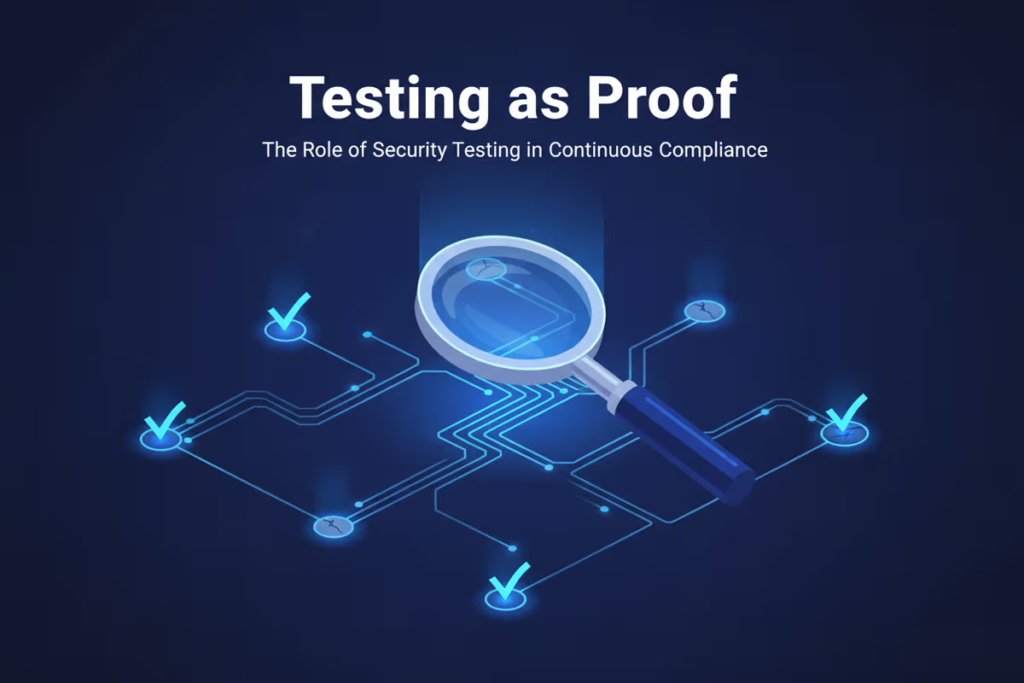
The EU AI Act isn’t a static document meant to sit on a shelf; it’s a living framework built to adapt alongside evolving technology.
  [ Audit Systems ] ──────> [ Track Regulations ]
         ▲                          │
         │                          ▼
  [ Train Employees ] <───── [ Update Policies ]
For business leaders, compliance isn’t a one-and-done legal exercise. It requires an ongoing cycle:
- Regularly auditing internal AI usage.
- Staying educated on updated regulatory guidelines.
- Refining internal safety policies.
- Training staff to use AI tools ethically and securely.
Ultimately, the EU’s framework is setting a global benchmark. Just as GDPR changed how the world handles digital privacy, the AI Act is shaping how technology is built and deployed far beyond Europe’s borders.
The companies that succeed won’t be those trying to dodge the rules or those waiting until the last minute to comply. The winners will be the organizations that integrate transparency, data protection, and human judgment into their culture from day one—proving that high-tech innovation and basic human respect can comfortably share the same seat.
The Best Workflow Tools for Small Businesses, Teams, and Freelancers
Running a business involves more than completing tasks. Workflow You have emails to answer, projects…

Content Marketing Trends 2026: Research & Storytelling
The internet has never had a shortage of content. Every day, businesses publish blog posts,…
Top Workflow Tools for Better Team Productivity in 2026
It rarely happens with a big dramatic crash. Instead, it’s a slow, quiet leak. You…

AI Automation Guide 2026: Work Smarter, Faster & Better
Artificial intelligence and automation are changing the way people work, manage information, communicate, and complete…
Tool Reviews: Find the Best Tools for Every Need
Every single morning, millions of people open their laptops to a screen crammed with open…

The Best Audio Editing Software 2026: Music, Podcasts & More
Good audio can completely change how a song, podcast, video, or voice recording feels.Audio Editing…
Frequently Asked Questions
1. Does the EU AI Act apply to companies outside of Europe?
Yes. If your business is located outside the EU—such as in the US or Asia—but your AI system produces outputs that are used within the European Union, you must comply with the law.
2. What happens if a company fails to comply with the EU AI Act?
The penalties are severe. Fines can reach up to €35 million or 7% of a company’s global annual turnover (whichever is higher) for using banned AI practices, and up to €15 million or 3% of global turnover for other major violations.
3. How can small businesses comply without a huge budget?
Small businesses should focus on inventory and vendor management. If you are buying AI software from an established vendor (like Microsoft, Salesforce, or Adobe), make sure that vendor provides proof of compliance. You are only responsible for how you deploy and oversee the tool internally.
4. Do everyday tools like spell-checkers or basic automation count as AI under these rules?
Simple software that runs on hardcoded rules or simple formulas is generally not classified as AI under the Act. The framework specifically targets machine-learning models that infer how to generate outputs from complex data.