

The Friction of Radical Transformation

We live in a culture that is absolutely obsessed with the fantasy of the overnight transformation. The Ultimate Collection of How-To Guides for Everyday Life Every advertisement, motivational clip, and social media creator screams that you need to completely reinvent your existence starting tomorrow morning.
They push an exhausting narrative of endless hustle, punishing workouts, and strict deprivation. What they completely fail to tell you is that your brain is a survival machine specifically optimized to seek comfort and resist abrupt behavioral shocks.
When you attempt to force massive, sweeping changes onto a nervous system that is already deeply fatigued by daily work, family obligations, and financial stress, the entire system rebels. The Ultimate Collection of How-To Guides for Everyday Life This biological survival response is why millions of well-intentioned people find themselves caught in a toxic, multi-year loop of temporary motivation, extreme restriction, inevitable burnout, and crushing self-blame. You do not lack willpower; you are simply fighting a losing war against your own evolutionary biology.
Guides The Compound Power of Micro-Actions
To build a lifestyle that actually lasts, you have to completely abandon the myth of the giant leap. Real, sustainable human transformation is built entirely on the back of tiny, almost imperceptible shifts in your daily movement. Think of your habits like the steering wheel of a massive container ship crossing the ocean. If you change the course by just one single degree, the shift is completely invisible to anyone standing on the deck.
However, over the course of a multi-thousand-mile journey, that microscopic correction will land the ship on a completely different continent. If you want to read more books, do not commit to an hour a day; commit to reading one single page before bed. If you want to get into shape, do not start with an intense gym routine; start with five bodyweight squats next to your desk. By reducing the initial friction of entry, you bypass your brain’s natural resistance mechanism and allow the momentum of repetition to take over the heavy lifting.
Guides The Pillars of a Sustainable Daily Ecosystem
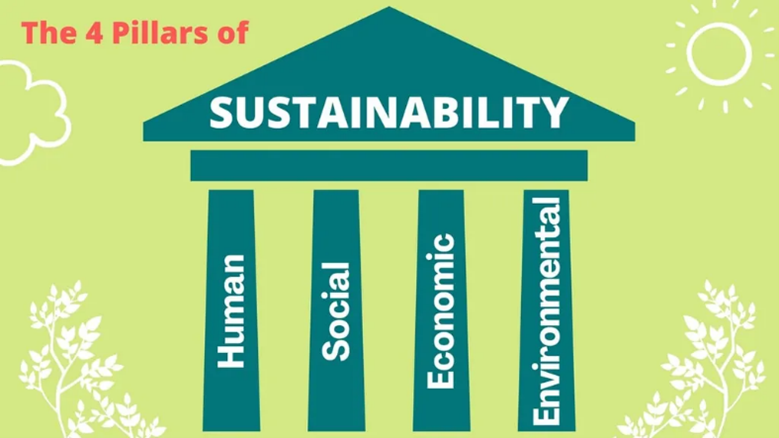
1: Guides To Reclaiming Your Limited Attention
Your attention is the absolute most valuable asset you own, and right now, a multi-trillion-dollar industry is actively working to steal it from you every second of the day. The modern digital environment is meticulously engineered to fragment your focus, degrade your deep cognitive processing, and keep your dopamine levels hooked on endless feeds. If you start your morning by immediately reaching for your smartphone and scrolling through chaotic notifications, you are handing over the steering wheel of your mind to external forces before you even step out of bed.
To build true time autonomy, you must introduce deliberate friction between yourself and digital distractions. Put your device in a completely separate room during high-priority working blocks. Disable every single non-human notification on your interface. By intentionally engineering a quiet, distraction-free sensory workspace, you allow your brain to settle into a deep state of cognitive flow where complex problem-solving becomes natural again.
2: The Flexible Capital Blueprint
A functional financial plan should never feel like a prison sentence designed to strip all joy out of your life. If your budget relies entirely on painful self-denial and cutting out every minor comfort, it will inevitably collapse the moment you experience a stressful week. Money is fundamentally a tool meant to support your life, not a metric to judge your human worth.
An adaptive budget focuses exclusively on driving maximum capital into the areas that truly matter to you, while aggressively cutting costs on things you do not care about. Track your raw transactions for thirty days using an automated interface to establish an honest baseline. Once you see exactly where the leaks are occurring, configure your accounts to automatically sweep your target savings and investments out of your primary account the exact morning you are paid. Once your future stability is mathematically secured, you can spend the remaining capital completely guilt-free.
3: Guides Lowering Environmental Cortisol
There is a powerful, undeniable connection between the physical layout of your home environment and the internal clarity of your mind. Visual clutter operates as a constant, silent drain on your cognitive energy. Every misplaced item, pile of unanswered mail, and unorganized closet acts as a physical reminder of uncompleted chores, keeping your brain in a state of low-grade cortisol elevation.
You do not need to adopt an extreme, sterile minimalist lifestyle to fix this. Simply establish an unyielding rule of functional organization: every object you own must possess a designated home base. Spend just ten minutes at the conclusion of every evening returning items to their respective bases. This simple daily ritual prevents chaos from accumulating, lowers your baseline stress, and ensures your home serves as a genuine sanctuary for recovery rather than an ongoing to-do list.
4: Guides The Recovery-Driven Schedule
True, high-performance productivity is never achieved by working yourself to a state of complete physical and emotional collapse. Pushing through exhaustion is a massive lie that yields incredibly sloppy work, ruined health, and long-term career stagnation. Human energy does not operate linearly; it moves in natural, ultradian biological waves.
To maintain high output across years rather than weeks, you must design your day around distinct blocks of intense focus followed by absolute, deep recovery. Work completely uninterrupted for fifty minutes, then force yourself to step away from all screens for ten full minutes to stretch, hydrate, or breathe deeply. Furthermore, you must ruthlessly protect your evening sleep architecture. Sleep is the precise physiological window where your brain flushes out metabolic waste and consolidates new knowledge. High-quality rest is not a reward for hard work; it is the vital biological prerequisite for it.
Guides The Deconstructing the Perfectionism Trap
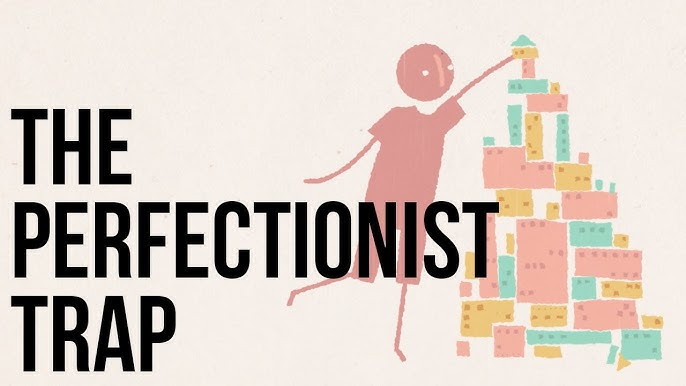
The single greatest killer of personal growth is not a lack of talent or ambition—it is the paralyzing grip of perfectionism. We tell ourselves that if we cannot execute a new routine flawlessly, we might as well not attempt it at all. If we miss a single workout, break our diet for one meal, or skip a day of writing, we view it as total failure and discard the entire goal. This is a cognitive trap known as all-or-nothing thinking.
The difference between people who successfully transform their lives and those who remain stuck is not that the successful group never messes up. The difference is their recovery timeline. Missing one day is a completely normal, expected part of being a human being. Missing two days in a row, however, is the initiation of a new, negative habit. Shift your focus away from achieving a perfect record and focus entirely on being a person who never misses twice.
The Trait vs. Skill Delusion
We love to look at highly articulate communicators, top-tier financial earners, or individuals in peak physical condition and attribute their success to unearned, genetic gifts. It is an incredibly comforting excuse because it instantly absolves us of the responsibility to try. The blunt reality is that communication, financial literacy, time management, and physical health are entirely trainable behavioral skills, not permanent personality traits.
The human brain possesses an incredible, lifelong capacity for neuroplasticity—the literal ability to rewire its physical structure in response to focused practice and environmental demand. You are not inherently “bad with money” or “naturally disorganized.” You are simply unpracticed. The second you reframe your personal limitations as temporary skill deficits rather than fixed character flaws, you reclaim your absolute power to change them.
Cultivating Deep Life Integration
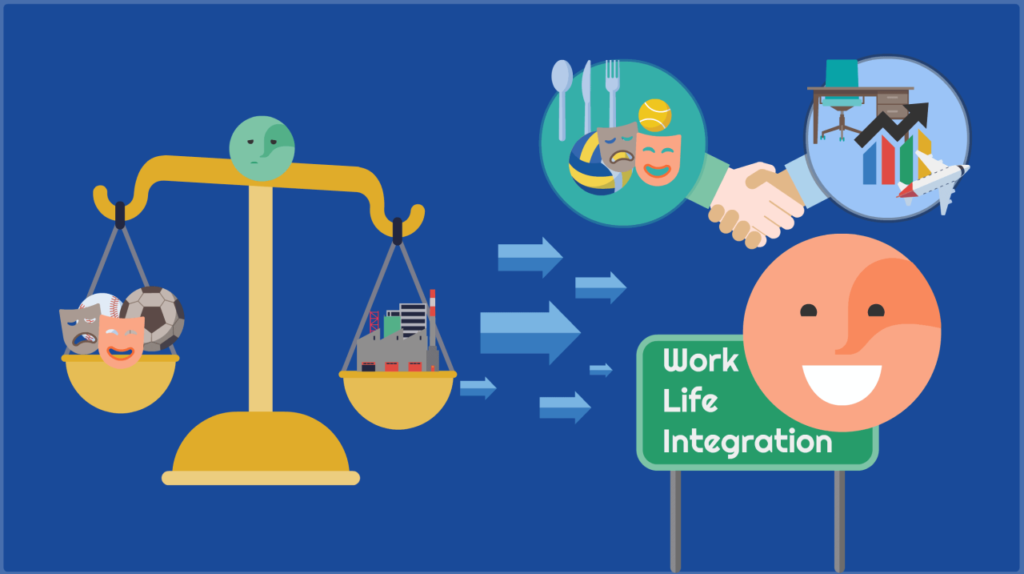
The Evolution of Personal Connections
As you begin to deliberately optimize your habits, manage your time, and protect your energy, you will notice a natural shift in your interpersonal dynamics. Relationships require active investment, deep empathy, and absolute presence to survive. In a world dominated by digital distractions, giving someone your undivided, uninterrupted attention is one of the highest forms of modern respect.
Listen to the people you love without internally preparing your next response or checking your screen. Address interpersonal conflicts early and directly, viewing them as opportunities to collaborate against a problem rather than battle against a person. Surround yourself with individuals who respect your growth and challenge your assumptions. Human beings are deeply social creatures; your immediate social circle acts as an emotional thermostat, silently setting the baseline for what you consider normal behavior.
Navigating the Lifelong Horizon

Personal development is completely meaningless if it is treated as a temporary project with a fixed endpoint. There is no final destination where you will suddenly become a perfect, flawless human being who never experiences stress, doubt, or failure. True fulfillment is found entirely in the daily commitment to the process of continuous tracking and refinement.
Embrace your mistakes as valuable, objective data points that tell you exactly where your system needs adjustment, rather than moral judgments on your character. Maintain an insatiable, deep curiosity about the world and your own internal motivations. By showing up every single day with a willingness to learn, adapt, and make tiny, incremental adjustments, you build an incredibly resilient life that belongs entirely to you.
Frequently Asked Questions
1.What are how-to guides?
How-to guides are instructional resources designed to teach people how to complete tasks, solve problems, or develop new skills through practical advice and clear explanations.
2.Why are how-to guides so popular?
They simplify complex topics and provide actionable information that helps people improve different aspects of their daily lives.
3.Can how-to guides help improve productivity?
Yes. Many guides focus on time management, organization, prioritization, and efficiency strategies that help individuals accomplish more effectively.
4.Are how-to guides useful for beginners?
Absolutely. Most how-to guides are designed to make learning accessible regardless of prior experience or knowledge.
5.What topics can how-to guides cover?
They can cover almost any subject, including personal finance, health, productivity, relationships, technology, education, and home improvement.