
There is a distinct, exhausting feeling that comes with trying to marketing a business today. If you spend even twenty minutes reading marketing advice online, you will be hit with a dizzying barrage of conflicting imperatives. You are told you need to post five times a day on three different social platforms, hack the latest search engine algorithm, launch a multi-tiered paid ad campaign, and rewrite your entire website copy using generative software tools by tomorrow afternoon. It feels less like building a business and more like running on a treadmill that keeps speeding up while the air gets thinner.
But if you step back from the frantic chatter of the marketing world, a comforting reality becomes clear: the fundamental nature of human psychology hasn’t changed. People do not buy from the loudest company, the one that spams their inbox the most, or the brand using the slickest tricks. People buy from companies they notice, trust, and remember when they are finally ready to make a purchase.
The landscape has undeniably shifted. We are navigating an era flooded with synthetic, generic content, where anyone can generate thousands of words of text with a single prompt. According to HubSpot’s benchmark marketing insights, we are operating in a highly saturated ecosystem where standing out requires a fierce commitment to relevance, trust, and structural clarity.
At the same time, major search engines like Google have explicitly aligned their systems to penalize low-effort, mass-produced text, rewarding genuine, people-first content that solves real problems.
If you want to grow your business without losing your mind—or your budget—to fleeting trends, you need to stop chasing hacks and start building a cohesive growth engine. Let’s explore the marketing techniques that actually move the needle, written from a place of real-world practice rather than textbook theory.
1. Planting Your Flag: Developing a Sharp Brand Point of View

The single greatest mistake a growing business can make is trying to please everyone. When you design your marketing to be so safe, neutral, and agreeable that it can’t possibly offend or alienate anyone, you accidentally make it entirely forgettable. In a market saturated by AI-generated white noise, a sterile, feature-driven description of your product is an architectural death sentence for your brand. You simply blend into the digital wallpaper.
Your growth engine begins with a sharp, undeniable brand point of view. This isn’t about being controversial for the sake of attention; it is about knowing exactly what your business stands for, who it is built to serve, and—just as importantly—who it is not for.
A definitive brand point of view acts as a natural filtering system for your business. It signals to your ideal customers that you deeply understand their specific pain points, while quietly telling bad-fit prospects to look elsewhere.
When you shift your marketing from explaining what you sell to articulating why your perspective matters, your messaging transforms. You stop sounding like a commodity competing on price and start sounding like a trusted authority with a clear mission. This foundational clarity serves as the bedrock for every piece of content you create, every ad you run, and every email you send. It gives your audience a human identity to attach their loyalty to.
2. Content Marketing as a Long-Term Trust Asset
Many business owners treat content marketing like a passive chore—a box to check because someone told them they need a corporate blog. They hire low-cost writing services to churn out generic, keyword-stuffed articles that read like encyclopedias. This approach is a complete waste of time and capital. It actively alienates human readers and runs counter to everything Google outlines in its search guidelines regarding original, authoritative content.
True content marketing is an exercise in empathy. It is the practice of systematically identifying the real, unvarnished questions your customers ask when they are lying awake at 2:00 AM, and answering them with absolute honesty, clarity, and depth.
Data consistently confirms that deeply helpful written content, such as comprehensive guides, authentic product comparisons, and detailed case studies, remains one of the highest-ROI marketing channels available.
When you create content clusters—where a main foundational topic is supported by hyper-focused, interconnected sub-articles—you demonstrate true topical authority. You aren’t just trying to manipulate a search ranking; you are building an organized library of value. When a prospective buyer arrives at your site and finds a transparent, beautifully structured answer to their exact problem, the barrier of skepticism drops. You have earned their trust before you ever ask for their credit card.
3. Short-Form Video: Capturing Attention in Shifting Micro-Moments

We must meet our customers where they actually live, and right now, human attention spans are highly fragmented. People spend their spare micro-moments—waiting in line for coffee, riding an elevator, or unwinding at the end of the evening—scrolling through vertical video feeds. If your marketing strategy relies entirely on walls of text or static images, you are making your business functionally invisible to a massive segment of your target market.
The rise of short-form video across platforms like Instagram, Facebook, and specialized social channels represents a fundamental shift in how media is consumed. Marketers consistently rank short-form video as the most effective format for capturing raw audience attention.
The beauty of this format is that it thrives on raw authenticity rather than high-budget production value. A highly produced, corporate commercial often feels like an intrusion to a user scrolling through their social feed, prompting them to skip it instantly.
Conversely, a simple, unpolished smartphone video featuring a real human face showing a behind-the-scenes process, answering a customer question, or demonstrating a product benefit feels native to the platform. It breaks through the noise because it feels human. It allows your audience to look into the eyes of your company, hear your voice, and form a psychological connection that text alone can rarely replicate.
4. Sophisticated Email Marketing Through the Lens of Segmentation
Email marketing is often unfairly labeled as an outdated tactic, usually by people who treat their email list like a digital megaphone. If your email strategy consists entirely of sending a generic, company-wide blast once a week to everyone on your list, you are actively training your audience to hit the delete button. A modern consumer expects communication to feel personally relevant, and if it isn’t, they will quickly opt out.
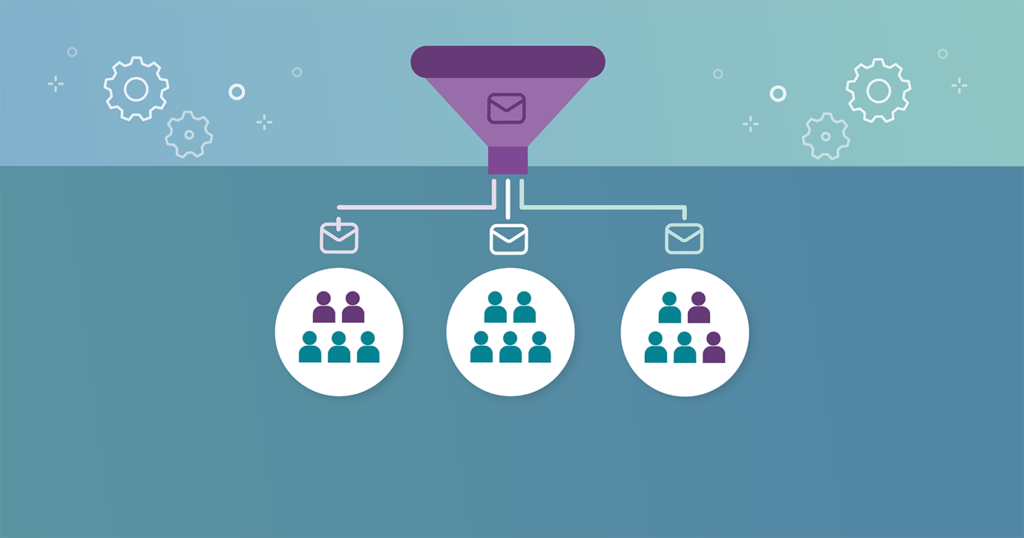
The true power of email lies in intelligent segmentation and personalization, a methodology long championed by distribution leaders like Mailchimp. Your email list is not a singular, monolithic group; it is a collection of human beings at completely different stages of their relationship with your business.
By dividing your audience into targeted segments based on explicit behaviors, historical purchases, or specific interests, you can tailor your messaging with surgical precision.
A fresh subscriber who just downloaded a free resource needs educational, low-pressure content that introduces your brand’s philosophy. A repeat customer who has bought from you three times needs a VIP loyalty offer or exclusive access to a new release. When you send fewer, highly targeted emails that align perfectly with the recipient’s current context, your open rates skyrocket, your unsubscribe rates drop, and your emails stop feeling like spam and start feeling like an anticipated resource.
5. Paid Social Media as a Structured Growth Accelerator
Organic marketing is a beautiful, sustainable way to build a foundation, but it takes time to mature. If you need to generate immediate momentum, validate a new product offering, or scale your customer acquisition quickly, paid social media is an incredibly potent tool—provided you approach it systematically.
The advertising infrastructure across platforms like Meta (including Facebook, Instagram, Messenger, and Reels) offers targeting capabilities that were unimaginable a generation ago. However, many business owners treat paid social like a lottery ticket. They boost a random post, spend a few hundred dollars without a clear strategy, see zero direct sales, and declare that social media ads don’t work for their industry.
The secret to profitable paid social advertising is understanding that an ad is never a standalone entity; it is merely the entry point into a comprehensive consumer journey.
| Ad Component | Primary Purpose | Human Experience |
|---|---|---|
| Creative / Copy | Stop the scroll, introduce the perspective | “This brand understands my specific frustration.” |
| Landing Page | Fulfill the promise, eliminate friction | “This is exactly what I expected. No surprises.” |
| Email Sequence | Continue the conversation, build authority | “They are still providing value, not just selling.” |
An ad’s sole job is to interrupt a user’s scroll, introduce a compelling point of view, and invite them to take a low-friction next step. Once they click that ad, they must land on a beautifully aligned web experience that explicitly delivers on the promise of the creative. If your paid ad system treats conversion as a holistic ecosystem rather than an isolated transaction, it becomes a predictable, scalable asset for your business.
6. Frictionless Landing Pages: Turning Curiosities into Commitments
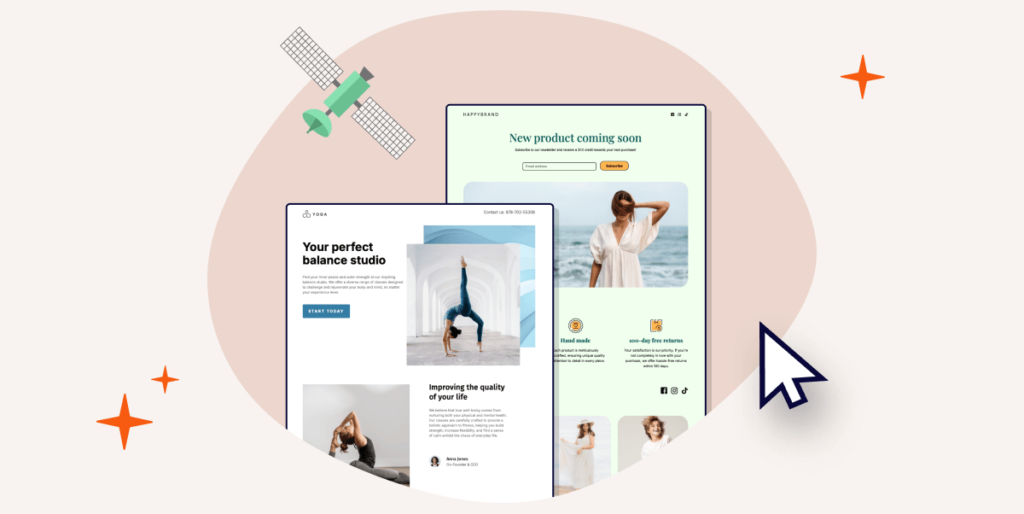
You can execute a flawless marketing campaign, design stunning ad creatives, and write world-class copy, but if your traffic lands on a confusing, cluttered website, your budget will dissolve without a trace. A standard website homepage is designed for exploration; it contains navigation menus, about sections, social feeds, and multiple links. It gives a visitor too many choices, and when a human being is presented with too many options, they typically choose to leave.
A dedicated landing page is built for a singular, focused objective. It is designed to guide a visitor toward a single, specific decision: downloading a resource, booking a consultation, or purchasing a product.
Building a high-converting landing page is an exercise in removing friction. The headline must perfectly match the exact language used in the ad or email that brought the visitor there. The value proposition must be communicated instantly, explaining how their life will be improved by your offer.
The layout should be clean, devoid of distracting secondary links, and anchored by a prominent, unambiguous call to action. By matching your user’s explicit expectations and removing the cognitive load of navigating a complex site, you transform casual attention into measurable business outcomes.
7. The Synergy of Search Engine Optimization and Strategic Publishing

Search engine optimization (SEO) is one of the most cost-effective long-term growth investments a business can make because it captures high-intent prospects. When someone types a specific problem into a search bar, they are actively looking for a solution. If your business appears at the top of that page with a definitive, helpful answer, you bypass the traditional hurdles of cold outbound marketing.
However, modern SEO has evolved far beyond old-school keyword manipulation. As Google’s technical documentation notes, search algorithms are designed to index content with users, not search engines, in mind.
To win at SEO today, your publishing habits must shift away from quantity and lean heavily into quality.
Instead of writing ten shallow, five-hundred-word blog posts that barely scratch the surface of a topic, invest your resources into creating one definitive, masterfully organized resource. Use clear header hierarchies (H2 and H3 tags) to break your thoughts into scannable, logical sections. Include internal links that connect your core articles into a logical web of information. When you build a website that serves as a highly functional, comprehensive manual for your industry, search engine algorithms will naturally recognize your utility, and your ideal customers will reward you with their loyalty.
8. Guarding Your Humanity: The Balanced Application of AI

Artificial intelligence has fundamentally changed the operational realities of modern marketing. Tools can draft copy, brainstorm content ideas, analyze data sets, and automate distribution schedules in seconds. This democratization of production is highly efficient, but it introduces a massive risk: because it is easier than ever to create content, the market is being flooded with an unprecedented wave of derivative, soul-less text that all sounds exactly the same.
The businesses that thrive in this automated landscape will be those that use AI to scale their efficiency while fiercely protecting their human originality.
Think of AI as an assistant, never as the director. Use it to outline your ideas, summarize complex data, or break through a bout of writer’s block. But never allow it to have the final say on your brand’s voice, tone, or perspective.
An automated tool cannot draw upon personal anecdotes, it has never looked a customer in the eye to understand their emotional frustrations, and it cannot formulate a truly original thesis. Your customers can sense synthetic marketing from a mile away. Keep your human experience, your real-world case studies, and your authentic point of view at the absolute center of everything you publish. Use technology to accelerate your execution, but let your human heart drive the strategy.
9. The Long Game: The Irreplaceable Value of Strategic Consistency

If you look closely at the most successful brands in any industry, you will find that their secret weapon isn’t a proprietary marketing channel or an unreplicable creative design. Their secret weapon is relentless consistency. Far too many businesses treat marketing like an erratic series of experiments: they run ads for two weeks, write three blog posts, send a single newsletter, and when the phone doesn’t ring off the hook, they abandon the effort and look for a new tactic.
Marketing is a cumulative discipline. Every touchpoint a customer has with your brand builds a microscopic layer of familiarity, and familiarity over time hardens into deep, unshakable trust.
This consistency must live across every single channel your business inhabits. Whether a prospect encounters an organic video on their social feed, opens an email newsletter, browses a landing page, or reads a technical support article, the visual identity, the core value proposition, and the brand voice must feel completely unified.
When your marketing feels cohesive and dependable, it projects an aura of stability and professionalism. It reassures your audience that you are an established, deliberate business that shows up for its customers day in and day out. Stop looking for the silver bullet tactic that will change your business overnight, commit to a sustainable ecosystem of helpful, human-centric marketing, and give your brand the space, time, and consistency it needs to truly grow.
Frequently Asked Questions
1.What marketing technique works best for small businesses?
For many small businesses, the best starting points are content marketing, SEO, and segmented email marketing because they can build trust over time and do not always require a large budget. Google’s SEO guidance and Mailchimp’s segmentation resources support this people-first, targeted approach.
2.Is short-form video really important for business growth?
Yes. HubSpot’s 2026 marketing data says short-form video was the most popular content format used by marketers in 2025, which shows how important it has become for visibility and engagement.
3.Why is email segmentation so effective?
Because it lets you send more relevant messages. Mailchimp says segmentation improves engagement and ROI by grouping contacts based on shared characteristics such as behavior or demographics.
4.Should I use AI in my marketing?
Yes, but use it carefully. AI can speed up content, analysis, and workflow tasks, but Google’s guidance stresses that content should still be helpful, reliable, and people-first.
5.What is the most important marketing habit to build?
Consistency. Showing up with a clear brand message across content, email, social media, SEO, and ads helps people recognize and trust your business over time. HubSpot’s 2026 report highlights the value of brand POV and trust in modern marketing.