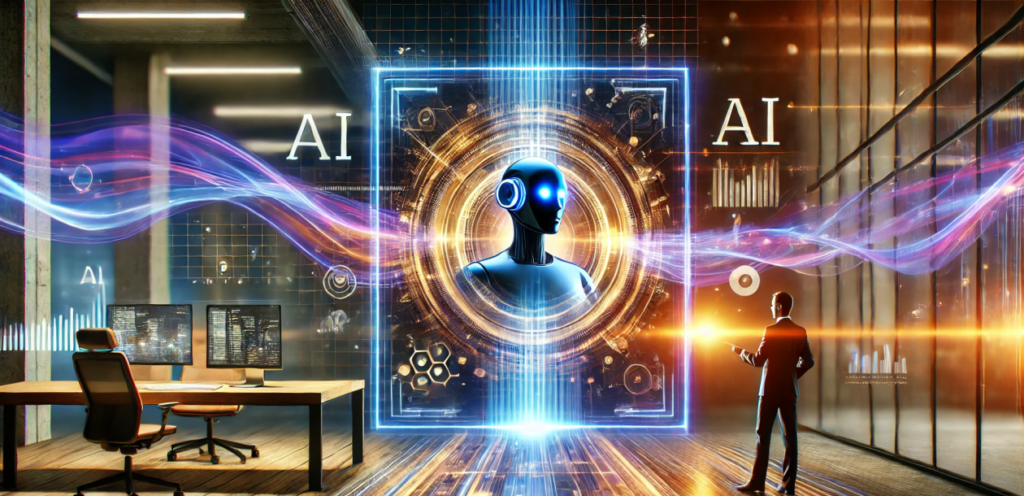
We have officially moved past the era of treating Artificial Intelligence (AI) and automation like futuristic sci-fi concepts. Today, they are no longer shiny new gadgets to marvel at; they are quietly woven straight into the fabric of our daily routines. From the way global enterprises make high-stakes boardroom decisions to how individual creators manage their chaotic personal to-do lists, intelligent systems are driving a massive, systemic shift in human productivity and creativity.
This isn’t a trend confined to Silicon Valley tech labs, either. Whether you look at healthcare, primary education, global logistics, or the creative arts, understanding this quiet shift isn’t just about keeping pace with technological novelty—it’s about staying relevant in an entirely reconfigured world. The question is no longer whether we will use these tools, but how deeply they will alter what we do with our days.
The Shift Toward Truly Adaptable Tech
The biggest leap we have witnessed in recent years is the transition from rigid, pre-programmed software to systems that can actually learn, pivot, and adapt on the fly. Traditional computing relied entirely on absolute predictability. If a software engineer didn’t write an explicit line of code to handle a specific scenario, the system failed. Early iterations of machine learning chipped away at this, but they still required constant hand-holding, exhaustive cleaning of massive datasets, and endless human intervention just to execute basic, repetitive tasks.
Today, that paradigm is entirely obsolete. Modern platforms are capable of analyzing highly unpredictable, real-time variables and self-correcting their workflows without a human needing to prompt them. They function less like a calculator and more like an analytical partner.
In the corporate world, this goes way beyond the simple, frustrating chatbots that used to populate customer service pages. Instead, cross-functional teams are leveraging intelligent corporate networks to spot subtle market shifts before they become obvious trends. These systems can autonomously draft comprehensive financial reports, analyze supply chain vulnerabilities, and flag operational risks well in advance. The core philosophy driving this shift isn’t just about getting things done faster; it is about building a buffer against human error and eliminating the blind spots that naturally occur when people are overwhelmed by too much data.
Reclaiming Time in the Modern Workplace


Let’s be completely honest: nobody goes to work hoping to spend three hours manually copying data between spreadsheets, chasing missing invoices, or playing endless games of email tag just to schedule a single project alignment meeting. Yet, for decades, these tiny, administrative friction points made up the vast majority of the modern workday. It was a grind that drained human energy and left people too exhausted to do the work they were actually hired to do.
Modern workflow automation has quietly taken over these repetitive, mind-numbing tasks. By seamlessly connecting disparate, once-isolated software applications, information now flows exactly where it needs to go without human intervention. If a client submits a form, the data is parsed, the contract is generated, the invoice is sent, and the internal team is notified in a single, silent heartbeat.
This shift has fundamentally changed what it means to be an employee. When you strip away the administrative busywork, you change the cognitive load of the workforce. People are finally being liberated to focus on the things that human beings are uniquely built for: long-term strategic thinking, complex problem-solving, empathetic client relationship management, and genuine collaboration. We are moving away from treating humans like biological robots and finally letting them think like humans again.
Digital Companions, Not Just Voice Commands

Remember when voice assistants were treated as novelty kitchen gadgets, mostly used to set egg timers, play a specific song, or read off a basic weather forecast? Those days feel incredibly distant now. Today’s digital assistants have evolved into deeply intuitive, hyper-contextual coordinators that actively help manage the chaos of modern life.
Instead of waiting for a manual command, these modern assistants subtly analyze your work habits, communication rhythms, and daily routines behind the scenes. They don’t just passively remind you that you have a meeting in fifteen minutes; they look at your schedule, notice a looming deadline later in the day, suggest an optimized restructuring of your afternoon, and proactively block out “deep-work” hours so you don’t get interrupted.
They can sense when your focus is flagging based on your interaction patterns and gently nudge you to step away from the screen for a break. In both homes and offices, they have transitioned from gimmicky, reactive software into indispensable partners for maintaining personal sanity, cognitive organization, and sustainable productivity.
How Industries Are Evolving
+---------------------+---------------------------------------------------------------+
| Industry            | Core Transformation                                           |
+---------------------+---------------------------------------------------------------+
| Business & Strategy | Hyper-personalized marketing; dynamic, automated supply chains|
| Healthcare          | Early diagnostic support; elimination of administrative drag |
| Education           | Adaptive, custom learning paths; automated grading assistance |
| Creative Arts       | Human-machine collaboration; rapid concept prototyping        |
+---------------------+---------------------------------------------------------------+
Smart Business Strategy
For modern businesses operating in a hyper-competitive landscape, automation is no longer a luxury or a cost-cutting measure—it is a baseline survival mechanism. The organizations thriving today are those that have completely abandoned broad, generic customer outreach in favor of targeted, algorithmic intelligence.
Instead of guessing what a demographic might want next quarter, companies use predictive modeling to anticipate shifting consumer behaviors in real time. This allows them to hyper-personalize marketing campaigns so that the content actually feels relevant, meaningful, and helpful to the consumer rather than intrusive.
Furthermore, this intelligence extends to the back end of business operations. Supply chains are no longer static; they are dynamic ecosystems that automatically adjust inventory levels based on shifting geopolitical factors, weather patterns, and real-time sales velocity. Simultaneously, autonomous security protocols operate constantly in the background, detecting, isolating, and neutralizing complex cybersecurity threats before a human IT team even realizes an attack was attempted.
Healthcare Lifelines


Perhaps the most profoundly meaningful impact of this technological evolution is unfolding within the field of medicine. Machine learning models have become sophisticated enough to act as an invaluable second pair of eyes for medical professionals. In radiology, for example, diagnostic algorithms assist doctors by spotting microscopic anomalies in complex medical scans—subtle tissue changes or tiny fractures that might easily slip past a tired human eye at the end of a grueling twelve-hour shift.
“The true victory of AI in medicine isn’t replacing the doctor; it’s removing the paperwork that keeps the doctor away from the patient.”
On the administrative side of medicine, the impact is equally life-saving. By automating patient record updates, cross-referencing pharmaceutical histories for negative drug interactions, and optimizing hospital scheduling, technology is stripping away decades of bureaucratic friction. When nurses and doctors spend less time clicking through poorly designed software menus, they can spend significantly more time at the bedside, delivering actual, empathetic patient care.
A New Era for Education
The traditional, industrial-era classroom model—where one teacher delivers a single, identical lesson to thirty entirely different children—is finally giving way to true personalized learning. AI-driven educational platforms can map out a student’s specific cognitive strengths, hidden learning gaps, and preferred pacing in real time.
Instead of forcing every student down the exact same rigid path, the curriculum adapts dynamically to the individual learner. If a student struggles with a specific algebraic concept but excels at geometry, the platform reframes the lessons, offering targeted exercises to build foundational confidence.
Meanwhile, automated grading systems handle routine, repetitive assessments, liberating teachers from hours of evening paperwork. This fundamentally shifts the role of the educator: teachers are freed up to act less like administrative evaluators and more like emotional mentors, providing targeted support to the specific students who need human guidance the most.
Redefining the Creative Process
For a long time, people believed that the creative industries would be completely immune to technological disruption. Creativity was viewed as a sacred, uniquely human spark. However, intelligent tools have firmly broken out of technical engineering silos and entered the creative sandbox, fundamentally challenging our definitions of art and production.
Today, creators across film, music, literature, and design are treating AI not as a threat, but as an incredibly powerful collaborative partner. Filmmakers use generative platforms to storyboard entire cinematic sequences in minutes rather than weeks. Musicians leverage intelligent software to experiment with complex, unusual harmonic arrangements, while writers use these tools to break through the paralysis of the blank page, brainstorming narrative concepts and testing structural variations at lightning speed.
The technology does not replace the raw human imagination, emotional depth, or lived experience required to make art meaningful. Instead, it acts as a mechanical launchpad, handling the tedious, labor-intensive components of rendering, editing, and technical execution, allowing the artist to focus entirely on the core creative vision.
The Real-World Friction

Of course, a civilizational shift this massive does not happen without profound growing pains, societal friction, and valid anxiety. The most pressing, immediate concern is the very real threat of job displacement. As routine cognitive and manual tasks are automated out of existence, entire segments of the traditional workforce risk being left behind. This reality has created an urgent, unprecedented global need for aggressive, large-scale workforce reskilling and upskilling initiatives. Educational institutions and corporate entities must cooperate to create pathways for workers to transition into new roles that emphasize human-centric skills.
Beyond employment anxieties, we are also grappling with deeply serious ethical dilemmas. The widespread adoption of these systems has brought massive questions regarding data privacy to the forefront of public discourse. How is our data being stored, who owns it, and how is it being leveraged to train these models?
  [Innovation Velocity] ---------> High Risk of Exploitation & Bias
           |
           v
  [Ethical Guardrails] ----------> Requires Slow, Intentional Legislation
Furthermore, the issue of algorithmic bias remains a critical vulnerability. If an AI system is trained on historical data that contains human prejudices, it will inevitably codify and amplify those biases in its outputs, leading to systemic discrimination in areas like hiring, loan approvals, and legal sentencing. The public conversation is rapidly shifting away from a place of uncritical wonder over what this technology can do, and toward a sober, urgent debate over how we can regulate it safely. Balancing the breakneck speed of innovation with robust, ethical guardrails is easily the defining social and political challenge of our generation.
The Road Ahead
Looking forward, the ultimate destination of the automation revolution isn’t to phase human beings out of the loop; it is to sharpen, elevate, and expand human capability. The individuals and businesses that thrive in the coming decades won’t be the ones trying to outrun or outwork the machines through sheer brute force. Instead, the future belongs to those who master the delicate art of collaborating with them.
By offloading the repetitive, the administrative, and the predictable to systems designed specifically to handle them, we unlock a massive reserve of human potential. The future isn’t just an automated landscape of cold efficiency—it is a collaborative, highly adaptive ecosystem built entirely around making our lives distinctly easier, more creative, and more human.
FAQ’s
1. What is AI and automation in 2026?
AI and automation in 2026 refer to smart technologies that perform tasks, analyze data, and improve productivity with minimal human effort.
2. How is AI used in daily life?
AI is used in voice assistants, smart homes, online shopping, healthcare, and personalized recommendations.
3. Will AI replace human jobs?
AI may replace some repetitive jobs, but it also creates new opportunities in tech, creativity, and management.
4. Why is automation important for businesses?
Automation helps businesses save time, reduce errors, cut costs, and improve efficiency.
5. What skills are needed for an AI-driven future?
Skills like digital literacy, problem-solving, data analysis, and adaptability are important for the AI-driven future.