
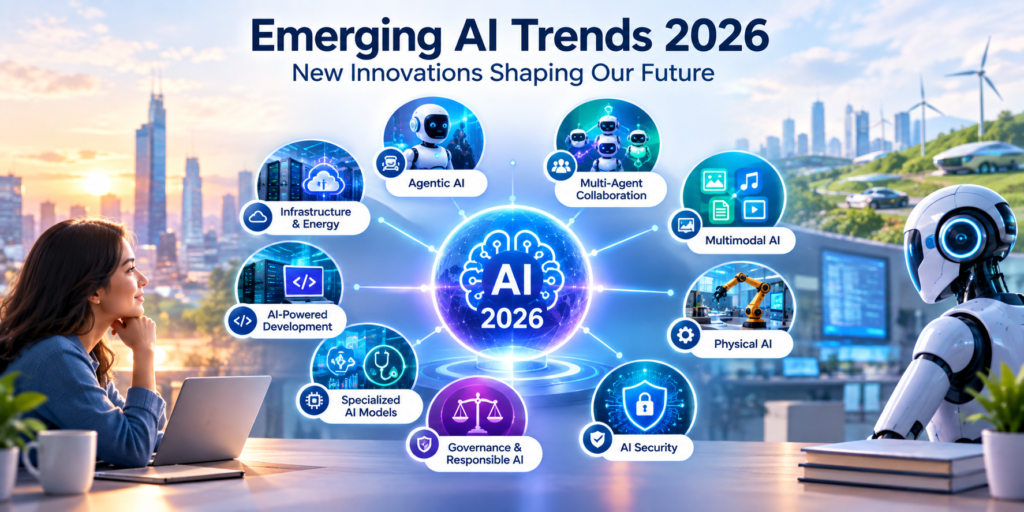
Artificial intelligence has crossed a major threshold. What was once seen as an experimental tool restricted to computer science departments or basic text-based chatbots has become an underlying layer of modern infrastructure. People routinely use software powered by machine learning to analyze raw information, write code, automate routine administrative duties, and draft communication.
As deployment expands, the conversation surrounding artificial intelligence is undergoing a fundamental shift. The central focus is no longer simply asking a software system a question and receiving a text-based response. Instead, technical development is prioritizing systems that plan complex multi-step tasks, evaluate visual and auditory information simultaneously, integrate into enterprise software networks, and operate physical hardware.
Technical Pillars of Modern AI Systems
The current evolution of artificial intelligence relies on several distinct structural developments. Rather than depending on a single monolithic algorithm, enterprise applications combine specialized models, agentic workflows, and physical machine hardware.
                            [ AI SYSTEM ARCHITECTURES ]
                                         │
       ┌────────────────────────┬────────┴────────┬────────────────────────┐
       │                        │                 │                        │
       ▼                        ▼                 ▼                        ▼
[ Agentic Frameworks ]   [ Multimodal Cores ]   [ Domain Models ]   [ Security Platforms ]
  - Task planning          - Audio/visual inputs  - Target fine-tuning - Access control
  - Tool execution         - Sensor fusion        - Lower latency      - Audit logging
  - Autonomous loops       - Physical robotics    - High precision     - Guardrail logic
The table below contrasts traditional generative interfaces with emerging system architectures, outlining their main functional goals, practical applications, and primary deployment requirements.
| Architectural Style | Primary Functional Goal | Practical Application | Key Implementation Need |
|---|---|---|---|
| Traditional Generative AI | Passive query answering and document synthesis | Drafting text, summarizing articles, answering reference queries | Basic prompt guardrails, output validation |
| Agentic & Multi-Agent Networks | Autonomous workflow execution and multi-task planning | Processing claims, handling customer support escalations, scheduling | Strict permission controls, logging mechanisms, human oversight |
| Multimodal & Physical AI | Spatial reasoning and physical environment interaction | Warehouse automation, quality control inspection, robotic navigation | High-grade sensors, edge computing, hardware safety overrides |
| Domain-Specific Models | High-accuracy analysis within specialized fields | Legal document review, clinical data analysis, financial auditing | High-quality industry data, privacy compliance structures |
| AI Security Platforms | Defense against prompt injection and data exfiltration | Query auditing, access control management, behavioral tracking | Network monitoring, zero-trust policies, automated logging |
Agentic Frameworks and Multi-Agent Collaboration
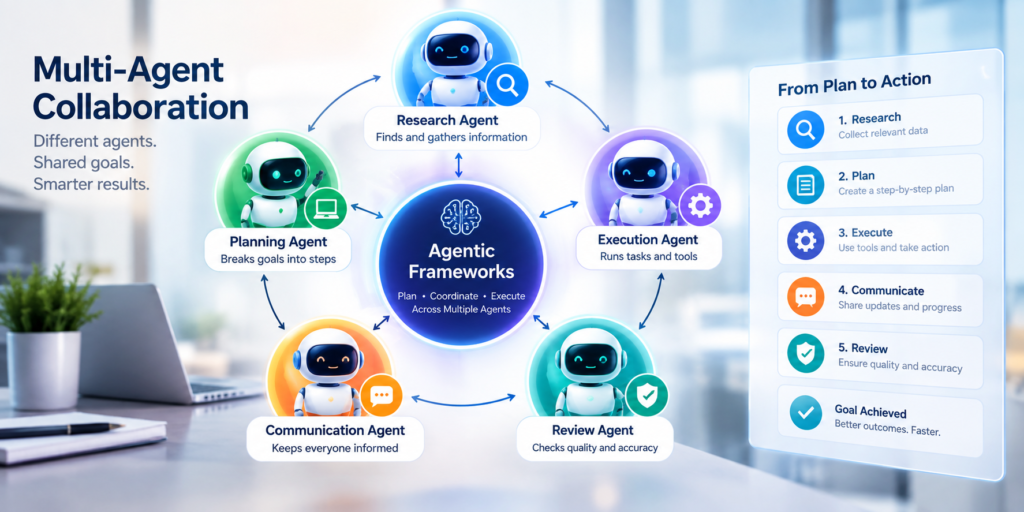
The standard software interaction model—where a human provides a prompt and waits for a static response—is giving way to agentic frameworks. An AI agent is designed to accept a high-level goal, break that goal down into sequential sub-tasks, query external databases using standard APIs, and complete actions independently within defined boundaries.
[ Goal Input ] ──► [ Planning Engine ] ──► [ API / Tool Execution ] ──► [ Verification Loop ]
When multi-agent systems are implemented, operational responsibilities are divided among specialized, narrow agents rather than relying on a single, general-purpose system:
- Data Extraction Agent: Pulls structured records from enterprise resource planning databases.
- Compliance Agent: Validates retrieved data against internal business policies and regulatory rules.
- Reporting Agent: Compiles findings into formatted documentation or updates internal dashboards.
- Audit Agent: Reviews the final output for mathematical or logical inconsistencies before requesting human verification.
A central challenge in multi-agent orchestration is error accumulation. If one agent hands off flawed context to another, subsequent decisions degrade rapidly. Preventing systematic failures requires clear permission boundaries, standardized message formats between agents, and central logs that record every automated step.
Multimodal Integration and Physical Hardware
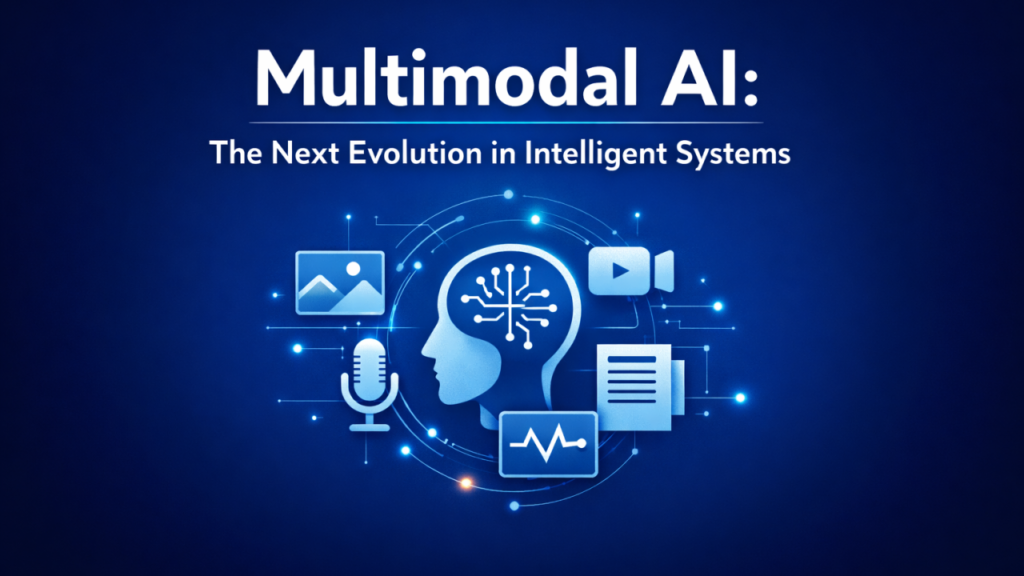
Modern model architectures natively process and correlate text, high-resolution imagery, raw audio, and video streams at the same time. This structure removes the need to convert non-text inputs into written descriptions before analysis, allowing software to evaluate context with greater precision.
                              MULTIMODAL DATA INPUTS
                                         │
       ┌─────────────────────────────────┼─────────────────────────────────┐
       │                                 │                                 │
       ▼                                 ▼                                 ▼
[ Structured Text & Code ]     [ Visual Data & Video ]        [ Audio & Sensor Streams ]
       │                                 │                                 │
       └─────────────────────────────────┼─────────────────────────────────┘
                                         │
                                         ▼
                            [ Cross-Modal Processing ]
                                         │
                                         ▼
                            [ Action / Motion Output ]
Physical Systems and Smart Robotics
Multimodal models serve as the software foundation for physical AI—the installation of adaptive software into physical hardware like industrial robots, automated warehouse equipment, and inspection devices.
Unlike pure software environments, physical operations carry immediate consequences if errors occur. Deploying physical AI successfully requires redundant hardware sensors, low-latency processing, and fail-safe mechanical overrides to maintain safety if the underlying software misinterprets physical surroundings.
Specialized Models versus Monolithic Foundation Models
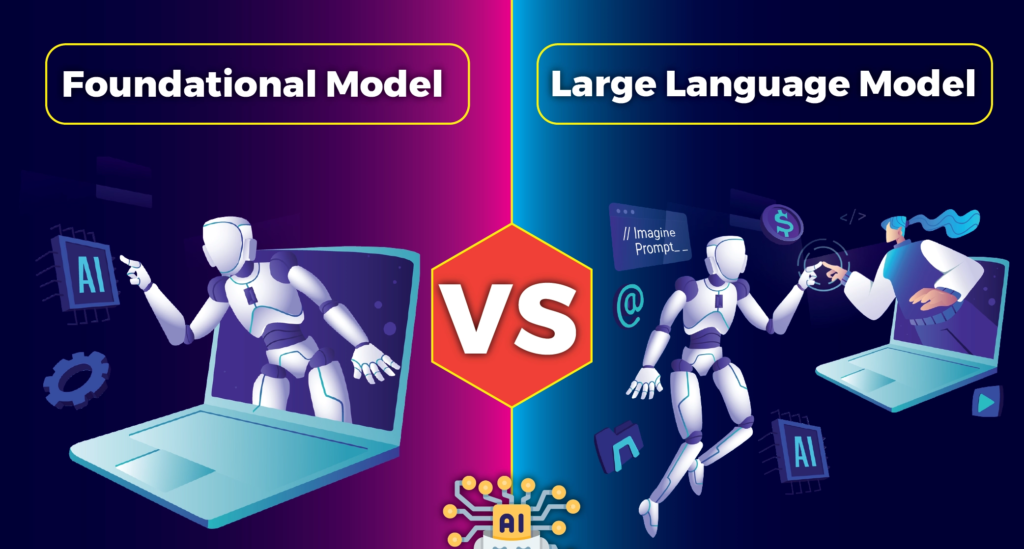
While massive general-purpose models show strong broad reasoning capabilities, real-world enterprise adoption favors smaller, highly specialized models fine-tuned for specific industries. Training or adapting a smaller model on focused datasets—such as legal cases, medical journals, or internal manufacturing logs—delivers distinct practical advantages:
- Improved Precision: Reduced rates of false or fabricated outputs (hallucinations) when handling complex technical vocabulary.
- Lower Operational Costs: Smaller parameter footprints require less memory and computational power, leading to faster response times and lower hosting expenses.
- Simpler Governance: Clear boundaries around training sources make compliance with regional privacy laws and intellectual property rules far more manageable.
In actual business deployments, organizations often use a hybrid structure. Large general models handle initial user interactions and high-level routing, while specialized domain models perform the detailed technical processing.
Software Engineering and AI Security Needs
The software development lifecycle is undergoing a parallel transformation. AI coding tools have moved beyond basic line completion to assist with system planning, automated test creation, bug identification, and documentation.
[ System Planning ] ──► [ Assisted Code Generation ] ──► [ Automated Testing ] ──► [ Security Audit ]
However, faster code generation does not automatically guarantee secure or efficient software. Automated assistants can generate code that appears correct on the surface while hiding subtle logical flaws, memory leaks, or security vulnerabilities. Senior developers must continue to audit generated code, design test suites, and evaluate architectural decisions.
Enterprise Security and Threat Mitigation
Connecting automated AI agents to company email servers, internal software, and customer databases creates new potential entry points for security breaches. Organizations are deploying dedicated security platforms to address risks such as:
- Indirect Prompt Injection: Preventing hidden malicious commands buried inside external websites, emails, or uploaded documents from altering an agent’s behavior.
- Data Exfiltration Safeguards: Automatically detecting and redacting personal information, system passwords, or proprietary source code before queries reach external networks.
- Access Control Enforcement: Restricting what data an automated tool can read or modify based on user credentials.
Infrastructure, Energy Demands, and Governance
Running complex artificial intelligence applications at global scale creates significant demands on physical infrastructure, server hardware, and electricity grids.
                         ENTERPRISE AI OPERATING FRAMEWORK
                                         │
       ┌─────────────────────────────────┼─────────────────────────────────┐
       │                                 │                                 │
       ▼                                 ▼                                 ▼
[ Identity & Access Controls ]   [ Preemptive Threat Defense ]    [ Compute Infrastructure ]
  - Scoped agent permissions       - Injection attack detection     - Hybrid cloud/edge strategy
  - Role-based data limits         - Automated data masking         - Power consumption tracking
Resource Allocation and Workload Distribution
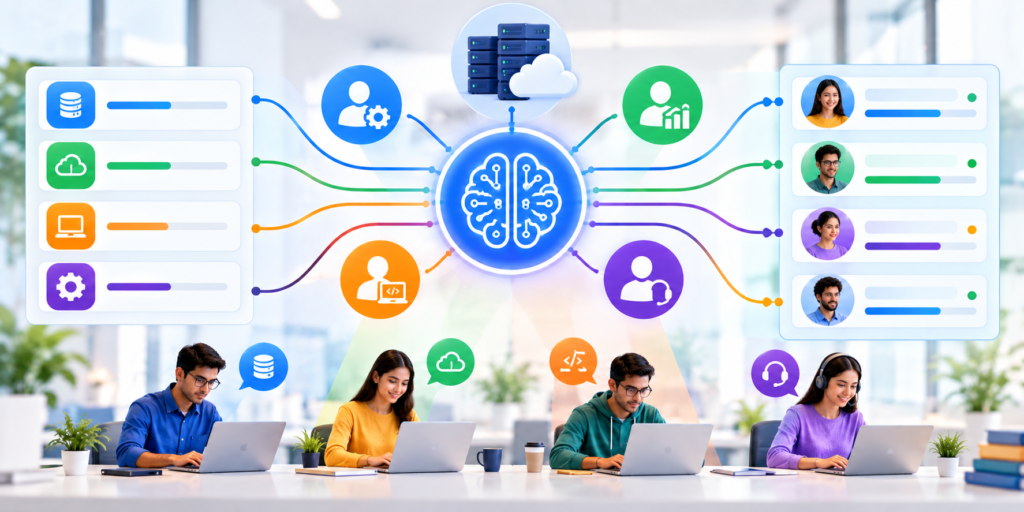
Data centers require substantial electrical power and specialized silicon processors to handle heavy compute workloads. To manage rising costs and infrastructure limits, engineering teams are adopting hybrid computation strategies:
- Cloud-Based Processing: Reserving massive server farms for heavy training tasks, complex reasoning loops, and global database queries.
- Edge Processing: Running smaller, compressed models directly on local devices like smartphones, industrial machinery, or local hardware hubs to reduce network latency and lower power consumption.
Governance and Operational Risk
As automated systems move from offering simple recommendations to taking real-world actions, governance frameworks become necessary. Responsible implementation requires establishing explicit rules regarding data privacy, model testing, decision tracking, and human sign-off procedures for high-stakes actions.
Structural Human-AI Collaboration
The most practical trajectory for artificial intelligence centers on collaboration rather than complete human replacement. The strengths of software systems and human professionals address fundamentally different needs:
  [ AI Strengths: Fast data analysis, pattern recognition, routine generation ]
                                     +
  [ Human Strengths: Contextual judgment, ethical oversight, creative direction ]
                                     =
  [ Balanced Workflow: Faster execution with responsible human control ]
Software tools excel at scanning large datasets, detecting subtle patterns, executing routine tasks, and generating initial drafts. Human professionals provide necessary contextual awareness, moral judgment, creative direction, and legal responsibility.
Whether in scientific research, healthcare, financial analysis, or creative fields, artificial intelligence functions best as a capability multiplier. Organizations that focus on clear system boundaries, transparent security protocols, and thoughtful human oversight will be best positioned to build reliable, practical tools that improve daily work without introducing unmanaged operational risks.
FAQs
1. What are the biggest AI trends in 2026?
Major trends include agentic AI, multimodal AI, specialized AI models, physical AI, AI security, and stronger AI governance.
2. What is agentic AI?
Agentic AI can plan and complete multiple steps toward a goal, rather than simply responding to a single prompt.
3. How will AI affect everyday life?
AI can make tasks such as learning, writing, research, customer service, software development, and automation faster and easier.
4. Will AI replace human workers?
AI may automate some repetitive tasks, but human creativity, judgment, communication, and decision-making will remain important.
5. Why is AI security important in 2026?
As AI systems gain access to more data and tools, strong security is needed to protect information and prevent misuse.
The Best Workflow Tools for Small Businesses, Teams, and Freelancers
Running a business involves more than completing tasks. Workflow You have emails to answer, projects…

Content Marketing Trends 2026: Research & Storytelling
The internet has never had a shortage of content. Every day, businesses publish blog posts,…

Top Workflow Tools for Better Team Productivity in 2026
It rarely happens with a big dramatic crash. Instead, it’s a slow, quiet leak. You…
AI Automation Guide 2026: Work Smarter, Faster & Better
Artificial intelligence and automation are changing the way people work, manage information, communicate, and complete…
Tool Reviews: Find the Best Tools for Every Need
Every single morning, millions of people open their laptops to a screen crammed with open…

The Best Audio Editing Software 2026: Music, Podcasts & More
Good audio can completely change how a song, podcast, video, or voice recording feels.Audio Editing…