Managing personal finances often feels like a constant balancing act. On any given day, you might be weighing current living expenses against long-term investments, trying to minimize your tax liability, managing debt, and setting aside money for future milestones. When you try to track all of these moving parts mentally, money management quickly turns into a source of stress.
Fortunately, getting a grip on your financial life does not require a degree in finance or complex mathematical strategies. With the right mix of digital tools, structured habits, and a realistic view of your goals, everyday money decisions become far more manageable. Financial planning and tax tools serve as powerful aids in this process—turning raw, overwhelming numbers into clear, actionable insights.
Understanding Financial and Tax Planning Tools
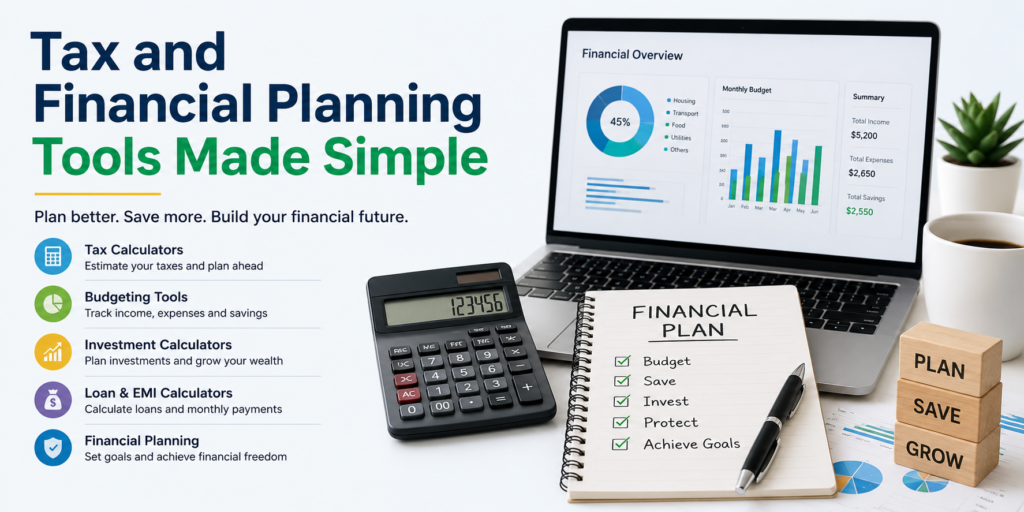
Financial and tax planning tools include a broad spectrum of digital resources. They range from simple online calculators and custom spreadsheets to comprehensive budgeting apps and investment modeling platforms.
                                 [ Financial Planning Ecosystem ]
                                                │
       ┌────────────────────────┬───────────────┴───────────────┬────────────────────────┐
       │                        │                               │                        │
       ▼                        ▼                               ▼                        ▼
[ Budgeting & Tracking ]   [ Tax Estimators ]          [ Credit & Loans ]        [ Long-Term Growth ]
  - Expense Categorization   - Income Bracket Check      - EMI Calculators         - Compound Interest
  - Cash Flow Analysis       - Deduction Optimization    - Amortization Schedules  - Retirement Models
Rather than offering rigid, one-size-fits-all answers, these tools give you a sandbox to model different scenarios. They take your current financial inputs—such as income, fixed costs, interest rates, and savings rates—and project potential outcomes. This allows you to base your choices on evidence and clear estimates rather than guesswork or intuition.
Tax Calculators: Simplifying Annual Obligations
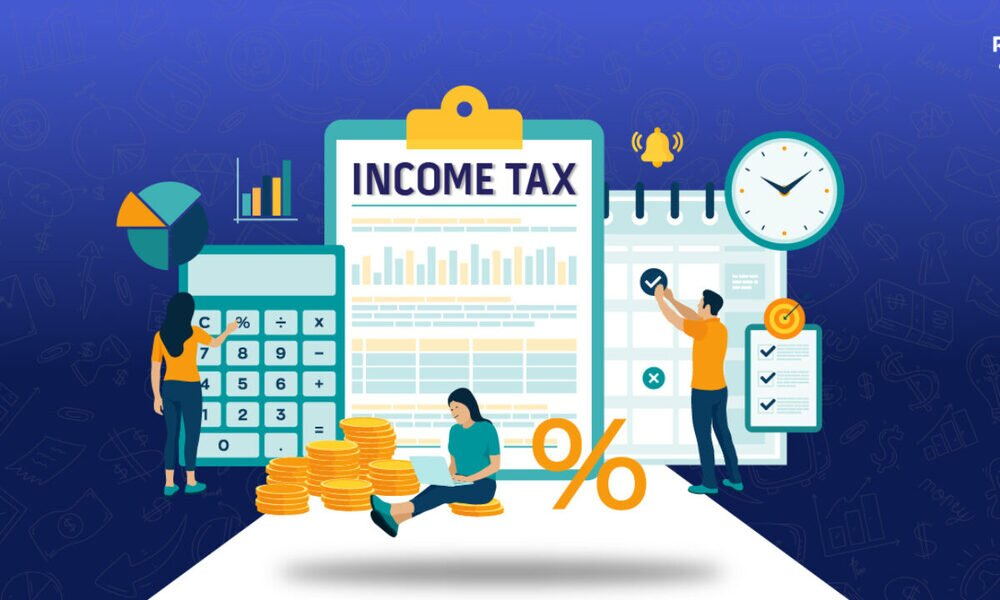
Taxes represent one of the largest single expenses in a household budget, yet they remain one of the least understood. Between shifting tax brackets, variable deductions, exemptions, and regional tax law updates, estimating what you owe at the end of the year can feel daunting.
Digital tax calculators simplify this process by breaking down your gross income into taxable components. By inputting your standard earnings, retirement contributions, health savings accounts, and eligible deductions, you can quickly estimate your tax liability.
| Feature | Primary Purpose | Key Benefit for Planning |
|---|---|---|
| Bracket Estimator | Maps income against current tax tiers | Helps evaluate the impact of a bonus or salary raise |
| Deduction Modeler | Calculates potential itemized vs. standard savings | Highlights opportunities to lower taxable income |
| Withholding Checker | Compares current pay stub withholdings to estimated total tax | Prevents surprising tax bills or excessively large refunds |
While a tax calculator is an excellent estimation aid, it is important to treat its outputs as directional guidance rather than definitive legal advice. Tax codes change frequently, and individual edge cases—such as freelance income, capital gains, or property sales—often warrant a review with a certified tax professional.
Budgeting Tools and Expense Trackers: Mapping Cash Flow
A solid financial foundation relies entirely on understanding cash flow: the relationship between what comes in and what goes out. Budgeting tools set the plan for where your money should go, while expense trackers record where your money actually went.
  [ Income Received ] ──► [ Automated Fixed Transfers ] ──► [ Savings & Investments ]
                                    │
                                    ▼
                          [ Variable Daily Expenses ]
                                    │
                                    ▼
                          [ Weekly Cash Flow Audit ]
When you track expenses consistently, patterns emerge that are nearly impossible to spot otherwise. Small, frequent purchases—like daily coffee runs, unused recurring subscriptions, or frequent food delivery—can silently drain hundreds of dollars from your budget every month.
Using an automated app or a manual tracking spreadsheet creates immediate visibility. The goal of a budget is not to eliminate enjoyment or impose extreme frugality; it is to ensure your spending reflects your true priorities rather than unexamined habits.
Loan and EMI Calculators: Understanding Borrowing Costs

Whether you are taking out a mortgage, financing a vehicle, or consolidating personal debt, borrowing money comes with long-term financial commitments. Loan and Equated Monthly Installment (EMI) calculators help you look past the initial principal amount to see the true cost of credit.
By adjusting three core variables—the loan principal, interest rate, and repayment term—you can instantly observe how small changes dramatically alter your financial obligations.
       Higher Monthly Payment  ◄───  [ Shorter Loan Term ]  ───►  Dramatically Lower Total Interest
       Lower Monthly Payment   ◄───  [ Longer Loan Term ]   ───►  Substantially Higher Total Interest
For instance, opting for a longer repayment term reduces your required monthly payment, which can ease immediate cash flow pressure. However, that same extended timeline allows interest to accumulate, drastically increasing the overall cost of the asset over time. Running these numbers beforehand ensures you select a borrowing structure that fits both your monthly cash flow and your long-term balance sheet.
Savings and Investment Calculators: Visualizing Growth

Building wealth requires time and consistency. Because human brains tend to think linearly, it can be difficult to intuitively grasp the power of compound interest over long horizons.
Savings and investment calculators bridge this gap by illustrating how modest, regular contributions grow when combined with time and an assumed rate of return.
These tools allow you to experiment with different variables:
- Initial Capital: Your starting point today.
- Monthly Contributions: The steady engine driving your portfolio growth.
- Time Horizon: The single most powerful multiplier in compounding.
- Estimated Rate of Return: A realistic, conservative average yield.
Playing out these projections highlights a critical financial reality: starting early with smaller amounts often yields far greater results than trying to make up for lost time with larger contributions later in life.
Retirement Planning Tools: Securing Long-Term Independence
Retirement planning can feel abstract, especially when your post-work years are decades away. Retirement calculators transform that distant goal into a concrete, manageable targets by projecting future living costs against your expected asset accumulation.
| Retirement Variable | Why It Matters | How to Adjust in Models |
|---|---|---|
| Inflation Rate | Erodes purchasing power over time | Use a conservative annual baseline (e.g., 2.5% to 3.5%) |
| Withdrawal Rate | Determines how long your nest egg lasts | Model conservative withdrawal rules (e.g., 3.5% to 4%) |
| Expected Longevity | Ensures your money outlasts your living needs | Plan for a horizon up to age 90 or 95 to build a buffer |
Because future inflation rates, market returns, and healthcare expenses remain uncertain, retirement projections should be revisited annually. Running “stress test” scenarios—such as modeling a period of low market returns or higher-than-expected inflation—helps you build a resilient strategy that can withstand real-world economic volatility.
The Timeless Value of Spreadsheets
While feature-packed mobile applications dominate the financial software space, simple custom spreadsheets remain one of the most flexible and reliable options available.
Spreadsheets offer complete control over your data layout without third-party paywalls, intrusive advertisements, or unwanted feature updates. Creating your own ledger fosters a deeper, hands-on understanding of your cash flow, forcing you to engage directly with your financial numbers rather than relying on automated background algorithms.
Best Practices for Managing Your Financial Infrastructure

Tools alone will not transform your financial health; success comes down to how you integrate them into your daily habits.
- Conduct Regular Monthly Reviews: Set aside 30 minutes at the end of every month to log your expenses, check progress on your savings targets, and adjust your budget for upcoming irregular costs.
- Use Conservative Assumptions: When modeling investment growth or loan payments, always err on the side of caution. Use lower expected market returns and higher estimated interest rates to build a margin of safety.
- Prioritize Data Security: Protect sensitive financial information. Use strong, unique passwords for accounts linked to financial software, enable multi-factor authentication, and avoid entering bank details into unverified platforms.
- Focus on Simplicity: Do not overcomplicate your setup with dozens of single-purpose apps. Choose two or three core tools that fit your personal workflow and stick with them consistently.
Financial planning is an ongoing process rather than a one-time project. By using calculators, budgeting tools, and structured tracking methods as practical navigational aids, you can replace financial anxiety with clarity, confidence, and long-term control over your money.
FAQs
1. What are tax planning tools?
They help estimate taxes, organize financial information, and plan for potential tax expenses.
2. Why are budgeting tools useful?
They help track income and spending so you can manage your money more effectively.
3. Can financial calculators predict exact results?
No. They provide estimates based on the information and assumptions entered.
4. What is a loan calculator used for?
It helps estimate monthly payments and the overall cost of a loan.
5. Are financial planning tools safe to use?
Use reputable tools and avoid sharing sensitive financial information with unfamiliar websites.