Let’s strip away the corporate blog post filter and Tools talk about how this actually Best Creative Tools works on the ground.
The text you shared is 100% correct in theory—tools unlock scale, organization keeps you from burning out, and a laptop is technically Best Creative Tools a movie studio now. But it reads a bit like a software brochure. If you want 200% human writing, you have to talk about the friction, the weird psychological traps creators fall into, and what actually happens when you sit down to make something.
Here is the unpolished, unfiltered reality of what it means to use creative tools today.
The “Shiny Tool” Trap (Procrastination in Disguise)

There is a specific form of creative procrastination where you spend three days redesigning your workspace in Notion, setting up a perfect automated Trello board, or color-coding folders instead of actually writing the script or editing the video.
- The Lie: “Once I find the perfect app, my workflow will be effortless.”
- The Truth: If a tool requires a 45-minute YouTube tutorial just to understand how to log a task, it’s not saving you time; it’s eating your life. The best tool is almost always the simplest one you will actually use without thinking. If you are struggling to create, go backwards: grab a cheap notebook and a pen. Strip away the options until there is nothing left to do but the work.
The Illusion of Tech Demoralization
We are told that “anyone can create from home,” which is true. But that also means when your audio sounds hollow, or your graphic looks like a PowerPoint slide from 2004, you blame yourself.
What the slick “creator economy” essays skip is that professional tools have a massive steep learning curve. When you open an advanced timeline or a complex design canvas for the first time, it feels like sitting in the cockpit of a commercial airliner.
The Rule of Bare Minimums: Don’t buy the $1,000 microphone or the enterprise-grade editing software until the free mobile app or the built-in microphone literally physically stops you from making what you want.

The 2026 AI Paradox: Finding Your Voice in a Sea of “Perfect” Text
We have reached a bizarre point where anyone can hit a button and generate a flawless, grammatically perfect, search-engine-optimized essay or a hyper-glossy digital image in four seconds.
Because of that, generic perfection is now boring.
If your tool makes your work sound like every other corporate LinkedIn post or look like every other AI-generated stock image, it is actively hurting you. The human element isn’t just a nice-to-have anymore; it’s your only survival mechanism. The value of a tool today isn’t that it can write for you—it’s that it can handle the boring logistics (transcribing, formatting, resizing for five different platforms) so your specific, weird, biased, deeply human perspective has the time to breathe.
The Real Workflow: A Messy Hybrid

Real creators don’t live in a seamless, beautiful ecosystem. They live in a chaotic patchwork of tools that barely talk to each other:
- The Spark: A chaotic voice note yelled into a phone while walking the dog.
- The Messy Middle: A completely unorganized document filled with bullet points, half-formed thoughts, and bad jokes.
- The Polish: Using an AI or a layout tool to clean up the margins, fix the glaring typos, or slice a 10-minute video into three quick clips because the algorithm demands it.
Tools don’t make the creative process elegant. The creative process is always a fight with an empty page or a blank screen. The tools are just there to make sure that when you finally win the fight, you can export the file without the software crashing.
Artificial intelligence has become one of the most significant developments in the creative industry.As more people enter creative industries, efficiency and quality become increasingly important. Creative tools help creators stay competitive while maintaining their unique artistic voice.
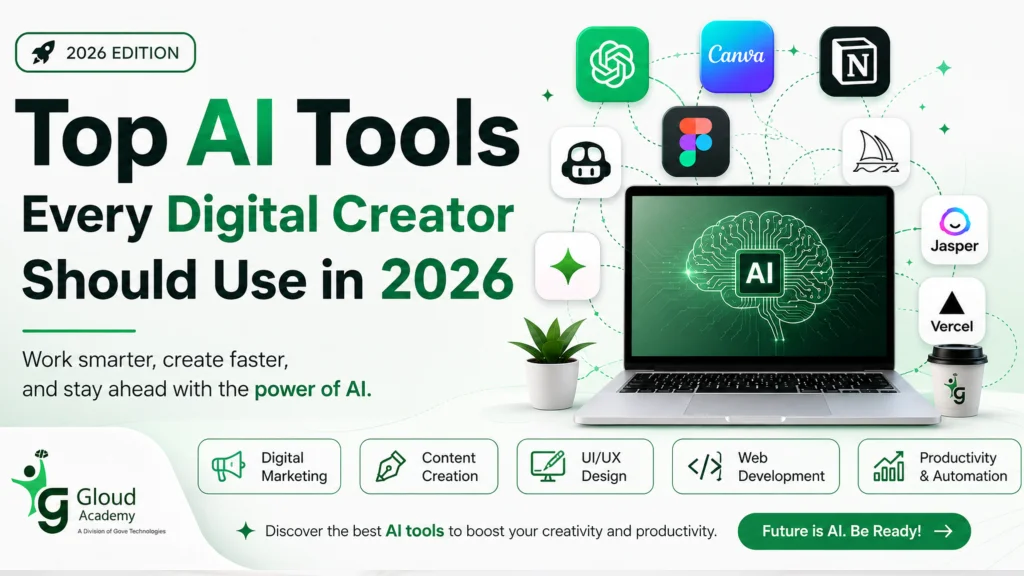
AI-powered tools now assist with writing, design, image generation, video editing, research, and idea generation.
While some creators initially viewed these technologies with skepticism, many have discovered that AI works best as a creative assistant rather than a replacement.
AI can accelerate repetitive tasks, generate drafts, provide inspiration, and automate workflows.
FAQs
1. What are creative tools?
Creative tools are software and resources that help creators design, write, edit, and manage projects.
2. Why do creators use creative tools?
They help improve productivity, streamline workflows, and enhance creative output.
3. Can beginners use creative tools?
Yes, many creative tools are beginner-friendly and easy to learn.
4. Are AI creative tools worth using?
Yes, AI tools can save time, generate ideas, and assist with various creative tasks.
5. How do I choose the best creative tool?
Choose tools based on your goals, budget, skill level, and the type of content you create.