
Artificial Intelligence (AI) is no longer a technology reserved for research labs or large tech companies. In 2026, AI has become an essential part of everyday life, helping businesses automate tasks, improving customer experiences, supporting healthcare professionals, and enabling creators to produce content faster than ever before. From smart assistants and generative AI to advanced automation and predictive analytics, AI continues to redefine how people work, learn, and communicate.
As organizations invest more heavily in AI-powered solutions, staying informed about the latest trends has become essential. Whether you’re a business owner, marketer, student, developer, or technology enthusiast, understanding where AI is headed can help you make smarter decisions and prepare for future opportunities.
This guide explores the biggest AI trends shaping the future in 2026 and explains why they matter.
Why AI Trends Matter
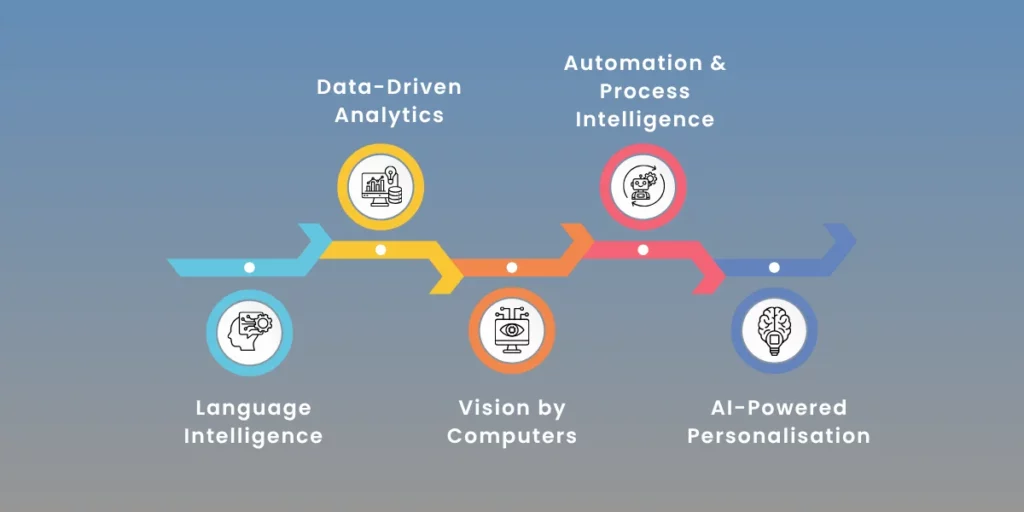
Artificial Intelligence is evolving faster than almost any other technology. Every year brings new breakthroughs that improve efficiency, reduce costs, and unlock innovative ways of solving problems. Businesses that embrace AI gain a competitive advantage through automation, better decision-making, and personalized customer experiences.
For individuals, learning about AI creates new career opportunities and improves productivity. Rather than replacing human intelligence, AI is becoming a powerful tool that complements creativity, strategic thinking, and problem-solving.
Generative AI Continues to Lead Innovation
Generative AI remains one of the most influential trends in 2026. Modern AI models can generate articles, images, presentations, videos, software code, music, and even realistic voice recordings from simple text prompts.
Businesses use generative AI to create marketing campaigns, product descriptions, customer support responses, and educational materials in significantly less time. Designers use AI to develop creative concepts, while developers rely on AI-powered coding assistants to speed up software development.
Although AI dramatically improves productivity, the most successful results still require human review, creativity, and expertise to ensure quality and originality.
AI Agents Are Transforming Workflows
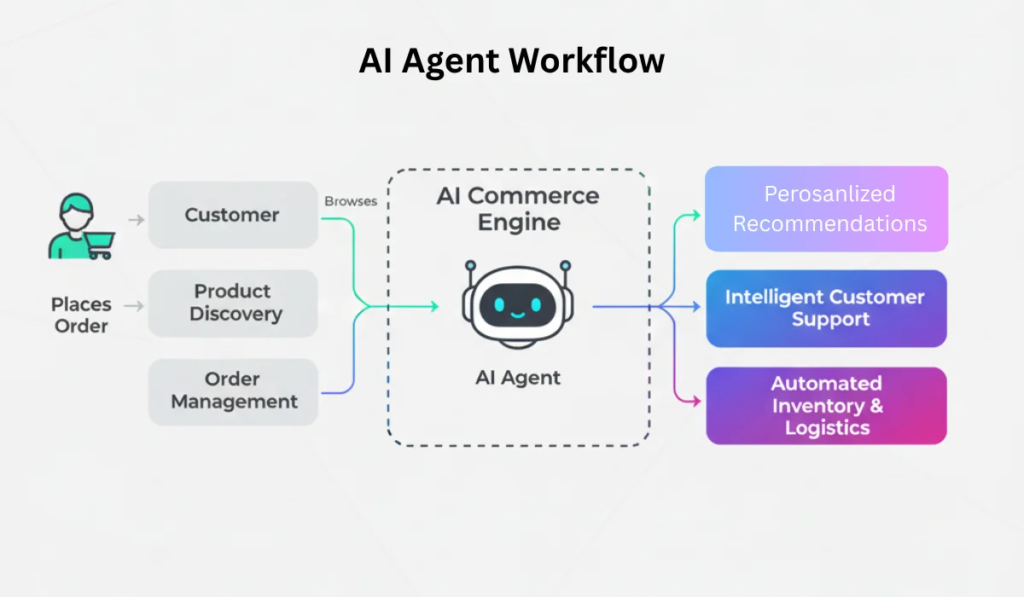
One of the biggest developments in 2026 is the rapid growth of AI agents. Unlike traditional chatbots that simply answer questions, AI agents can complete entire workflows independently.
These intelligent systems can organize calendars, conduct online research, summarize meetings, generate reports, analyze documents, automate customer support, and even collaborate across multiple software platforms.
Businesses are increasingly deploying AI agents to reduce repetitive work, allowing employees to focus on strategic planning, innovation, and customer relationships.
Hyper-Personalization Is Becoming Standard
Customers now expect personalized experiences whenever they shop online, stream entertainment, or interact with digital services.
AI analyzes browsing habits, purchase history, customer preferences, and behavioral data to deliver personalized recommendations, targeted advertisements, and customized user experiences.
Retailers recommend products customers are most likely to purchase, streaming platforms suggest content based on viewing history, and financial services provide personalized investment insights.
This level of personalization improves customer satisfaction while helping businesses increase engagement and conversions.
AI-Powered Automation Is Expanding Across Industries
Automation continues to reshape nearly every industry. What once required hours of manual effort can now be completed automatically through AI-powered workflows.
Marketing teams automate campaign optimization and email marketing. Human resource departments streamline recruitment and employee onboarding. Manufacturers predict equipment failures before they occur. Financial institutions detect fraud more quickly using intelligent monitoring systems.
Rather than eliminating jobs, automation allows professionals to dedicate more time to creative thinking, relationship building, and solving complex challenges.
AI Is Revolutionizing Healthcare
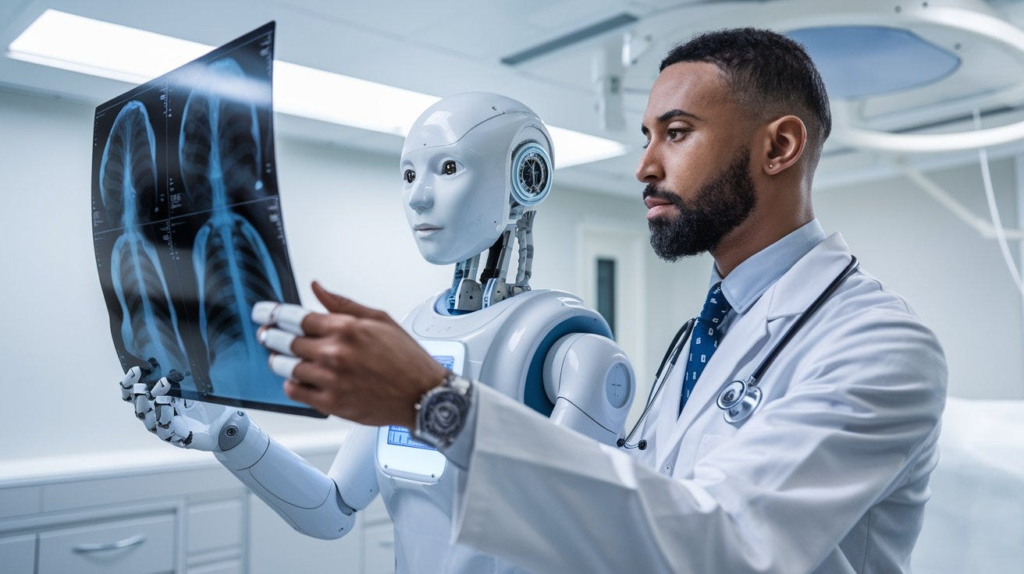
Healthcare remains one of the industries benefiting most from Artificial Intelligence.
AI assists doctors by analyzing medical images, detecting diseases earlier, recommending treatment options, and improving diagnostic accuracy. Hospitals use predictive analytics to optimize staffing, manage patient flow, and reduce waiting times.
Wearable health devices powered by AI continuously monitor heart rate, physical activity, sleep quality, and other health indicators, helping users make informed lifestyle decisions.
While AI provides valuable support, healthcare professionals remain responsible for diagnosis and patient care.
Smarter AI in Education
Education is becoming increasingly personalized thanks to AI.
Learning platforms adapt lessons based on each student’s progress, strengths, and weaknesses. AI tutors provide instant explanations, generate quizzes, and recommend study materials tailored to individual learning styles.
Teachers benefit by automating grading, preparing lesson plans, and identifying students who may require additional support.
These innovations improve accessibility while making learning more engaging and efficient.
Multimodal AI Is Changing Human-Computer Interaction
Modern AI systems can now process multiple forms of information simultaneously.
Instead of understanding only text, multimodal AI can analyze images, audio recordings, videos, documents, and voice commands together. Users can upload photos, ask questions about charts, summarize documents, or generate videos from written instructions.
This creates more natural interactions and expands the practical applications of AI across education, design, healthcare, customer support, and business operations.
AI in Cybersecurity Is Becoming Essential

As cyberattacks become increasingly sophisticated, AI is playing a critical role in digital security.
Machine learning algorithms monitor network activity around the clock, identify unusual behavior, detect malware, and respond to threats much faster than traditional security systems.
Organizations also use AI to improve identity verification, monitor employee access, and predict potential vulnerabilities before attackers exploit them.
Cybersecurity powered by AI is becoming essential as businesses continue their digital transformation.
Responsible and Ethical AI
The rapid growth of Artificial Intelligence has increased discussions around ethics, transparency, privacy, and accountability.
Organizations are developing AI systems that explain how decisions are made, reducing concerns about bias and discrimination. Governments around the world are introducing regulations that encourage responsible AI development while protecting consumer privacy.
Building trustworthy AI will remain a top priority as adoption continues to grow across industries.
AI Is Reshaping the Future of Work
Artificial Intelligence is transforming job roles rather than simply replacing workers.
Professionals increasingly use AI to assist with writing, research, coding, financial analysis, project management, customer service, and decision-making.
New career opportunities continue emerging in areas such as AI engineering, prompt engineering, AI governance, automation consulting, data science, and machine learning.
Workers who learn to collaborate effectively with AI tools are likely to enjoy stronger career prospects in the years ahead.
AI for Small Businesses
Advanced AI technology is no longer limited to large corporations.
Affordable cloud-based AI platforms now allow small businesses to automate customer service, manage inventory, optimize marketing campaigns, forecast sales, and improve operational efficiency.
This accessibility enables startups and entrepreneurs to compete more effectively while reducing operational costs.
AI has become an equalizer that helps businesses of every size innovate and grow.
AI Content Creation Continues to Evolve
Content creation has experienced one of the biggest transformations through AI.
Writers use AI to brainstorm ideas, draft articles, improve grammar, and optimize content for search engines. Designers create graphics in minutes, while marketers generate social media campaigns more efficiently.
Video creators use AI for editing, subtitle generation, scriptwriting, voiceovers, and animation.
Although AI accelerates production, successful content still depends on human creativity, expertise, originality, and fact-checking.
Voice AI Is Becoming More Natural
Voice technology has advanced significantly in recent years.
Modern voice assistants understand conversational language more accurately and provide faster, more helpful responses. Businesses use voice AI for customer support, appointment booking, multilingual communication, and accessibility services.
As speech recognition improves, voice interfaces will become an increasingly common way people interact with digital technology.
AI and Sustainability
Artificial Intelligence is also supporting global sustainability efforts.
Businesses use AI to monitor energy usage, optimize transportation routes, reduce manufacturing waste, and improve recycling systems.
Farmers rely on AI for precision agriculture, using smart sensors and predictive analytics to improve crop yields while conserving water and reducing chemical use.
These innovations demonstrate how AI can contribute to environmental protection while improving operational efficiency.
AI in Creative Industries
Creative professionals increasingly see AI as a collaborative partner rather than a replacement.
Graphic designers generate concept art more quickly. Musicians experiment with AI-assisted composition. Filmmakers use AI for editing and visual effects, while architects develop building concepts using intelligent design software.
The combination of human imagination and AI-powered efficiency continues to redefine creative industries across the world.
The Future of Artificial Intelligence
Looking beyond 2026, Artificial Intelligence will become even more deeply integrated into everyday life.
AI assistants will become smarter, automation will become more sophisticated, healthcare will become increasingly personalized, and businesses will rely more heavily on predictive intelligence.
At the same time, governments, businesses, and researchers will continue working together to ensure AI develops responsibly, balancing innovation with ethical standards, privacy, and security.
The future of AI belongs not only to advanced technology but also to the people who know how to use it wisely.