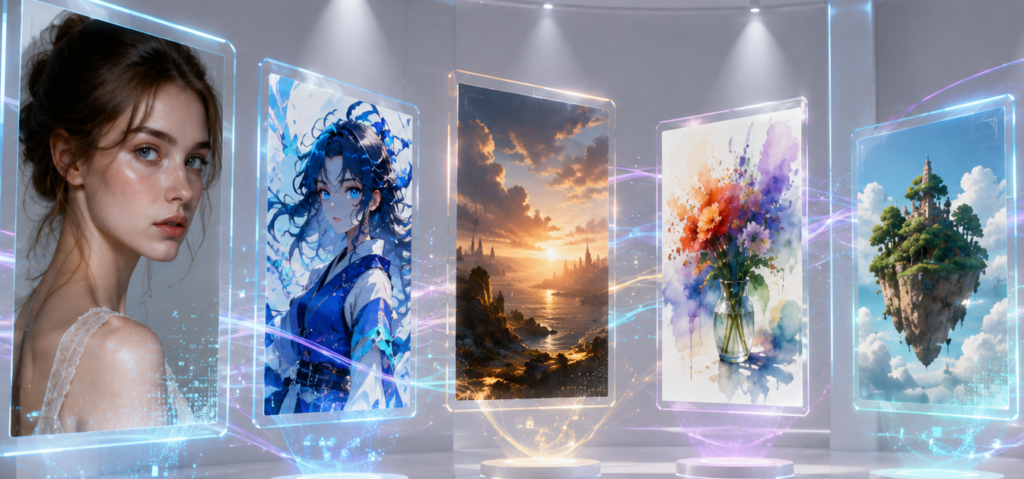
Not that long ago, bringing a visual idea to life was a grind. Best AI Image You either had to spend hours tweaking vector paths, setting up lighting for a photo shoot, scrubbing through hundreds of mediocre stock photos, or sketching dozens of drafts before landing on something usable.
Today, generative Best AI Image AI has turned that timeline on its head.Best AI Image A process that used to consume entire afternoons now happens in seconds.
But the real story isn’t about raw speed; it’s about momentum.
AI image generators aren’t here to replace human vision—they are built to eliminate friction. Best AI Image They act as tireless visual brainstorming partners, taking over the repetitive grunt work and allowing designers, marketers, and artists to iterate faster, try weirder ideas, and see immediate drafts of what used to live only in their heads.
Whether you’re a solo freelancer, an in-house designer, or a marketing manager trying to scale up your brand’s assets, finding the right tool boils down to how you actually prefer to work.Best AI Image Here is a realistic look at where the technology stands today and the platforms worth your time.
What Actually Happens Under the Hood?
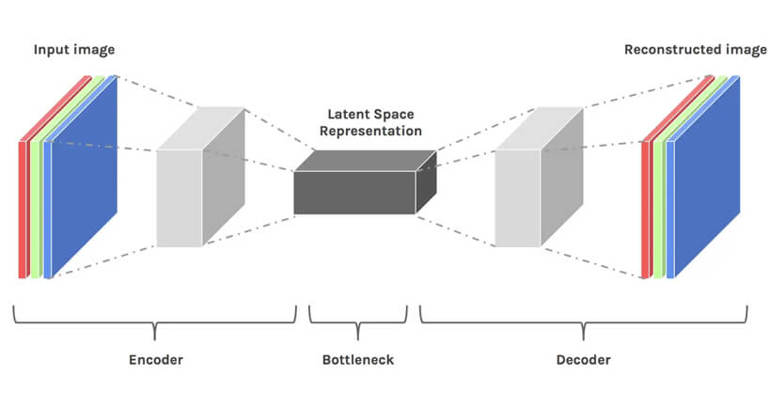
Strip away the marketing terminology, and an AI image generator is essentially a translator. Best AI Image You describe a scene—the subject, the lighting, the mood, the camera angle—and the software uses deep learning models (mostly diffusion architectures) to reconstruct that description as a fresh visual.
These models were trained on massive datasets of paired images and descriptive text. Best AI Image Through millions of training cycles, the AI learned the visual mechanics of the world: what direct sunlight looks like reflecting off wet asphalt, how watercolor bleeds into heavy paper, or how atmospheric perspective softens a mountain range.
When you type a prompt, the model doesn’t just cut and paste existing pictures. It starts with a canvas of random digital noise and progressively cleans it up, shaping that noise step-by-step until a coherent, detailed image emerges.
Where This Actually Fits Into Daily Work
- Advertising & Marketing: Testing creative concepts for campaigns without committing budget to a full production shoot upfront.
- Game Art & Film: Drafting quick environment concepts, storyboard frames, and character silhouettes during pre-production.
- E-Commerce: Generating contextual lifestyle backgrounds around clean product renders.
- Publishing & Editorial: Creating custom article headers and editorial artwork tailored to niche topics.
- Architecture & Interiors: Building mood boards and lighting concepts for client presentations.
The Best AI Image Generators in 2026 (And Who They’re Actually For)
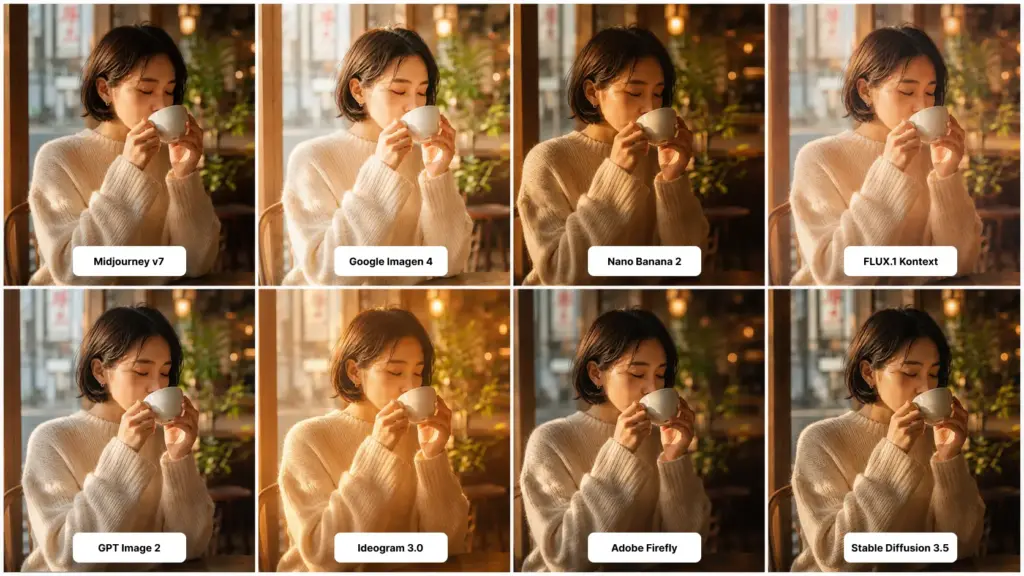
ChatGPT Image Generation
- The Vibe: Conversational, effortless, and versatile.
- Why It Works: You don’t need to learn complicated prompt syntax or “cheat codes.” You talk to it like a colleague. If the initial render isn’t quite right, you simply type, “Make the lighting a bit warmer and move the character to the left,” and it understands the context of the conversation.
- Best For: Content writers, bloggers, and generalists who want to generate matching visuals directly within their writing workspace.
Adobe Firefly
- The Vibe: Safe, precise, and built for professional pipelines.
- Why It Works: Firefly’s biggest selling point is copyright peace of mind. It’s trained on Adobe Stock and public domain content, making it natively safe for enterprise commercial work. Plus, because it’s embedded directly into Photoshop and Illustrator (via tools like Generative Fill), it feels like a natural extension of standard design workflows rather than a separate app.
- Best For: Professional graphic designers, agencies, and corporate teams who need granular control and total legal clearance.
Midjourney
- The Vibe: Raw artistic style and cinematic flare.
- Why It Works: Midjourney remains the undisputed champion for aesthetic beauty. Out of the box, its lighting, textures, and compositions look painterly and intentional, avoiding the glossy “synthetic” look that plagues cheaper engines. It takes a bit of getting used to—operating mainly through Discord and a web app with specific parameter flags—but the visual payoff is unmatched.
- Best For: Concept artists, visual storytellers, and digital illustrators looking for high-end aesthetic inspiration.
Google Imagen
- The Vibe: Realistic physics, crisp text, and clean enterprise integration.
- Why It Works: Google’s model excels at spatial relationships, believable textures (like skin, fabric, or water droplets), and rendering legible text on signs, packaging, and labels. It connects natively into Google Workspace, making it easy to pull visual assets right into Slides or Docs.
- Best For: Presentation designers, developers, and corporate teams looking for grounded, photorealistic imagery.
Canva AI
- The Vibe: Fast, accessible, and template-ready.
- Why It Works: Canva takes the friction out of the post-generation process. Instead of downloading a standalone image and importing it elsewhere, you generate visuals directly inside your layout, social post, or pitch deck. Paired with Canva’s Magic Studio tools (one-click background removal, object erasing, and quick resizing), it’s an efficiency monster.
- Best For: Social media managers, small business owners, and non-designers who need finished graphics fast.
Ideogram
- The Vibe: The master of typography and vector-style graphics.
- Why It Works: Historically, AI generators struggled terribly with text, yielding scrambled gibberish. Ideogram changed that. It renders clean, correctly spelled, stylized typography inside complex designs. It’s a game-changer for posters, apparel prints, badges, and logo concepts.
- Best For: Merch creators, poster artists, and branding designers who need text integrated into their visual art.
Leonardo AI
- The Vibe: Production-grade control for game and asset design.
- Why It Works: Leonardo gives you the keys to the engine. You can select specific fine-tuned models, train your own models on custom brand styles or character sheets, and use advanced tools like pose control or texture generation.
- Best For: Game developers, UI designers, and concept artists who need consistent style across an entire asset library.
Stable Diffusion
- The Vibe: Open-source, local control, and endless customizability.
- Why It Works: Stable Diffusion is for tinkerers and technical creators. Because you can run it locally on your own graphics card, you get complete privacy, zero subscription costs, and total freedom. You can plug in custom ControlNets, LoRAs, and node-based interfaces like ComfyUI to direct every pixel.
- Best For: Developers, technical artists, and privacy-focused creators who want zero platform restrictions.
Best AI Image Quick Reference Guide
| Tool | Primary Focus | Learning Curve | Standout Feature |
| ChatGPT | Daily content & ideas | Very Low | Natural conversational tweaks |
| Adobe Firefly | Commercial design work | Low | Commercial safety & Photoshop integration |
| Midjourney | High-end artistic imagery | Medium | Unmatched lighting and painterly aesthetics |
| Canva AI | Social media & marketing | Very Low | Direct editing within design layouts |
| Google Imagen | Realism & typography | Low | Accurate physics and clean text rendering |
| Leonardo AI | Game & character assets | Medium | Custom model training and style consistency |
| Ideogram | Logos, merch, & posters | Low | Perfect text rendering within graphics |
| Stable Diffusion | Total local control | High | Open-source with unlimited customization |
How to Get Useful Results Best AI Image (Without Fighting the AI)
Best AI Image Generating great art with AI isn’t about memorizing magic buzzwords like “hyperrealistic 8k render.” It’s about giving the model clear, descriptive context.
- Focus on the Subject First: Start with a concrete anchor. Best AI Image Rather than asking for “a cat in a room,” try “an elderly tabby cat sleeping on a sunlit velvet armchair.”
- Define the Medium: Tell the AI what kind of art it’s making. Is it a 35mm film photograph, an oil painting with heavy impasto brushstrokes, a minimalist vector illustration, or a charcoal sketch?
- Describe the Light: Lighting sets the mood faster than anything else.Best AI Image Mention “dramatic side-lighting,” “soft overcast morning light,” “neon glow,” or “golden hour sun flare.”
- Direct the Camera: Guide the framing like a director. Specify a “macro close-up,” “a wide-angle eye-level shot,” “an isometric 3D view,” or “a top-down flat lay.”
- Iterate Incrementally: Don’t throw 50 descriptors into your first prompt. Start simple, evaluate the output, and add details to steer the next iteration.
Best AI Image Keeping It Real: The Constraints to Keep in Mind
Best AI Image While the tech is impressive, it isn’t magic, and it comes with real-world limitations you need to plan around:
- The “Almost Right” Problem: Getting an image that is 90% accurate is easy. Getting that final 10%—like a specific hand posture, exact brand color matching, or repeating intricate patterns—still requires manual polish or image editing software.
- Character Consistency: Making the exact same character appear across ten different storyboards or comic panels takes patience and specialized workflows (like reference images or custom models).
- Ethical & Legal Rules: Copyright precedent around AI-generated art is still evolving worldwide. If you’re publishing high-stakes commercial campaigns, sticking to ethically trained tools like Adobe Firefly or verified commercial licenses is essential.
- Human Oversight is Mandatory: Raw AI outputs frequently contain subtle glitches—floating artifacts, extra fingers, or unnatural shadows. A human eye needs to curate, check, and refine the work before it goes live.
FAQ’S
1. What is the best AI image generator for designers in 2026?
The best AI image generator depends on your needs. Adobe Firefly is ideal for professional designers, Midjourney excels at artistic visuals, Canva AI is great for beginners, and ChatGPT Image Generation is excellent for creating and editing images from natural language prompts.
2. Can AI image generators create commercial-use images?
Many AI image generators support commercial use, but licensing varies by platform. Always review the tool’s terms of service and commercial usage policy before using AI-generated images for business or client projects.
3. Are AI image generators suitable for beginners?
Yes. Tools like Canva AI, ChatGPT Image Generation, and Microsoft Designer offer user-friendly interfaces that make it easy for beginners to create professional-quality images without advanced design skills.
4. How can designers write better prompts for AI image generators?
Use clear and detailed prompts that describe the subject, style, colors, lighting, composition, and desired quality.
5. Will AI image generators replace graphic designers?
No. AI image generators are designed to enhance creativity and speed up workflows, but human designers remain essential for creative direction, branding, storytelling, strategic thinking, and producing polished, original designs.