
If you’ve spent any time reading tech headlines lately, you’ve probably heard two competing narratives:AI & Automation either AI & Automation Powerful Ways to Transform Business & Everyday Work artificial intelligence is coming for everyone’s job tomorrow, or it’s a overhyped buzzword that only generates generic emails and weird images.
The truth on the ground is much more boring—and much more interesting.
The biggest shift isn’t about AI replacing humans or acting as a magical silver bullet.AI & Automation It’s about a quiet, practical rewrite of daily operations. We are moving away from treating AI like a glorified search engine or a clever novelty and toward using it as glue—connecting scattered software, automating repetitive handoffs, and absorbing the low-level administrative tax that burns out teams every single day.
Whether you run a business, lead a small team, or just want to stop spending four hours a week copying data between spreadsheets, here is how to navigate automation without falling for the hype.
Stop Buying Tools; Start Fixing Broken Processes AI & Automation
The single biggest mistake organizations make with automation is rushing to buy software before understanding their own chaos.
If a process is confusing, bloated, or broken when a human does it, automating it just means you’ll break things faster.
Before you touch an AI tool, map out the friction:
- Where does work sit around waiting for someone to click “approve”?
- What information gets manually re-typed from one app to another?
- Which questions do your customers or colleagues ask three times a day?
Rule of thumb: Simplify first. Standardize second. Automate last.
Where AI and Automation AI & Automation Actually Deliver Value

Forget the sci-fi promises for a moment. AI & Automation The places where intelligent automation pays off right now are usually unglamorous, repetitive, and deeply practical.
┌─────────────────────────────────────────────────────────────────┐
│                    THE HIGH-VALUE SWEET SPOT                    │
├────────────────────────────────┬────────────────────────────────┤
│      WHAT AI DOES BEST         │     WHAT HUMANS MUST OWN       │
├────────────────────────────────┼────────────────────────────────┤
│ • Pattern recognition          │ • Context & nuanced judgment   │
│ • First-draft generation       │ • Strategic decision-making    │
│ • Sorting & categorizing data  │ • Relationship building        │
│ • Coordinating multi-app tasks │ • Empathy & crisis negotiation │
│ • Summarizing long inputs      │ • Final quality control        │
└────────────────────────────────┴────────────────────────────────┘
Administrative Drag
Drafting routine follow-ups, organizing meeting notes, categorizing expense receipts, and updating CRM records aren’t hard—they’re just tedious. Offloading the first draft of these tasks gives people back the mental energy required for actual deep work.
Customer Operations
Instead of forcing customers to wait 24 hours for a basic answer about an order status or business hours, intelligent systems can handle routine tier-one queries instantly.AI & Automation The key is setting up smooth handoffs: the moment a customer is frustrated, confused, or dealing with a complex issue, the system should route them to a human with full context already attached.
Data Synthesis
Most teams don’t suffer from a lack of data; they suffer from a flood of it. Instead of drowning in endless spreadsheets, intelligent tools excel at skimming thousands of rows of data to highlight anomalies, spot trends, or draft a three-bullet summary of a 50-page report.
Sales and Marketing Operations
Instead of using AI to spam the internet with low-quality, generic blog posts, smart teams use it as an internal researcher. It can summarize prospect news before a sales call, outline content strategies based on user feedback, or turn a recorded video interview into transcripts, social summaries, and newsletter drafts.
The Rise of “Agents” (And What It Actually Means for You)
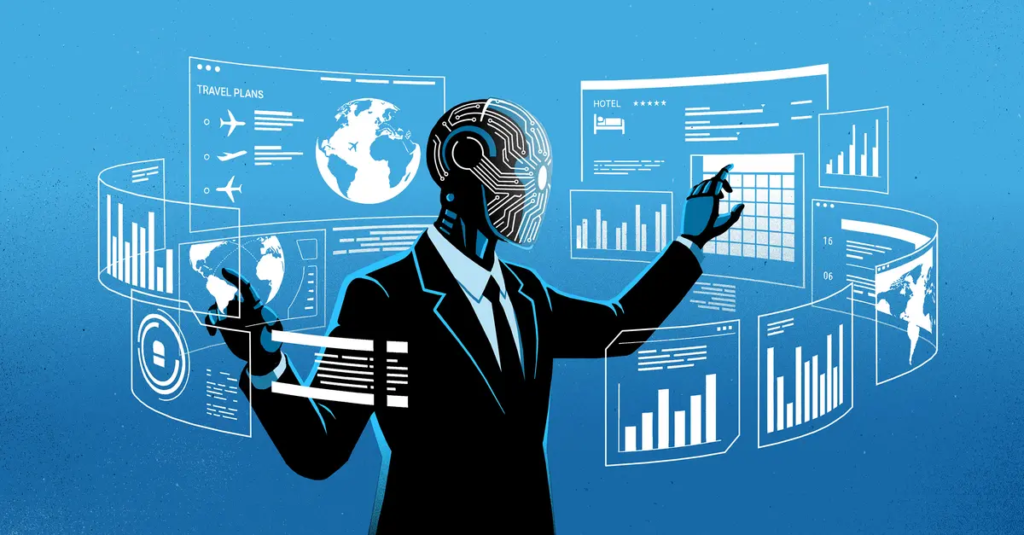
You’ll hear a lot of talk about “AI Agents.” Strip away the marketing jargon, and here is what it actually means:
- Old Automation: Rigid, rule-based logic. If an email arrives with an invoice attached, then save it to a Google Drive folder. If anything deviates slightly, the whole chain breaks.
- Agentic Workflows: Goal-oriented execution. You give the system an outcome—“Find all unpaid invoices from last month, match them against our accounting ledger, and draft reminder emails for any that are overdue.” The system figures out the intermediate steps, works across different apps, and presents you with the finished drafts to review.
Instead of humans manually jumping between ten browser tabs to complete one project,AI & Automation we are moving toward a model where people manage the system, set the rules, and review the output. You become the director rather than the data entry clerk.
The Hidden Pitfalls Nobody Mentions AI & Automation

Automation isn’t free magic; it comes with real trade-offs that require active AI & Automation management.
- The Accuracy Trap: Language models operate on probability, not ground truth. They make confident mistakes. Any automated workflow that touches legal compliance, financial movement, or high-stakes customer communication must have a human reviewer in the loop.
- The Context Gap: Software doesn’t understand your company’s unwritten culture, implicit promises, or sensitive client dynamics. It lacks intuition.
- Security & Permissions: Connecting AI systems to internal databases means you need strict guardrails on who—and what—can access sensitive employee or financial records.
- The “Lazy Content” Backfire: Pushing out raw, unedited AI-generated content might save time in the short term, but it destroys trust with your audience almost instantly. Originality, tone, and human perspective are more valuable now, not less.
A Practical Blueprint for Getting Started

If you want to introduce meaningful automation to your workflow without creating a chaotic mess, follow this playbook:
- Pick One Friction Point: Find the single task your team complains about the most. Make sure it’s low-risk and highly repetitive.
- Define Success: Are you trying to save two hours a week, reduce data errors, or respond to leads in five minutes instead of two hours? Pick a concrete metric.
- Build the Draft, Keep the Rubber Stamp: Design the workflow so the AI does 80% of the heavy lifting (researching, drafting, organizing), but leaves the final 20% (approval, sending, signing off) to a human.
- Iterate and Expand: Run the automated process alongside your old manual way for two weeks. Tweak the instructions, fix the edge cases, and once it runs smoothly, move on to the next process.
Frequently Asked Questions
1. What is AI automation?
AI automation combines artificial intelligence with automated workflows to perform tasks, analyze information, and complete processes with less manual effort.
2. Why is AI and automation important in 2026?
AI and automation are becoming important because they can help businesses save time, streamline repetitive work, improve productivity, and deliver faster customer experiences.
3. How can AI automation help businesses?
Businesses can use AI automation for customer service, marketing, sales, data analysis, scheduling, reporting, document processing, and many other repetitive workflows.
4. What are the best uses of AI automation?
Some popular uses include automating repetitive administrative tasks, creating content, analyzing data, managing customer inquiries, generating reports, and assisting with sales and marketing workflows.
5. Can small businesses use AI automation?
Yes. Small businesses can use AI automation for tasks such as scheduling, customer communication, lead management, marketing, content creation, and basic data analysis without needing a large technology team.