
Artificial intelligence and automation are changing the way businesses operate, compete, and grow. What once seemed like advanced technology reserved for large corporations is now becoming accessible to businesses of all sizes. From automating repetitive tasks to improving customer experiences and analyzing business data, AI and automation can help organizations work more efficiently and make better decisions.
However, adopting new technology is not simply about using the latest tool. Successful businesses focus on identifying real problems, choosing practical solutions, and using technology in a way that supports long-term goals. This guide explains how AI and automation can support business growth, improve productivity, reduce unnecessary work, and create new opportunities.
What Are AI and Automation?
Artificial intelligence refers to technology that can perform tasks that traditionally require human intelligence. These tasks may include understanding language, analyzing information, recognizing patterns, making predictions, and generating content.
Automation involves using technology to complete tasks with little or no manual involvement. Automation can be simple, such as sending an automatic email response, or more advanced, such as using AI to analyze customer behavior and recommend next steps.
When combined, AI and automation can help businesses complete tasks faster and more intelligently. Automation handles repetitive processes, while AI can help systems understand information, identify patterns, and support decision-making.
Why AI and Automation Matter for Business Growth
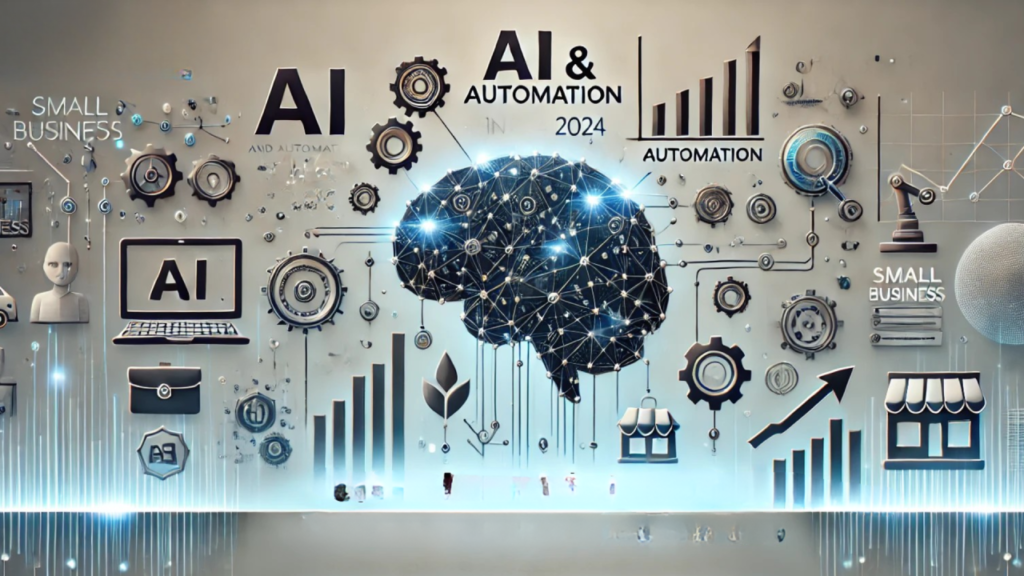
Why AI and Automation Matter for Business Growth
Business growth depends on many factors, including productivity, customer satisfaction, operational efficiency, and the ability to adapt to change. AI and automation can support all of these areas.
One of the biggest advantages is time savings. Employees often spend hours on repetitive tasks such as data entry, scheduling, reporting, email management, and document processing. Automating these activities can give employees more time to focus on creative work, customer relationships, problem-solving, and strategic planning.
AI can also help businesses analyze large amounts of information more efficiently. Instead of relying only on manual reports, companies can use AI-powered systems to identify trends, understand customer behavior, and support faster decision-making.
Automating Repetitive Business Tasks
Many businesses begin their automation journey by identifying repetitive tasks. These tasks may not require complex decision-making, but they can consume significant amounts of time.
Examples include:
- Sending appointment reminders
- Organizing customer information
- Creating routine reports
- Managing invoices
- Updating spreadsheets
- Scheduling meetings
- Sending email notifications
- Processing basic forms
Automating these tasks can improve consistency and reduce the risk of human error. Employees can then focus on work that requires communication, creativity, judgment, and personal attention.
The best approach is to start small. Businesses do not need to automate every process at once. Choosing one time-consuming process and improving it can create immediate value.
AI for Marketing and Customer Engagement

Marketing is one of the areas where AI and automation can provide significant benefits. Businesses can use AI tools to analyze customer interests, identify trends, and create more personalized marketing campaigns.
Automation can help manage email campaigns, social media scheduling, customer follow-ups, and lead nurturing. For example, a potential customer who downloads information from a website may automatically receive a series of helpful follow-up emails.
AI can also help businesses understand which marketing campaigns are performing well. By analyzing data such as website traffic, customer engagement, and conversions, businesses can make more informed decisions about where to focus their marketing efforts.
The most effective use of AI in marketing is not about replacing human creativity. Instead, it can support marketers by reducing repetitive work and helping them understand their audience more effectively.
Improving Customer Service with AI
Customers expect quick, helpful, and convenient support. AI-powered chatbots and automated customer service systems can help businesses respond to common questions at any time.
For example, an automated system may answer questions about:
- Business hours
- Product information
- Order updates
- Appointment availability
- Basic account questions
- Frequently asked questions
When a question requires human judgment or personal attention, the system can direct the customer to a member of the support team.
This approach can reduce waiting times while allowing employees to focus on more complex customer needs. However, businesses should make sure automation does not make customer service feel impersonal. A combination of technology and human support often provides the best experience.
AI and Automation in Sales

Sales teams can also benefit from automation. Customer relationship management systems can automatically organize customer information, track interactions, and remind sales representatives about follow-ups.
AI can help sales teams identify potential customers who may be more likely to make a purchase. It can also help analyze customer behavior and suggest possible next steps.
Automated systems can assist with lead scoring, email follow-ups, appointment scheduling, and sales reporting. These tools can help sales professionals spend less time managing administrative tasks and more time building relationships.
The goal is not to remove the human element from sales. Strong communication and trust remain important. AI and automation simply help sales teams work more efficiently.
Using AI for Business Data and Decision-Making
Modern businesses generate large amounts of data. This information may come from sales, websites, customer interactions, marketing campaigns, financial systems, and other sources.
AI can help businesses identify patterns within this information. For example, a company may use data analysis to understand which products are most popular, which customers are most engaged, or which marketing channels generate the strongest results.
Better access to information can support more informed decision-making. Instead of relying entirely on assumptions, business leaders can use data to identify opportunities and potential problems.
However, data quality is extremely important. AI systems are only as useful as the information they receive. Businesses should make sure data is accurate, organized, and handled responsibly.
Improving Productivity Across the Workplace
Productivity is not simply about completing more tasks. It is about using time and resources effectively.
AI tools can support productivity by helping employees organize information, summarize documents, generate ideas, manage schedules, and complete routine work. Automation can connect different business systems so information moves between them without requiring constant manual effort.
For example, when a customer completes an online form, automation may transfer the information into a customer database and notify the appropriate team member. This reduces unnecessary manual data entry.
Small improvements across many processes can have a significant impact over time.
AI for Small Businesses
AI and automation are not only for large companies. Small businesses can also benefit from affordable and easy-to-use tools.
A small business might use automation for:
- Appointment scheduling
- Email marketing
- Customer support
- Invoicing
- Social media planning
- Inventory updates
- Lead management
Small businesses often have limited staff and resources, which makes efficiency especially important. Automating repetitive work can help small teams operate more effectively without significantly increasing costs.
The key is to choose tools that solve real business problems rather than adopting technology simply because it is popular.
Common Challenges of AI and Automation
Although AI and automation offer many benefits, businesses should also understand the potential challenges.
One challenge is choosing the right technology. With so many tools available, it can be difficult to determine which solution is actually useful.
Another concern is data privacy and security. Businesses must handle customer and company information responsibly and follow applicable privacy requirements.
Employee training is also important. New systems may require time and support before employees become comfortable using them.
Finally, automation should be monitored regularly. A process that works well today may need updates as business needs change.
How to Start an AI and Automation Strategy

Businesses can begin with a simple step-by-step approach.
First, identify repetitive or time-consuming tasks. Ask employees which processes take the most time or create the most frustration.
Next, identify the business goal. Do you want to save time, improve customer service, increase sales, reduce errors, or improve data analysis?
Then, choose a practical tool that matches the goal. Avoid selecting technology simply because it has many features. The best solution is often the one that is easy to use and solves a specific problem.
After implementation, measure the results. Look at time saved, productivity improvements, customer satisfaction, cost changes, or other relevant business metrics.
Finally, continue improving the process. AI and automation should be viewed as ongoing business tools rather than one-time projects.
The Future of AI and Automation in Business
The role of AI and automation is expected to continue growing. Businesses will increasingly use intelligent tools to support customer service, marketing, operations, finance, sales, and decision-making.
However, the future of business is unlikely to be based on technology alone. Human creativity, communication, leadership, and critical thinking will remain extremely valuable.
The most successful businesses will likely combine the strengths of people and technology. AI can process information quickly, automate repetitive tasks, and identify patterns. People provide judgment, empathy, creativity, and strategic thinking.
Final Thoughts
AI and automation are powerful tools for businesses looking to improve productivity and support growth. They can reduce repetitive work, improve customer experiences, support data-driven decisions, and help teams focus on higher-value activities.
The best results come from a practical and thoughtful approach. Businesses should begin with real problems, choose suitable tools, protect important data, train employees, and measure results.
AI and automation do not need to transform an entire business overnight. Even small improvements can create meaningful benefits when they are applied consistently. By using technology strategically while keeping people at the center of the business, organizations can build more efficient, flexible, and competitive operations for the future.
5 Short FAQs
1. How can AI help businesses grow?
AI can improve productivity, analyze data, support customers, and help businesses make better decisions.
2. What business tasks can be automated?
Repetitive tasks such as scheduling, reporting, email follow-ups, data entry, and invoicing can often be automated.
3. Is AI automation useful for small businesses?
Yes. Small businesses can use AI and automation to save time, reduce manual work, and improve efficiency.
4. Can AI improve customer service?
Yes. AI chatbots and automated systems can provide quick answers and support for common customer questions.
5. How should a business start using AI and automation?
Start by identifying a repetitive business task and choose a practical tool that solves a specific problem.