
Learning how to manage money Finance can feel completely overwhelming at first. One minute you are trying to cover your everyday expenses, and the next you are told you need to save for an emergency fund, pay off student loans, and somehow plan for a future that feels a lifetime away. When everything hits you at once, it is easy to feel paralyzed. The common misconception is that to get your finances in order, you need a background in accounting, a complex understanding of economics, or expensive premium software.
The reality is much kinder. You do not need a paid subscription or a math degree to take absolute control of your financial life. Today, there is an entire world of free finance tools designed specifically for beginners. These resources are built to simplify your daily routine, demystify where your hard-earned money is going, and help you build better habits for Finance without adding a drop of extra stress to your day. Money management does not have to feel like a second job; with the right approach, it can become a simple, empowering habit that gives you total peace of mind.
Why Free Finance Tools Matter for Beginners

When you decide to get serious about your money, it is tempting to think you need the most advanced tools available. You might imagine yourself building massive, color-coded spreadsheets from scratch or paying for a top-tier financial app. However, jumping straight into the deep end often causes more harm than good. Free finance tools matter because they strip away the unnecessary complexity and give you exactly what you need to start making better decisions right now.
For a beginner, the biggest hurdle is simply seeing the big picture. Free Finance tools allow you to view your income and your outgoings in one clear space. They help you naturally notice the difference between your absolute necessities and your impulsive spending habits. More importantly, they take the vague, heavy anxiety of financial uncertainty and transform it into clear, actionable data. When you stop guessing about your balance and start seeing the actual numbers, the fear begins to fade.
Furthermore, free tools provide a safe space to experiment. When you are trying to figure out what style of budgeting works best Finance for your personality, the last thing you want is a recurring monthly subscription fee pressuring you to get it right immediately. Free platforms give you the grace to try manual tracking, test automated categorization, or use simple visual goals without any financial risk. In the world of personal finance, consistency is far more important than intensity. A basic, free tool that you enjoy opening every week will always do more for your financial health than an expensive, feature-heavy app that you avoid out of guilt.
Budgeting Tools That Make Money Finance Management Simple
Budgeting has an unfortunate reputation for being restrictive, boring, and punitive. Many people view a budget as a financial prison sentence that forbids them from enjoying life. In truth, a budget is nothing more than a roadmap. It does not tell you that you cannot spend money; it simply gives you the power to decide exactly where your money goes before it leaves your hands.
Free budgeting tools are designed to make this roadmap incredibly easy to build. Instead of staring at a blank piece of paper wondering where to start, these tools guide you through the process of listing your regular income and mapping out your expenses. They take the guesswork out of the math, automatically calculating what you have left over after your non-negotiable bills are covered.
One of the greatest benefits of using a dedicated budgeting tool is the clarity it provides regarding fixed versus flexible expenses. Fixed expenses—like your rent, car insurance, or basic utility bills—are steady anchors in your life. They rarely change from month to month, making them easy to plan around. Flexible expenses, however, are where most people lose control. Grocery bills, dining out, weekend entertainment, and shopping sprees can fluctuate wildly. A good free budgeting tool highlights these fluctuations, helping you see patterns and adjust your behavior before you accidentally overspend.
Expense Trackers That Reveal Spending Habits For Finance

Have you ever looked at your bank account at the end of a long week and wondered where all your money went? You know you did not buy anything extravagant, yet your balance is precariously low. This is the classic “leaky bucket” phenomenon, and it happens to almost everyone. Small, daily purchases have a sneaky way of accumulating. A morning coffee run, an impulsive online checkout, or a quick rideshare trip might only cost a few dollars in the moment, but over a month, they can quietly eat away a massive portion of your income.
This is exactly why free expense trackers are so revolutionary for beginners. An expense tracker does not judge your choices; it simply acts as a mirror for your daily habits. By keeping a running log of every single dollar that leaves your account, you develop a deep sense of self-awareness.
When you look at a summary of your weekly spending, you stop guessing and start knowing. You might discover that you are spending three times more on food delivery than you realized, or that forgotten digital subscriptions are draining your account every month. This realization is not meant to make you feel bad. Instead, it gives you the power to ask yourself honest questions: Am I actually getting value from this purchase, or am I just spending out of habit, boredom, or stress? The moment you identify a pattern, you gain the ability to change it.
Savings Tools That Help You Build Momentum
Saving money is universally acknowledged as a smart move, but actually doing it can feel incredibly difficult. Human psychology is wired to appreciate immediate rewards over future stability. Buying something fun today feels great right now, whereas putting money into a savings account can feel like you are depriving yourself of enjoyment. Free savings tools help bridge this gap by making the savings process visual, interactive, and rewarding.
When you use a savings tool, you are no longer just putting money into a vague, empty account. Instead, you are funding specific, tangible life goals. Whether you want to build a three-month emergency fund, save for a summer vacation, buy a new laptop, or plan for a down payment on a home, these tools let you break down large targets into bite-sized milestones.
Seeing a visual progress bar fill up as you add money creates a genuine psychological boost. It builds momentum. You start to realize that even if you can only afford to save ten or twenty dollars a week, those small contributions are actively moving the needle. Over time, watching that progress bar grow becomes more satisfying than making an impulsive purchase. By turning saving into a game of steady progress, free tools help you build a sustainable routine that lasts a life time.
Debt Management Tools for Clearer Progress
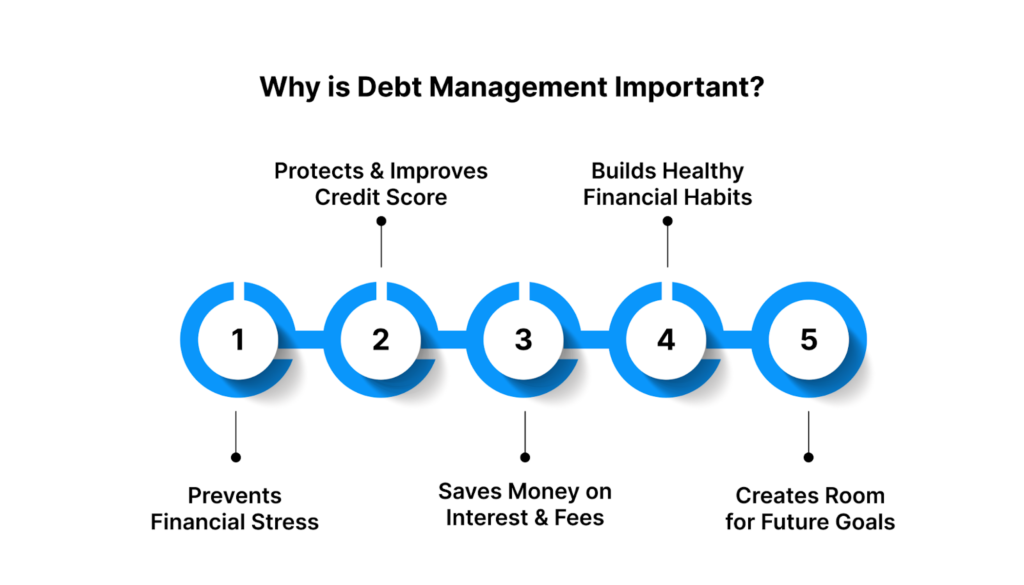
Carrying debt can feel like a heavy weight on your shoulders. It is not just the financial strain that hurts; it is the mental exhaustion of trying to balance multiple credit card statements, student loan balances, varying interest rates, and different monthly due dates. When you feel overwhelmed by debt, it is incredibly easy to ignore the problem entirely, which only causes interest to accumulate further.
Free debt management tools are specifically designed to cut through this chaos. They act as a central command station for your repayment journey. By allowing you to input all your balances, interest rates, and minimum payments in one centralized location, these tools strip away the emotional dread and replace it with a logical, step-by-step strategy.
Once your information is entered, a debt management tool can model different payoff methods, such as the debt snowball (focusing on the smallest balances first for quick psychological wins) or the debt avalanche (focusing on the highest interest rates first to save money over time). Seeing a concrete timeline of exactly when you will be debt-free provides immense emotional relief. Every time you make a payment and watch your total debt balance shrink, you gain a powerful surge of motivation to keep going.
Net Worth Trackers That Show the Bigger Picture
When people think about their financial health, they usually check their day-to-day checking account. While that balance is important for buying groceries, it only tells a tiny fraction of your financial story. To truly understand whether your financial life is improving, you need to look at your net worth.
Your net worth is a simple mathematical equation: everything you own (your assets) minus everything you owe (your liabilities). If you have $2,000 in savings but owe $5,000 on a credit card, your net worth is negative $3,000. For many beginners, seeing a negative net worth can be startling at first. However, tracking this number over time is one of the most encouraging things you can do.
Free net worth trackers allow you to easily update your balances once a month. As you pay down your debts and slowly build up your savings or investments, you will watch your net worth steadily climb. Even if your checking account fluctuates wildly from week to week due to bills, your net worth tracker will show the steady upward trajectory of your hard work. It shifts your focus away from short-term survival and trains your mind to think like a long-term builder of financial security.
Goal-Setting Tools That Keep You Motivated

Without clear direction, even the best financial intentions will eventually fizzle out. If your only goal is to “be better with money,” it is incredibly difficult to know if you are actually succeeding. Free goal-setting tools help beginners transform vague wishes into highly structured, achievable milestones.
A great goal-setting tool encourages you to make your financial ambitions specific, measurable, and time-bound. Instead of a floating thought in your head, your goal becomes an interactive plan with a clear deadline and a target dollar amount.
Furthermore, these tools help you break down overwhelming long-term goals into manageable, short-term benchmarks. If you realize you need to save $5,000 for a reliable used car, that number might feel impossible today. But when a goal tool breaks that down into a target of $96 a week over the course of a year, the goal suddenly shifts from impossible to entirely doable. Reaching those smaller, weekly benchmarks keeps your motivation incredibly high and prevents you from drifting away from your plans.
Spreadsheet Templates and Calculators for Flexible Planning
While financial apps and automated trackers are fantastic, they are not for everyone. Some people prefer complete control over their data, while others find peace of mind in entering their numbers manually. If you fall into this category, free spreadsheet templates and online financial calculators are your perfect match.
Programs like Google Sheets offer an endless array of free, pre-made budgeting templates that do all the heavy mathematical lifting for you while leaving the aesthetic and structural design completely in your hands. Entering your expenses manually at the end of each day forces you to intimately engage with your financial choices, creating a powerful loop of mindfulness.
Online financial calculators are equally indispensable when you need quick, objective answers to complex questions. If you want to know how much an extra fifty dollars a month will shorten the lifespan of your auto loan, or how much your savings will grow over five years thanks to compound interest, a free online calculator can give you the answer in seconds. They take abstract financial concepts and make them instantly understandable, allowing you to test different scenarios before making a major financial decision.
How to Choose the Right Free Finance Tool
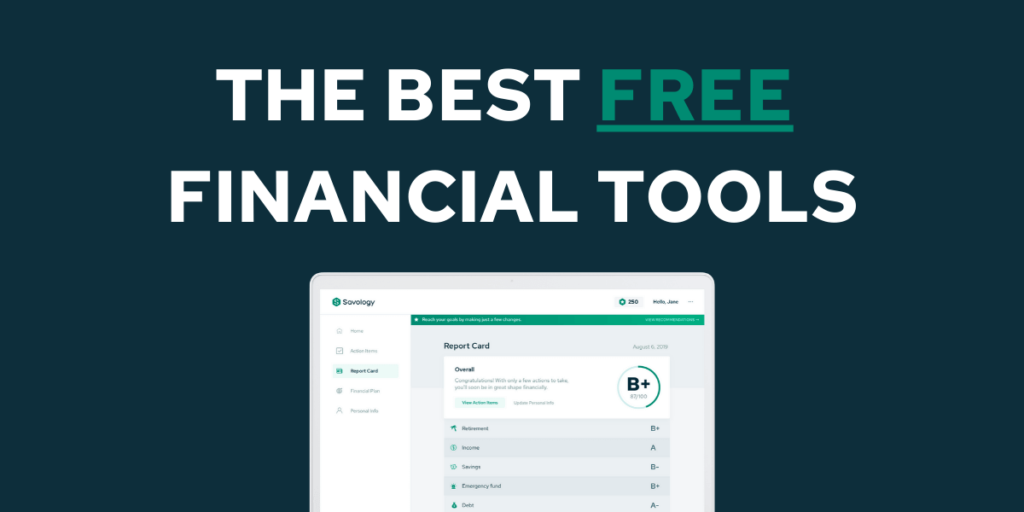
Because there are thousands of free financial resources available, it is incredibly easy to experience choice paralysis. You might feel tempted to download five different apps, open three spreadsheets, and try to use them all at once. This is a fast track to burnout. The best approach for any beginner is to start with your single most urgent pain point.
If your primary issue is that you run out of money before your next paycheck, focus exclusively on a simple budgeting or expense tracking tool. If your primary source of stress is credit card debt, skip the general wealth-building apps for now and focus solely on a debt repayment tracker. You do not need an entire digital suite to be successful; you just need one tool that solves your immediate problem.
When evaluating a tool, prioritize ease of use over complex features. If an app looks stunning but takes ten minutes of frustrating navigation just to log a purchase, you will eventually abandon it. The ideal tool should slide seamlessly into your existing daily routine without creating friction. Finally, always prioritize privacy and security. Opt for reputable, well-reviewed platforms, read their data-handling disclosures, and ensure you feel completely safe and comfortable with the system you choose.
Building Better Money Habits With Consistency
At the end of the day, the magic of personal finance does not live inside the code of an app or the cells of a spreadsheet. The real value of these free tools is their ability to change your daily behavior. Managing money is not a sprint; it is a marathon built upon small, repetitive actions.
When you make a habit of checking your budget before making a non-essential purchase, or logging your expenses every Sunday afternoon, your relationship with money undergoes a fundamental shift. You stop reacting to financial emergencies in a panic and start responding to your life with intentionality.
Do not expect your entire financial reality to change overnight. The goal of using these tools is not to reach perfection instantly, but to create a sustainable rhythm. Taking just five minutes a week to interact with your chosen tool will compound into massive results over the course of a year. Keep it simple, stay patient with yourself, and let the tools do the heavy lifting while you focus on building the routine.
The Long-Term Benefits of Starting Early
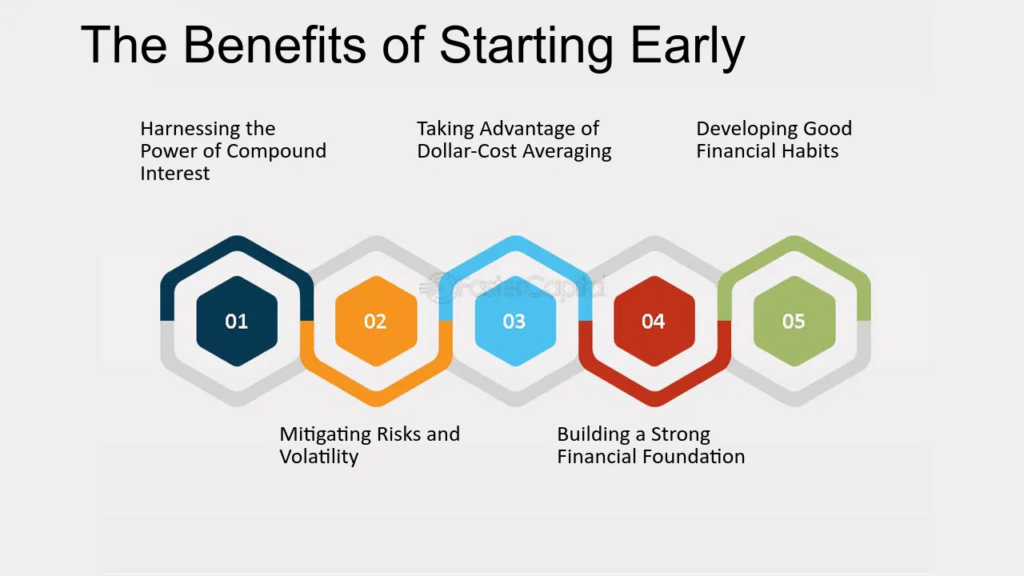
There is a profound sense of freedom that comes from mastering your finances early in life. The habits you establish today, no matter how small they might seem right now, will set the foundation for every decade that follows. By choosing to use free finance tools to organize your money today, you are giving a massive gift to your future self.
When you understand how money flows through your life, you are no longer at the mercy of unexpected financial storms. You build an emergency fund that transforms an unexpected car repair from a major life crisis into a minor inconvenience. You avoid the crushing cycle of high-interest consumer debt, and you learn how to live comfortably within your means without feeling deprived.
Ultimately, the greatest benefit of starting early with free finance tools is the confidence you build along the way. Money stops being a scary, mysterious force that controls your happiness, and instead becomes a practical tool that you control to build the life you want. Financial stability is not reserved for the wealthy or the naturally gifted; it is fully available to anyone willing to take that first simple step, download a free tool, and start looking at the numbers with clarity and courage.
FAQs
1.What is the best free finance tool for beginners?
The best free finance tool depends on your main goal. If you need help controlling spending, a budgeting tool is a strong place to start. If you want to understand your habits better, an expense tracker may be more useful. Beginners usually do best with tools that are simple, easy to use, and focused on one task.
2.Are free finance tools safe to use?
Many free finance tools are safe, especially when they come from trusted providers with clear privacy policies. It is important to check how the tool handles your data before connecting bank accounts or entering sensitive information. Beginners should choose tools with strong security features and reliable reviews.
3.Can I manage all my finances with free tools?
Yes, many people can manage most of their finances using free tools alone. Budgeting, tracking expenses, saving goals, and even debt planning can often be handled without paying for premium software. As your needs grow, you may decide to upgrade, but free tools are often enough to build a strong foundation.
4.How often should I check my finance tools?
For beginners, checking your finance tools once a week is often a good habit. This gives you enough time to spot spending patterns, review goals, and make small adjustments without feeling overwhelmed. Some people prefer daily check-ins, while others use monthly reviews. The best routine is the one you can stick to consistently.
5.Do I need financial knowledge to use these tools?
No, most free finance tools are designed for beginners and do not require advanced financial knowledge. In fact, many of them are built to help you learn as you go. They can make financial concepts easier to understand by turning numbers into simple visuals, summaries, and progress tracking.