Discover how AI and Automation are reshaping business, work, and daily life in 2026. This ultimate guide explores the latest trends, real-world applications, benefits, challenges, and future opportunities of intelligent technology.
It’s the chatbot that actually solves your missing-package crisis without making you scream “speak to an agent” into your phone. It’s the smart scheduling app that somehow knows you’re a zombie before 9:00 AM and protects your calendar. It’s the invisible logic quietly smoothing out the rough edges of almost every business you deal with.
ArtificAdvance Searchial Intelligence (AI) and automation are no longer upcoming tech trends to watch. They are the plumbing of our daily lives. They influence how we earn a living, how we talk to each other, and how entire industries scale up. But what does that actually mean for us on a human level? If we strip away the corporate buzzwords and marketing hype, what is the real story of how these tools are shifting our world?
Shifting from “Rules” to “Brains”
To understand why this moment feels different, we have to look at how the machinery underneath has evolved. For a long time, we had basic automation. It was helpful, sure, but it was incredibly rigid.
- The Rule-Based System: Think of traditional automation as a strict, slightly stubborn assistant. You tell it, “Every day at 5:00 PM, send this specific follow-up email.” It will do exactly that. It won’t think about it, it won’t care if it’s a major holiday, and it certainly won’t notice if your customers are completely ignoring those emails. It just follows a line of code blindly.
- The Learning System: This is where AI changes the game. Instead of just mindlessly watching the clock, an AI-powered system looks at the bigger picture. It says, “Hey, I noticed that most of your clients actually open emails around 10:30 AM on Tuesdays, and they seem to hit delete whenever we sound too formal. Let’s tweak the timing and soften the tone a bit.”
We have essentially moved away from machines that just do things based on instructions, and toward systems that can analyze, adapt, and iterate based on experience. It’s the difference between a music box that plays one tune over and over, and a musician who jams along with the rest of the band.
Why Everyone Is Obsessed with This Right Now
Why the massive rush to adopt these tools? It comes down to a very relatable human struggle: we are collectively drowning in information, and we are chronically short on time.
Every single day, organizations generate mountains of data—spreadsheets, customer feedback, inventory logs, sensor readings. It is way too much for any human team to read, let alone understand. AI acts like that unbelievably sharp colleague who can read a 500-page document in three seconds and hand you a sticky note with the only three insights that actually matter.
But more than that, it’s about offloading the grunt work. Nobody goes to school or starts a business because they dream of copying and pasting strings of text from one software program to another for five hours a day. It kills the spirit. By letting smart automation swallow those repetitive, mind-numbing chores whole, we get to save our energy for the creative, messy, strategic thinking that we are actually built for.
The Core Engines Driving the Shift
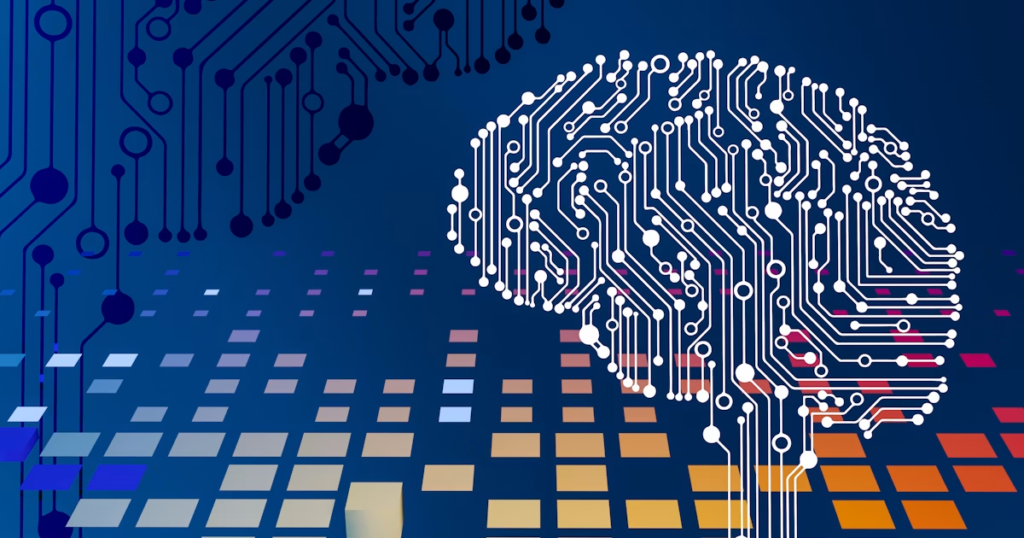
If you look under the hood of modern technology, you’ll find a few specific engines doing the heavy lifting. You don’t need a computer science degree to get how they work; you just need to see what they do for us.
Machine Learning (The Art of Finding Patterns)
At its core, machine learning is just a system looking at a massive pile of examples and figuring out the hidden patterns. It’s how streaming apps figure out what you want to watch next when you’re too tired to choose, how banks spot a fraudulent credit card charge before you even realize your wallet is gone, and how businesses predict next month’s sales trends.
Natural Language Processing (Talking Like Us)
For decades, humans had to learn to speak “computer”—writing code and using precise commands. Natural Language Processing flips that. It teaches computers to understand our messy, nuance-filled language. It’s what allows virtual assistants to get our context, power translation tools that feel natural rather than robotic, and run conversational customer support platforms.
Computer Vision (Teaching Machines to See)

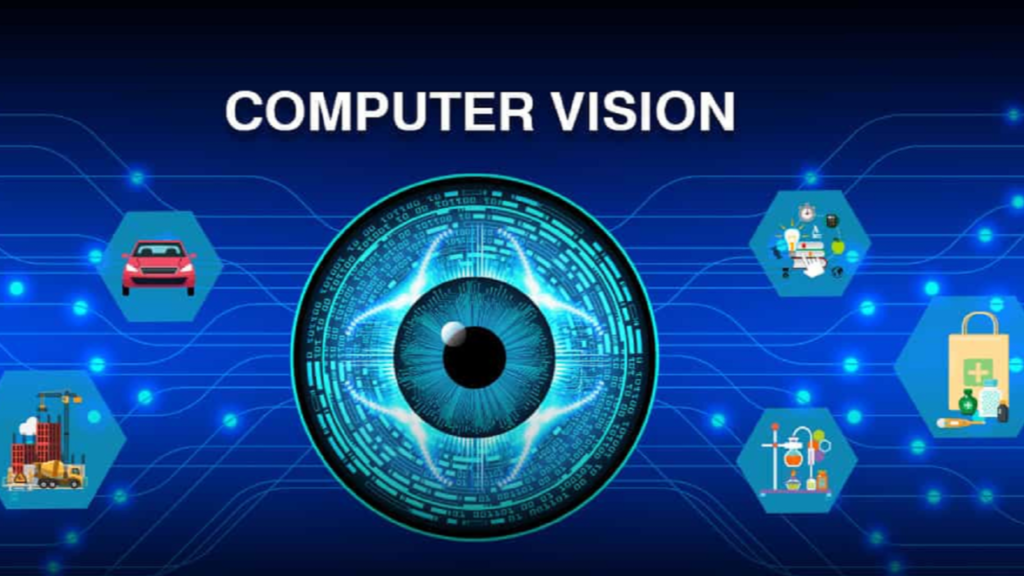
Computers used to be blind; they only understood text and numbers. Computer vision gives them eyes. By training systems on millions of images, they can learn to spot details in medical scans, recognize manufacturing defects on a fast-moving conveyor belt, and help autonomous vehicles navigate real-world streets safely.
Robotic Process Automation (The Digital Copy-Paster)
Often called RPA, this is the digital workforce that handles the invisible paperwork of the world. It takes over the structural, boring tasks—like moving an invoice from an email into an accounting software, or generating standard weekly reports—and executes them instantly without making typos.
Generative AI (The Creative Catalyst)
This is the one that has completely upended creative industries. Generative AI doesn’t just analyze what already exists; it creates new things from scratch. Whether it’s generating a rough draft of an article, rendering a concept design for a product, or writing functional software code, it has turned into the ultimate brainstorming partner for creators.
How This Looks on the Ground
We talk a lot about these technologies in the abstract, but they are altering the flavor of distinct industries right now.
+-------------------------------------------------------------------------+
|                        AI IN ACTION (2026)                              |
+------------------------------------+------------------------------------+
| HEALTHCARE                         | EDUCATION                          |
| • Flags anomalies in diagnostics   | • Tailors lessons to student pace  |
| • Handles paperwork & scheduling   | • Frees teachers to mentor kids    |
+------------------------------------+------------------------------------+
| MANUFACTURING                      | BUSINESS OPERATIONS                |
| • Predicts hardware breakdowns     | • Automates repetitive accounting  |
| • Optimizes complex supply chains  | • Powers 24/7 client support       |
+------------------------------------+------------------------------------+
The Changing Face of Healthcare

This isn’t about sci-fi robot doctors replacing the healing power of human touch. It’s about giving human doctors superhuman tools. Imagine a radiologist who has been on their feet for eleven hours. They’re exhausted. An AI tool running in the background can look at an MRI scan and instantly flag a tiny, microscopic anomaly that the tired human eye might slip right past.
Furthermore, it’s relieving the crushing weight of administrative paperwork. By automating patient records and billing cycles, nurses and doctors can spend less time staring at computer screens and more time actually looking their patients in the eye.
Individualized Education
The industrial-era model of school—where thirty kids sit in a room and are expected to learn the exact same thing, at the exact same speed, in the exact same way—has always left people behind. AI is beginning to break that down. Modern learning platforms can feel out how a specific student’s brain works. If a kid is struggling with fractions but flying through geometry, the system adapts, serving up tailored practice problems and alternative explanations. For educators, this means fewer hours spent grading multiple-choice sheets and more time spent stepping in as mentors when a student is genuinely stuck.
Reimagining the Factory Floor
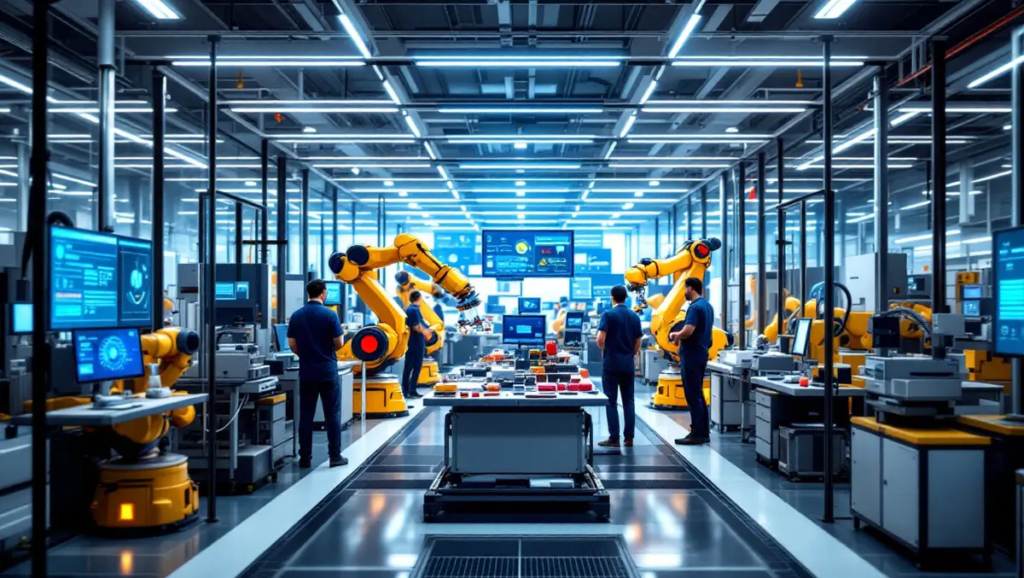
Manufacturing has used basic robotics for decades, but adding AI turns a standard assembly line into a living system. Smart factories use predictive maintenance. Instead of waiting for a vital machine to break down and halt production for two days, AI monitors the subtle vibrations and temperature shifts of the machinery. It flags the issue early, saying, “Hey, this bearing is going to fail in about forty-eight hours. Fix it during the night shift.” It saves millions of dollars and an incredible amount of logistical stress.
The Elephant in the Room: The Real Challenges
It is incredibly easy to get swept up in the glittering marketing presentations of technology companies. But if we are being completely honest with ourselves, this transition is painful, complicated, and full of friction. We have to look at the shadows this technology casts.
The Reality of Job Displaced Anxiety
We cannot sugarcoat this: when a machine can do a routine task faster, cheaper, and more accurately than a human, businesses will eventually choose the machine. Roles built entirely around repetitive data entry, basic filing, and transactional administrative work are shrinking rapidly.
While it’s true that technology historically creates new jobs—like data curators, AI prompts engineers, and digital systems managers—that doesn’t fix the immediate human crisis. A person who has spent twenty-five years mastering a specific administrative skill can’t just become an overnight data analyst. The real test for our society right now isn’t how fast we can innovate, but how well we can retrain and protect the people whose livelihoods are caught in the crosshairs of that innovation.
The Messy World of Data Privacy and Security
AI is hungry. It requires massive, unimaginable oceans of data to learn and make decisions. But where is that data coming from? Every time we use a service, we leave a digital trail—our habits, our private health details, our financial choices.
The struggle in 2026 is ensuring that companies collect and hold this information with absolute responsibility. If a business becomes entirely dependent on a cloud-based AI system to run its daily operations, it becomes a massive target for cyberattacks. A security breach is no longer just an annoyance; it can paralyze an entire supply chain or hospital system in seconds.
The Bias and Ethics Dilemma

Here is a fundamental truth about AI that people often forget: it doesn’t have a moral compass. It learns how to make decisions by looking at historical human data. And human history is filled with bias, systemic unfairness, and bad choices.
If you train a hiring AI on ten years of a company’s past hiring decisions, and that company historically favored men over women for leadership roles, the AI will look at that data and conclude that men are naturally better leaders. It will quietly automate institutional bias while wearing a mask of mathematical objectivity. Making these tools transparent, fair, and accountable is one of the most urgent intellectual battles of our generation.
The Co-Pilot Era: The True Future of Work
So, where does this leave us? Are we heading toward a world where humans are obsolete?
Not even close. The real story of the modern workplace isn’t about machines replacing us; it’s about a radical partnership. Think of AI as a bicycle for the human mind. A bicycle sitting by itself doesn’t go anywhere. It’s just a frame and some wheels. But when a human climbs onto that bicycle, they can travel much faster and further than they ever could on foot.
  Traditional Working      ───>   Hours spent on copy-pasting, formatting,
                                  and manual sorting.

  The AI Co-Pilot Model   ───>   AI handles the heavy lifting of data;
                                  Human focuses on strategy, nuance, and empathy.
As the technical, highly repetitive skills become easier to offload to software, the value of our uniquely human traits is actually skyrocketing. You can’t code genuine empathy into an algorithm. You can’t train a neural network to navigate a delicate, highly emotional negotiation between two conflicted teams. You can’t teach a machine to have authentic gut-level intuition, creative storytelling ability, or the kind of leadership that inspires people to pull together during a crisis.
The professionals, students, and businesses who are thriving right now aren’t necessarily the technical purists who know how to build a neural network from scratch. They are the deeply adaptable, curious people who know how to talk to these tools, challenge their outputs, and use them to supercharge their own human potential.
The Horizon: What Comes Next?
As we look toward the edge of tomorrow, the technology is moving out of its childhood phase. We are seeing the rise of hyperautomation—where companies aren’t just automating single tasks, but connecting multiple AI systems to manage entire, complex workflows from start to finish. Generative tools are becoming smoother, moving past basic text and images into deeper collaborative spaces.
But as these systems grow more powerful, the human anchor becomes more critical. The ultimate goal of this digital revolution shouldn’t be to build an automated world just because we have the technical ability to do so. The goal should be to build systems that take care of the mechanical work, so we can finally return to doing the human work. Understanding these tools, seeing both their incredible power and their very real human costs, is the first step toward building a future where technology serves us—not the other way around.
FAQs
1. What is AI?
AI is technology that enables machines to learn, think, and make decisions.
2. What is automation?
Automation uses technology to perform tasks with minimal human involvement.
3. How does AI help businesses?
AI improves efficiency, reduces costs, and supports better decision-making.
4. Can AI create content?
Yes, AI can generate text, images, videos, and even software code.
5. Is AI the future?
Yes, AI is expected to play a major role in business, technology, and everyday life.