
Management has become the foundation of successful business operations in today’s fast-paced digital world. The best workflow management software helps teams organize tasks, automate repetitive processes, improve collaboration, and maintain productivity across departments. Whether you’re managing a small team or a growing enterprise, the right workflow solution can streamline daily operations, reduce delays, and help businesses achieve their goals more efficiently. As companies continue to embrace remote and hybrid work environments, investing in effective workflow management software has become essential for staying competitive and delivering consistent results.
This is precisely why workflow management software has transitioned into an essential, non-negotiable tool for businesses of all sizes. These specialized digital platforms help teams structure their daily work, automate highly repetitive tasks, improve cross-departmental communication, and keep complex projects moving smoothly from start to finish. Instead of wasting valuable time searching for obscure updates or manually following up on incomplete tasks, employees can entirely focus their energy on the work that truly matters.
As we progress through 2026, workflow management is no longer strictly about tracking basic tasks. Modern solutions now seamlessly integrate advanced automation, artificial intelligence, and real-time collaboration tools to help businesses work significantly faster and smarter. Whether you are operating as an independent freelancer, a startup founder, a project manager, or an enterprise business owner, investing in the right workflow management software can dramatically improve overall productivity and operational efficiency.
Understanding Workflow Management Software
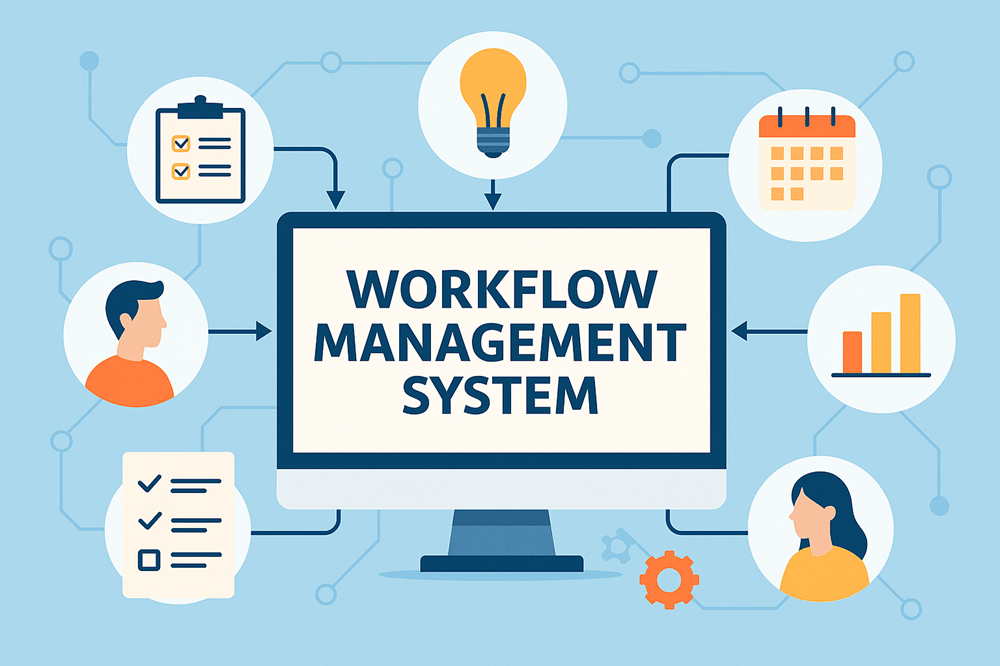
At its core, workflow management software is designed to help organizations build a clear, repeatable process for completing daily work. Every single project involves an intricate series of individual tasks, necessary approvals, and distinct team responsibilities. Without a highly structured workflow in place, it is incredibly easy for important procedural steps to be missed entirely.
To illustrate this, think about a standard digital content marketing team creating an comprehensive blog post. The operational process may involve sequential stages including topic research, content writing, editing, SEO optimization, formal approval, publishing, and social promotion. If even one step is delayed or miscommunicated, the entire project timeline can fall way behind schedule. Workflow management software guarantees that each specific stage is completed in the correct order and instantly assigned to the right person.
Furthermore, these tools provide a unified, centralized location where team members can visually view tasks, impending deadlines, real-time project status, and related communication updates. Because everyone stays completely informed through a single source of truth, operational confusion is drastically reduced, helping projects move forward with minimal friction.
Why Workflow Management Matters More Than Ever in 2026

The contemporary workplace has changed dramatically over the last few years. A vast majority of forward-thinking organizations now operate with hybrid or fully remote teams, making traditional communication and collaboration methods much more challenging. At the exact same time, modern businesses are expected to deliver exceptional results faster while simultaneously managing rapidly growing workloads.
This is where implementing a workflow management platform makes a massive difference. It directly creates structure and predictability in an operational environment that can otherwise quickly feel chaotic. Team members always know exactly what they should be working on, managers can effortlessly track micro and macro progress, and business leaders gain unprecedented, high-level visibility into daily operations.
Modern workflow platforms also do a heavy amount of lifting to reduce repetitive administrative work. Tasks such as sending routine deadline reminders, assigning standard responsibilities, updating project lifecycle statuses, and generating weekly reports can be entirely automated. This not only saves hundreds of collective hours but also minimizes the risk of human error disrupting the supply chain.
Ultimately, businesses that successfully adopt workflow management tools notice immediate, measurable improvements in employee productivity, team communication, individual accountability, and overall project success rates.
Monday.com: A Visual Approach to Workflow Management
One of the most widely adopted workflow management platforms available on the market today is Monday.com. The platform is internationally known for its highly colorful, visual interface that makes complex project tracking simple, intuitive, and engaging for all users.
Instead of dealing with boring, complicated spreadsheets, users can comfortably view their tasks through fully customizable boards and interactive dashboards. This highly visual approach makes it easy to digest project progress at a sudden glance. Team members can quickly identify which tasks are currently pending, which projects are perfectly on schedule, and where potential operational bottlenecks may exist.
Monday.com is also celebrated for being exceptionally flexible. Businesses can easily customize distinct workflows based entirely on their unique internal processes, whether they are managing creative marketing campaigns, complex sales pipelines, comprehensive employee onboarding, or urgent customer support operations.
Another major advantage lies in its robust native automation features. Routine actions such as status updates, cross-platform notifications, and task re-assignments can happen automatically behind the scenes, reducing manual effort and allowing teams to focus intensely on strategic, high-value work.
Asana: Keeping Teams Organized and Focused
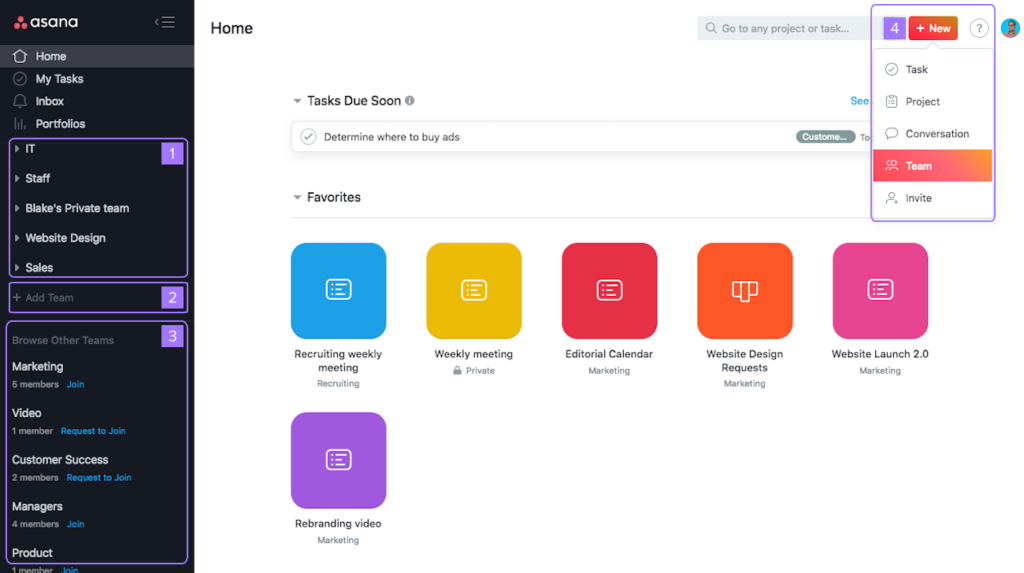
When it comes to pure project and task management, Asana continues to be a favorite choice among businesses worldwide. Its clean, minimalist, and user-friendly design makes it incredibly easy for teams to organize vast amounts of work without feeling overwhelmed by data.
Asana excels at helping users break down massive, daunting projects into smaller, highly manageable tasks. Each individual task can be assigned to a specific team member, given a definitive deadline, and tracked explicitly throughout its lifecycle. This granular level of organization helps ensure that absolutely nothing slips through the cracks.
One of Asana’s strongest features is its streamlined project visibility. Managers can easily monitor team progress across multiple views—such as lists, boards, and timelines—and identify potential delays before they transform into major financial issues. Team members also benefit from having clear expectations and explicit priorities, which significantly reduces daily confusion and boosts morale.
For growing businesses looking to drastically improve daily collaboration while maintaining a sense of simplicity, Asana offers an excellent, mature balance of deep functionality and everyday ease of use.
ClickUp: The All-in-One Productivity Solution
Many organizations make the mistake of using multiple fragmented software tools to manage different aspects of their work. They might use one platform for project management, another for document sharing, and a third distinct app for team communication. While this fractured approach can work temporarily, it often creates unnecessary complexity and severe information silos.
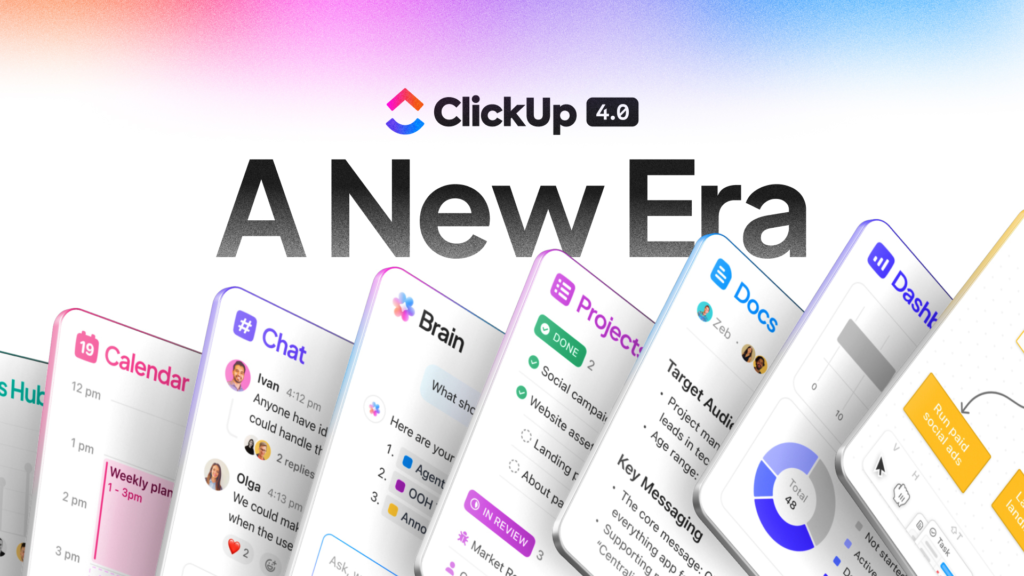
ClickUp aims to solve this software bloat problem by bringing absolutely everything together into one place. The platform aggressively combines task management, workflow automation, document collaboration, real-time reporting, and long-term goal tracking into a single centralized workspace.
One specific reason scaling businesses appreciate ClickUp is its near-infinite flexibility. Teams can heavily customize their digital workflows to match their exact operational needs rather than forcing their natural processes into a rigid, pre-built structure. Whether you are managing complex software development sprints, multi-channel marketing campaigns, or diverse client deliverables, ClickUp can adapt effortlessly.
Its built-in productivity tools help teams stay highly organized while drastically reducing the exhausting need to switch between multiple disconnected applications throughout the workday.
Trello: Simple Workflow Management for Growing Teams
Not every business requires a hyper-advanced, multi-layered project management ecosystem. For nimble teams looking for a straightforward, no-nonsense solution, Trello remains one of the easiest and most accessible workflow management tools to deploy.
Trello is beautifully engineered around the traditional Kanban methodology, which utilizes visual boards, lists, and cards to map out workflows. Tasks fluidly move horizontally through different custom stages such as “To Do,” “In Progress,” and “Completed.” This incredibly simple system provides a crystal-clear overview of project status and helps teams stay aligned instantly.
One of Trello’s biggest operational strengths is its immediate accessibility. New users can learn the platform inside and out within minutes, without requiring extensive training or onboarding documentation. This makes it particularly appealing to fast-moving startups, independent freelancers, small local businesses, and specific teams that want a lightweight, highly visual project management solution.
Despite its outward simplicity, Trello still offers surprising automation capabilities through its Butler tool, alongside hundreds of app integrations that can significantly improve everyday workflow efficiency.
Wrike: Advanced Workflow Management for Larger Organizations

As businesses scale up, their underlying workflow requirements naturally become far more complex. Multiple cross-functional departments need to collaborate securely, human and financial resources must be balanced carefully, and executive leaders require highly detailed performance insights.
Wrike is explicitly designed from the ground up to meet these advanced, enterprise-level needs. The platform offers immensely powerful workflow management capabilities, including comprehensive resource planning, detailed project tracking, fully custom workflows, and real-time analytics.
One specific area where Wrike truly excels is deep operational visibility. Managers can easily gain a comprehensive, 360-degree view of project performance across the entire organization, helping them pinpoint subtle inefficiencies and make data-driven decisions on the fly. The platform also supports highly detailed reporting, allowing large organizations to measure productivity accurately and continuously improve their corporate processes.
For larger companies simultaneously managing hundreds of complex projects, Wrike provides the granular control, high security, and rigid structure needed to maintain peak efficiency at scale.
How to Choose the Right Workflow Management Software
With so many excellent options available on the market today, selecting the single best workflow management software for your company can easily feel overwhelming. The ultimate key to success is to focus entirely on your organization’s specific needs rather than simply choosing the most popular or heavily marketed platform.
| Selection Criteria | Business Assessment Questions |
| Team Size & Scale | Is the tool designed for small agile teams, or does it support massive enterprise-level coordination? |
| Automation Capabilities | Can the software effectively eliminate repetitive, manual tasks with no-code rules? |
| Integration Architecture | Does the platform integrate seamlessly with your existing tools like email, CRMs, and cloud storage? |
| Ease of Adoption | Is the user interface intuitive enough for non-technical employees to learn quickly? |
| Data & Analytics | Does it offer the robust reporting and real-time dashboards required by management? |
Start by closely considering your team size, workflow complexity, and financial budget. A small business may choose to prioritize simplicity and extreme affordability, while a larger organization may heavily require advanced security, reporting, and customization features. Taking advantage of free trials and live software demonstrations can help your team experience the platform firsthand before making a final financial commitment.
Workflow Management Trends Shaping 2026

Technology continues to transform the way modern businesses manage daily work at a staggering pace. One of the single biggest trends dominating 2026 is the ubiquitous integration of Artificial Intelligence (AI) directly within workflow management platforms.
AI-powered features are no longer just concepts; they can now automatically prioritize daily tasks, predict potential project delays well in advance, recommend process improvements, and provide highly valuable operational insights based entirely on historical data. These intelligent capabilities help businesses operate with maximum efficiency while drastically reducing manual decision-making.
Another major trend is the explosive rise of no-code workflow automation. Employees without any technical expertise or programming background can now create sophisticated automated workflows using simple, user-friendly drag-and-drop interfaces. This effectively democratizes workflow automation, making it accessible to a much wider corporate audience.
Furthermore, enhanced collaboration tools are becoming increasingly critical. As remote and hybrid work models continue to mature globally, businesses need platforms that support seamless asynchronous communication and real-time digital teamwork regardless of physical geographic location.
The Benefits of Investing in Workflow Management Software
The right workflow management software can deliver tangible, long-term benefits that extend far beyond basic task organization. Businesses that embed these tools into their core operations frequently experience vastly improved communication, greater organizational transparency, significantly faster project delivery times, and higher overall employee satisfaction rates.
When workflows are clearly defined and visually mapped, employees spend far less time trying to figure out what needs to be done next and significantly more time completing meaningful work. Managers gain excellent, unhindered visibility into daily operations, allowing them to proactively address issues before they transform into significant, costly problems.
Perhaps most importantly, workflow management software helps businesses scale up efficiently and sustainably. As organizations grow, maintaining operational consistency becomes increasingly difficult. Automated workflows ensure that core business processes remain perfectly standardized and reliable, even as daily workloads increase exponentially.