
Artificial intelligence refers to computer software built to simulate human cognition, reason through complex concepts, and perform tasks that traditionally required human intellect. Unlike rigid legacy software programs that only follow static, predetermined rules, AI models can analyze massive datasets, detect subtle patterns, understand natural human language, and generate original content.
In our daily personal and professional lives, AI serves as an adaptable digital co-pilot. Modern platforms can draft articulate documents, summarize long technical reports, write functional code, produce high-resolution imagery, and offer predictive data insights. By acting as a tireless assistant, AI empowers us to process complex information and solve difficult problems in a fraction of the usual time.
What Is Automation?
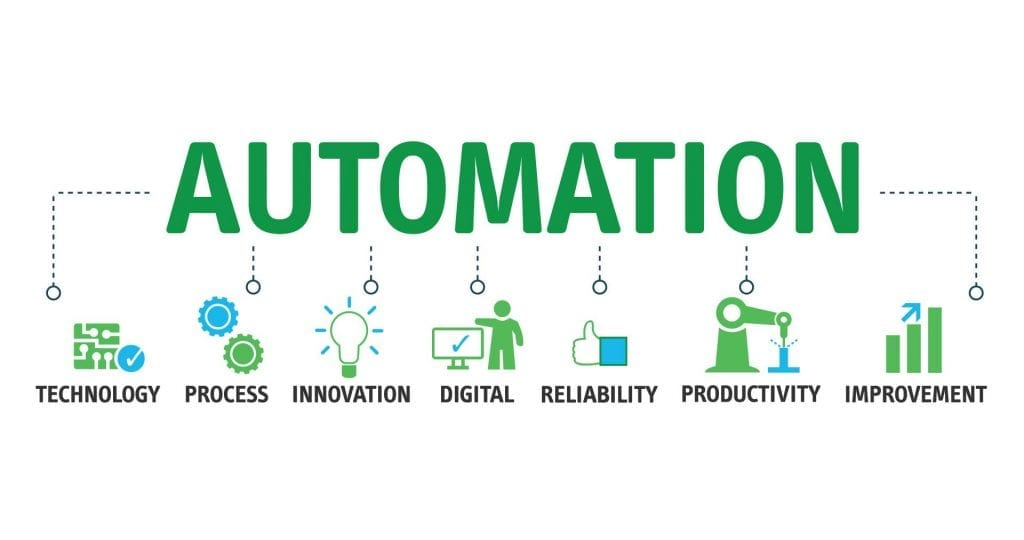
Automation is the strategic implementation of technology to execute multi-step processes with minimal or no human intervention. At its core, basic automation operates on straightforward logical rules, commonly structured around simple “if-this-then-that” triggers. For example, when a prospective client submits a contact form on a website, an automated rule can instantly save their details to a database and dispatch a warm welcome email.
The primary objective of traditional automation is to eliminate repetitive manual labor across rule-based operations. By handing over predictable tasks like data entry, file transfers, calendar scheduling, and status notifications to software bots, organizations ensure operational consistency while eliminating costly human error and operational bottlenecks.
How AI and Automation Work Together
While standard automation excels at executing pre-defined linear instructions, it struggles when encountering unexpected inputs or unstructured data. This is where combining artificial intelligence with automated engines creates a powerful synergy often referred to as intelligent automation. AI equips the system with an analytical brain, enabling it to read text, interpret nuance, evaluate intent, and adapt to changing conditions.
Consider a modern customer service pipeline: standard automation routes incoming support tickets, but integrated AI reads the customer’s actual message to gauge their frustration level, detect the specific problem category, and draft a personalized solution. The automated system then delivers the response or routes urgent cases directly to human supervisors, blending speed, intelligence, and human judgment into one smooth workflow.
Benefits of AI and Automation
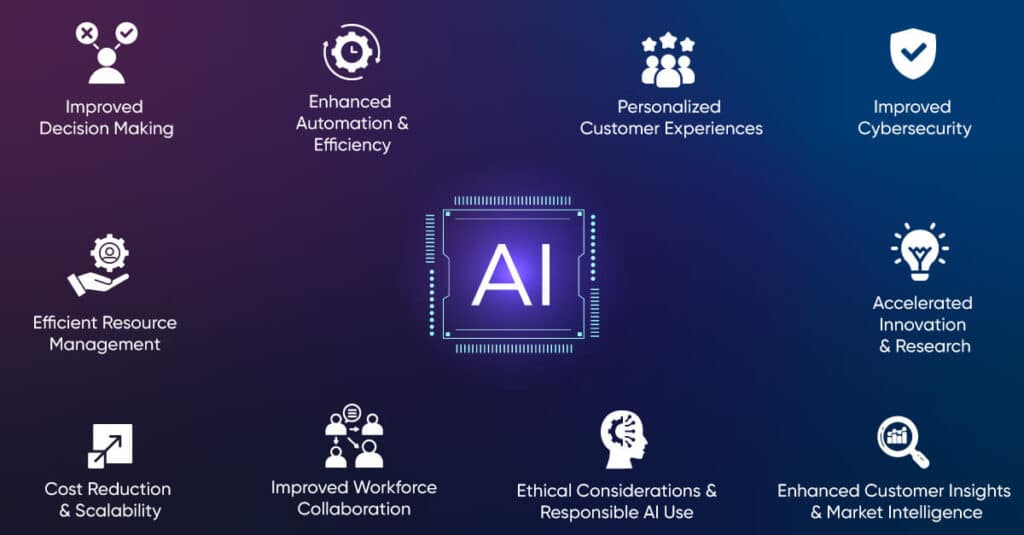
Adopting AI-driven automation delivers transformative advantages for businesses, independent contractors, students, and busy professionals alike.
- Save Massive Amounts of Time: Automating administrative routines like invoicing, scheduling, file organization, and data collection reclaims dozens of productive hours every single month.
- Boost Overall Productivity: Shifting repetitive manual tasks to intelligent software frees up your energy to focus on high-impact strategic planning, creative direction, and relationship building.
- Eliminate Human Error: Software bots process technical data and execute routine instructions with unwavering accuracy and perfect consistency, preventing costly manual mistakes.
- Enhance Decision-Making: AI analytics digest vast amounts of raw operational data to highlight hidden market trends, forecast future demand, and offer actionable strategy recommendations.
- Deliver Instant Customer Support: Automated systems provide 24/7 immediate assistance, answering common inquiries instantly and keeping overall customer satisfaction scores high.
Common Applications of AI and Automation
Intelligent automation touches virtually every modern industry, fundamentally reshaping how core business departments operate on a daily basis.
Marketing Automation
Marketing specialists utilize intelligent automation to segment audiences, schedule social media campaigns, personalize email newsletter sequences, and analyze ad metrics. AI tools can generate dozens of engaging ad copy variations in seconds, test headline variations automatically, and track buyer journeys across multiple channels.
Customer Support
AI-powered virtual assistants handle high volumes of customer inquiries by answering frequently asked questions, troubleshooting common account issues, and processing order returns. When an issue requires nuanced empathy, the system seamlessly escalates the chat conversation to human support agents along with a concise AI-generated summary of the problem.
Sales Automation
Sales representatives leverage automated tools to qualify incoming leads, track prospective client interactions, send timely follow-up reminders, and keep CRM databases updated. AI models analyze historical deal histories to predict which leads are most likely to convert, allowing sales teams to prioritize their outreach efforts effectively.
Content Creation and Media
Content strategists, copywriters, and video editors use generative AI tools to brainstorm fresh ideas, outline detailed articles, polish rough drafts, and generate custom visuals. While human oversight remains essential for maintaining brand voice and factual accuracy, AI dramatically accelerates the overall speed of content production.
Human Resources
HR departments deploy automated workflows to streamline employee onboarding, organize training materials, manage paid-time-off requests, and schedule candidate interviews. AI software can also scan large volumes of job applications to identify candidate resumes that best match specific job requirements, saving hiring managers countless hours of manual screening.
Finance and Accounting
Finance teams rely on smart automation to process invoices, reconcile bank statements, flag suspicious transaction anomalies, and prepare financial reports. AI models analyze historical spending patterns to forecast future cash flow requirements and identify operational cost-saving opportunities, ensuring the organization remains financially healthy.
AI-Powered Workflow Automation
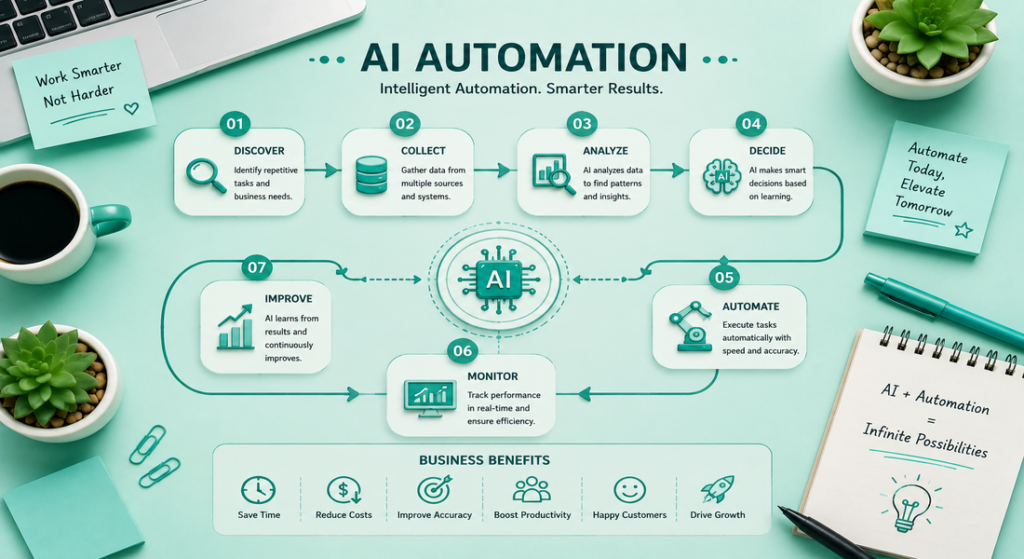
The real magic of modern technology happens inside multi-step, AI-driven workflow engines. Rather than treating software apps as isolated islands, workflow automation links disparate software applications together into a seamless assembly line. AI acts as an intelligent supervisor at each step, making decisions based on incoming data rather than relying on rigid manual programming.
A typical intelligent workflow operates through a smooth sequence of automated events:
- A client submits an unformatted inquiry email.
- AI scans the email body to extract key contact details and gauge sentiment.
- The system automatically creates a new project profile inside your CRM database.
- The workflow generates a customized service proposal draft based on the client’s request.
- A team member receives a prompt to review and approve the proposal with a single click.
- The system dispatches the finalized proposal to the client and logs the outreach date.
How to Choose AI and Automation Tools
With thousands of new AI applications entering the market every year, choosing the right software can feel overwhelming. The key to making a wise investment is focusing on your specific operational bottlenecks rather than chasing trendy software features. Clearly map out the manual tasks that consume the most time before evaluating any tech vendor.
Essential criteria to assess when selecting automation platforms include:
- Intuitive, user-friendly interface requiring minimal technical training or coding knowledge
- Extensive native integration support for your current email, calendar, and storage applications
- Robust cybersecurity standards and strict data privacy compliance to safeguard proprietary information
- Transparent pricing structures that offer manageable monthly plans and clear renewal terms
- Scalable infrastructure capable of handling higher workload volumes as your business grows
AI and Automation for Small Businesses

Small businesses frequently operate with limited personnel and tight operational budgets. For small business owners, intelligent automation acts as a powerful force multiplier, allowing small teams to achieve the output of a much larger corporation. Automating routine client communications, appointment bookings, and inventory tracking keeps operating costs extremely lean.
By delegating time-consuming administrative work to digital assistants, small business owners reclaim the freedom to focus on client relationships, product quality, and strategic business growth. Starting small with one or two simple automated processes allows small teams to build confidence before expanding their digital infrastructure.
AI and Automation for Individuals
Intelligent automation isn’t reserved exclusively for corporate environments; individual freelancers, students, and busy professionals can also transform their personal routines. You can build simple personal workflows to sort incoming emails into priority folders, auto-generate daily to-do lists, summarize study materials, and track personal budgets.
For students and researchers, AI tools serve as exceptional study partners capable of explaining complex scientific concepts, organizing citations, and generating practice exam questions. Embracing these daily productivity habits helps individuals stay organized, reduce stress, and achieve a healthier work-life balance.
Challenges of AI and Automation
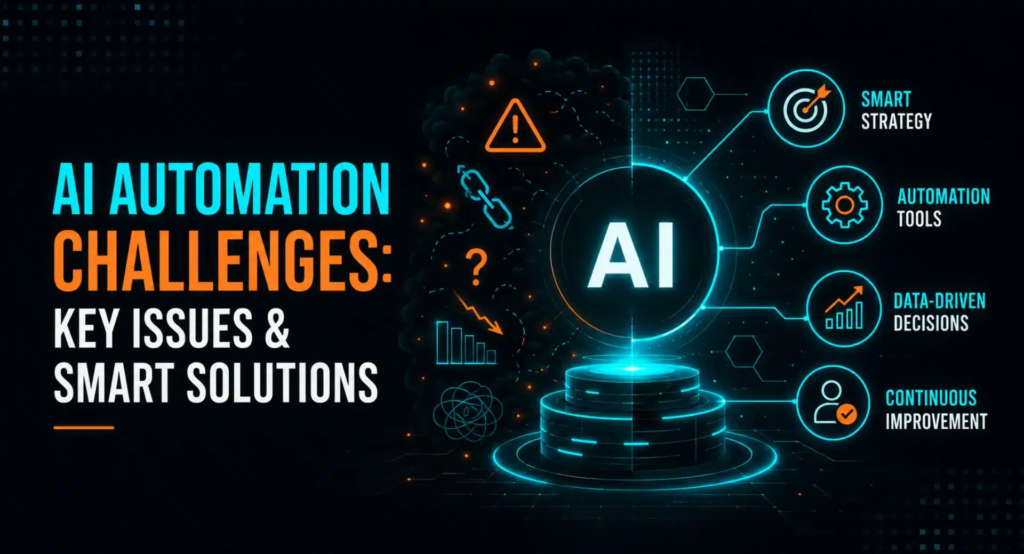
Despite the incredible benefits, implementing emerging technologies requires navigating several practical challenges thoughtfully.
- Hallucinations and Inaccuracies: Generative AI models can occasionally produce false or misleading information, making rigorous human fact-checking absolutely mandatory.
- Data Privacy Concerns: Uploading confidential corporate data or personal information into public AI tools can create severe data exposure and privacy risks.
- Security Vulnerabilities: Connected automated networks create additional entry points for malicious cyberattacks if strong passwords and multi-factor authentication are neglected.
- Implementation Expenses: Setting up custom automated systems may require upfront software licensing fees, technical setup costs, and staff training investments.
The Importance of Human Oversight
As intelligent automation continues to evolve, maintaining a human-in-the-loop operational model is critical for long-term success. Software should handle the heavy lifting of data crunching and routine execution, but human beings must retain final decision-making authority over ethical considerations, high-stakes financial choices, and sensitive interpersonal communications.
Technology lacks genuine human empathy, moral judgment, and deep cultural context. By pairing the speed and analytical power of artificial intelligence with human intuition, creativity, and ethical oversight, organizations create a balanced workspace that drives outstanding performance while maintaining genuine human connection.
The Future of AI and Automation
Looking ahead, artificial intelligence and automation will become deeply embedded across every piece of everyday software we use. Emerging AI agents will soon be capable of handling complex, multi-stage projects autonomously, communicating across diverse platforms to manage intricate logistics, financial planning, and operational workflows with minimal prompting.
However, thriving in this automated future requires more than just installing cutting-edge software. Success will belong to the individuals and organizations that foster a culture of continuous learning, maintain strong data privacy safeguards, prioritize ethical AI usage, and empower people to do what they do best: innovate, connect, and think critically.