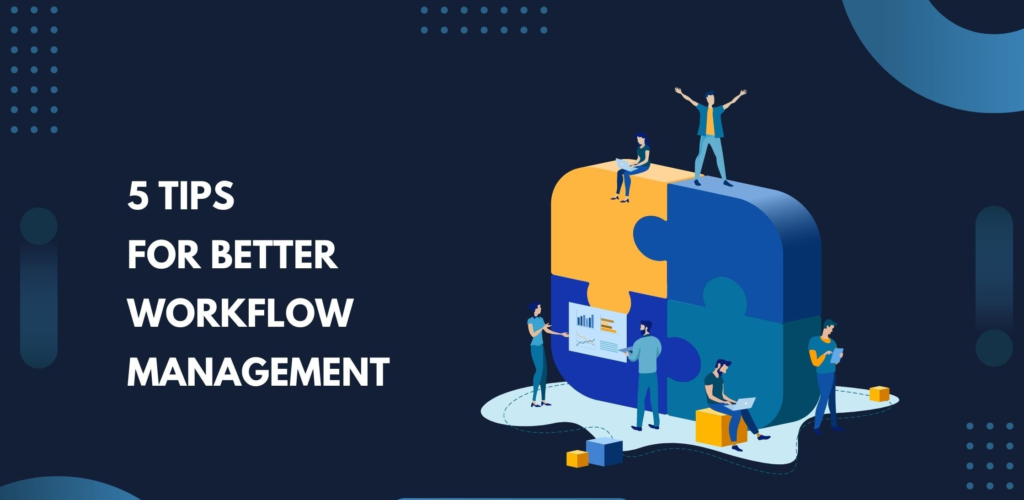
Modern work can quickly become overwhelming with endless emails, messages, and tasks. Workflow Management Tools help teams stay organized, improve collaboration, and ensure projects move forward without confusion.
As a business grows, workflows naturally become more complex—like a river branching off into too many unpredictable streams. For a long time, we tried to tame this wildness with rigid spreadsheets and endless email chains. But let’s face it: those are just digital paper trails that leave everyone feeling isolated and overwhelmed.
That is why we turn to workflow management tools. They aren’t just software; they are digital clearings in the woods. They give us a shared space to breathe, organize our thoughts, and see where everyone else is walking. Shifting to the right platform can completely change the climate of your workplace, turning daily friction into a smooth, natural flow.
Cultivating the Right Digital Space
Choosing a tool is a lot like planting a garden—you need the environment that matches how your team naturally grows. Here is an honest look at five spaces where teams find their stride.
1. Asana: The Balanced Path ( Workflow Management Tools )
Imagine a well-mapped trail through a forest. You know exactly where the steep hills are, where to stop for a break, and who is leading the pack. That is what Asana feels like. It strikes a beautiful balance between a clean, intuitive design and serious organizational power.
When you log in, your inner monologue gets an immediate wave of relief: “Okay, here is my day. I know exactly what is mine to finish.” It takes away the guesswork by centralizing deadlines and tracking progress on clear dashboards. It’s incredibly adaptable, making it a favorite for teams who want to stay deeply connected without having to sit through a week of software training just to understand how to log a task.
2. Trello: The Visual Clearing ( Workflow Management Tools )
Some minds just don’t think in rows and columns; they need to see the landscape. Trello is built for the visual thinkers. It relies on a classic system of boards, lists, and cards that feels exactly like moving sticky notes across a whiteboard.
You physically drag a task card from “To Do” over to “Finished,” and your brain gets that small, satisfying hit of accomplishment. Because it is so simple and tactile, it’s a breath of fresh air for creative teams, startups, and anyone who wants to see the entire horizon of a project at a single glance without getting bogged down by heavy data.
3. Monday.com: The Adaptable Ecosystem ( Workflow Management Tools )
No two businesses are identical; they are unique ecosystems. Monday.com understands this deeply. Instead of forcing your team to adapt to the software, it lets you reshape the software to match the natural contours of your workflow.
Whether you are tracking a creative video project, managing a sales pipeline, or mapping out a product launch, you can customize the columns, colors, and automations to fit your exact language. It’s a tool built to scale, expanding and morphing right alongside your company as your daily operations become more complex.
4. ClickUp: The All-in-One Sanctuary ( Workflow Management Tools )
We’ve all had those days where we feel fractured—switching between ten different browser tabs, hunting for a document in one app, tracking time in another, and chatting in a third. It’s exhausting. ClickUp’s core philosophy is to end that digital fragmentation.
It aims to be an all-in-one workspace, gathering tasks, docs, goal-tracking, and team chats under a single roof. For teams tired of paying for five different software subscriptions and feeling scattered across the internet, it offers a centralized sanctuary where everything lives together in harmony.
5. Wrike: Navigating Deep Waters ( Workflow Management Tools )
When a company reaches a certain size, projects stop being simple paths and start looking like massive, intersecting river systems with heavy currents. Wrike is built for those deep, complex waters.
It is designed for larger organizations that need serious, granular control over resources, deep analytical reporting, and multi-layered project planning. Wrike helps project managers look from a bird’s-eye view to see where bottlenecks are forming—allowing them to reroute work and balance team workloads before anyone burns out.
Finding Your Best Fit
If you’re wondering which direction to turn, take a step back and look at your team’s current climate.
| If your team craves… | …look toward: | Because it feels like: |
|---|---|---|
| Pure simplicity & visual ease | Trello | Moving post-it notes on a clean wall. |
| Total control over customization | Monday.com | Building a workspace completely from scratch. |
| Everything in one single place | ClickUp | A digital swiss-army knife for productivity. |
| Clear accountability & neat layout | Asana | A reliable, well-marked map for the journey. |
| Heavy-duty planning for big operations | Wrike | A command center for complex, moving parts. |
Before committing to a subscription, listen to your own human instincts. Is the tool intuitive, or does it feel like a chore to open? Does it integrate smoothly with the tools you already use daily, like your email or cloud storage? Don’t buy a massive tractor if all you need is a reliable shovel. Pick the tool that minimizes friction and allows your team’s natural talent to shine.
The Evolving Landscape of Work
The way we work is shifting, mirroring the constant changes we see in nature. With remote and hybrid teams scattered across different time zones, these tools are no longer just a luxury—they are the literal bridges keeping us connected.
As we look ahead, we are seeing intelligence and automation weave their way into these platforms. The goal isn’t to replace the human element, but to protect it. By letting technology handle the repetitive, mindless tracking, it frees up our minds to do what we do best: create, problem-solve, and genuinely connect with one another.
The Ultimate Goal: Freedom to Create
At the end of the day, no piece of software can replace human spirit, trust, and shared passion. A workflow tool is simply a trellis designed to support the vine.
By clearing away the administrative static, staying hydrated in your communication, and keeping your processes grounded, you give your team the greatest gift possible: the time and mental clarity to do meaningful work. Start small, pick a tool that feels right to your gut, and let your workflow find its natural, peaceful stride.
FAQ’s
1. What is a workflow management tool?
A workflow management tool helps businesses organize tasks, automate processes, and improve team collaboration.
2. Which workflow management tool is best for small businesses?
Trello and Asana are popular choices due to their simplicity and ease of use.
3. How do workflow tools improve productivity?
They streamline tasks, reduce manual work, and help teams stay organized and focused.
4. Can workflow management tools support remote teams?
Yes, they enable communication, task tracking, and collaboration from any location.
5. Are workflow management tools worth the investment?
Yes, they help save time, improve efficiency, and enhance overall business performance.