
AI has come a long way since 1952, when the first documented success of an AI computer program was written by Christopher Strachey, whose checkers program completed a whole game on the Ferranti Mark I computer at the University of Manchester. Thanks to developments in machine learning and deep learning, IBM’s Deep Blue defeated chess grandmaster Garry Kasparov in 1997, and the company’s IBM Watson won Jeopardy! in 2011.
Since then, generative AI has spearheaded the latest chapter in AI’s evolution, with OpenAI releasing its first GPT model in 2018. This has culminated in OpenAI developing ChatGPT, leading to a proliferation of tools that can process queries to produce relevant text, audio, images and other types of content.
Other companies have followed suit with competing products of their own, including Google’s Gemini, Anthropic’s Claude and DeepSeek’s R1 and V3 models, which made headlines in early 2025 for approaching parity with competing models at a fraction of the operational cost.
AI has also been used to help sequence RNA for vaccines and model human speech, technologies that rely on model- and algorithm-based machine learning and increasingly focus on perception, reasoning and generalization.
How AI Will Impact the Future
Improved Business Automation
Current Impact
AI, especially generative AI, has already increased task automation for many businesses, and will likely continue to do so in the future. With the rise of chatbots and digital assistants, companies can rely on AI to handle simple conversations with customers and answer basic queries from employees.
AI’s ability to analyze massive amounts of data and convert its findings into convenient visual formats can also accelerate the decision-making process. Company leaders don’t have to spend time parsing through the data themselves, instead using instant insights to make informed decisions.
“If [developers] understand what the technology is capable of and they understand the domain very well, they start to make connections and say, ‘Maybe this is an AI problem, maybe that’s an AI problem,’” said Mike Mendelson, a learner experience designer for Nvidia. “That’s more often the case than, ‘I have a specific problem I want to solve.’”
Future Outlook

As artificial intelligence becomes more powerful over the next few years, it will likely handle more tasks previously performed by human workers. In particular, advancements in AI agents will enable people to hand off more complex tasks to automation.
Businesses may transition from a model of human-led workflows to a hybrid workforce where humans act as orchestrators for AI agents. In these types of roles, employees will simply describe intent and command their agents to work across software to deliver the final result instead of manually navigating multiple apps to complete a project.
Job Disruption
Current Impact
Business automation has naturally led to fears over job losses. Although AI has made gains in the workplace, it’s had a massive impact on different industries and professions. Whether forcing employees to learn new tools or taking over their roles, AI is set to spur upskilling efforts at both the individual and company level.
Despite the concern about mass unemployment brought upon by AI, the job market has only seen minimal impact since 2022, the year ChatGPT became publicly available. According to ADP research, AI has mainly affected early-career workers in fields with high exposure to AI, such as software engineering and customer service. According to the data, employment for 22- to 25-year-olds in high AI exposure roles fell by 6 percent between 2022 and 2025.
However, during that same time, employment for workers 30 and older in those same fields increased by 13 percent. The divide is likely due to AI’s current inability to automate more complex tasks and work that more experienced workers would otherwise carry out. Because of such limitations, AI will likely have an uneven impact on the labor force. For example, AI is already automating repetitive jobs; meanwhile, creative positions are more likely to have their jobs augmented by AI, rather than outright replaced. But the demand for other jobs like machine learning specialists and data center technicians has risen.
Future Outlook
While the future impact of AI on the job market may largely depend on its technical limitations, The World Economic Forum describes a possible scenario by 2030 where exponential AI advancements outpace workers’ ability to reskill, forcing companies to further automate roles, leading to unemployment spikes. Less ominous viewpoint points predict around one in four jobs will likely be transformed over the next five years.
“One of the absolute prerequisites for AI to be successful in many [areas] is that we invest tremendously in education to retrain people for new jobs,” said Klara Nahrstedt, a computer science professor at the University of Illinois at Urbana-Champaign and director of the school’s Coordinated Science Laboratory.
While AI could displace as many as 92 million jobs by 2030, the World Economic Forum’s Future of Jobs report suggests a net positive outcome, with the creation of 170 million new roles. These new positions will likely center on “human-plus” capabilities: AI ethics officers, human-AI collaboration designers, and specialized roles in physical AI, such as robotics and autonomous mobility.
Data Privacy Issues
Current Impact
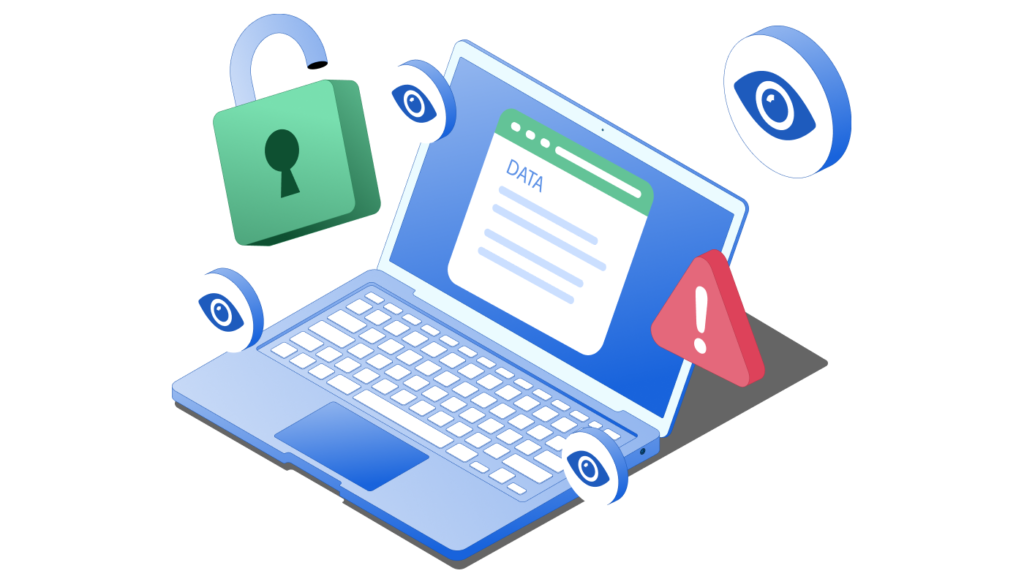
LLMs work by scraping vast amounts of data from a large number of sources, including websites, forums, social media and much more. Even though some AI companies have agreements with certain platforms to train on their data, individuals whose information might be included in those agreements have no say on how their personal data is used. And there is no way for individuals to request that their data be deleted from an LLMs training material.
Some experts are concerned that by using personal data, AI systems are able to infer sensitive information such as sexual orientation, political views or health status, and that this could lead to algorithmic bias or the stereotyping of certain groups. Researchers have already widely documented this issue. For example, there have been incidents where AI systems reinforce gender roles or AI image generators overwhelmingly create images of white men when prompted to show an image of a successful person.
Future Outlook
By 2030, the reliance on raw, scraped internet data is expected to diminish, replaced by synthetic data — artificially generated information that mimics real-world patterns without exposing personal identities. Experts predict that by 2026, nearly 60 percent of all AI training data could be synthetically produced, significantly lowering the legal and ethical risks associated with unauthorized data harvesting.
During that same time, the AI industry may adopt a privacy by design approach to data collection. This framework integrates privacy protections directly into the initial engineering of AI systems rather than treating them as an afterthought or a secondary layer of compliance. By embedding safeguards like data minimization and end-to-end encryption into the software’s architecture, companies can ensure that personal information is automatically protected.
Increased Regulation

Current Impact
AI could shift the perspective on certain legal questions, depending on how various generative AI lawsuits continue to unfold. The issue of intellectual property has come to the forefront in light of copyright lawsuits filed against OpenAI and Anthropic by writers, musicians and companies like The New York Times. These lawsuits affect how the U.S. legal system interprets what is private and public property, and a loss could spell major setbacks for OpenAI and its competitors.
Ethical issues that have surfaced in connection to generative AI have placed more pressure on the U.S. government to take a stronger stance. Despite this, the Trump administration’s AI Action Plan unveiled in 2025 emphasizes a largely hands-off approach to AI regulation.
Future Outlook
In the United States, the federal government’s hands-off approach aims to prioritize national dominance and infrastructure growth over regulatory oversight, even blocking states from imposing regulations. However, this federal leniency may trigger a legal battle with states like California, New York, Illinois and Texas, which may continue to push for their own protections regarding consumer privacy and algorithmic bias.
Internationally, the EU AI Act will reach full implementation by August 2026, setting a global benchmark for high-risk AI systems. As AI agents become more autonomous, the focus of regulation will likely shift from how developers train models to how those models behave in the real world. We may see the introduction of AI liability when an autonomous system makes a costly or harmful error.
FAQ’s
1. What is AI and automation?
AI enables machines to perform intelligent tasks, while automation helps complete tasks with little or no manual effort.
2. How can AI automation save time?
It can handle repetitive tasks, organize information, generate content, and streamline everyday workflows.
3. Is AI automation useful for beginners?
Yes. Many AI-powered tools are designed to be simple enough for beginners without technical knowledge.
4. What tasks can be automated with AI?
Common examples include writing, data organization, customer support, scheduling, research, and routine business tasks.
5. Will AI and automation replace human jobs?
Some repetitive tasks may become automated, but AI can also create new roles and help people focus on more creative and strategic work.