
Subscription fatigue is very real. Between paying for streaming services, cloud storage, and premium software, adding another monthly bill for an AI assistant often feels impossible to justify. There is a common belief that high-quality generative AI is locked behind expensive paywalls, reserved only for large corporations or engineers with big budgets.
The good news is that this simply isn’t true. The open-source community and competitive free plans have made top-tier models available to everyone. For students, freelancers, and working professionals, this means you can build, experiment, and streamline your daily workload without spending a single dollar.
In this guide, you will find an overview of the best free AI tools available right now. We will cover tools for writing, research, design, coding, audio, and video. You can easily manage your day-to-day tasks without opening your wallet.
Important Rules Before You Start

While free plans are surprisingly generous, it helps to understand how companies offer them:
- Data Privacy: Free services may use your inputs to train their models. Never paste confidential work documents, personal identity numbers, or private code into a free chat tool unless you are sure about the privacy settings.
- Commercial Rules: Some free plans restrict using generated images, code, or video for paid business projects. Always check the terms before using outputs commercially.
- Usage Limits: Free tools usually come in three types:
- Genuinely Unlimited: Completely free with no message caps.
- Daily or Monthly Credits: A set amount of usage that resets regularly (e.g., 50 credits a day or 10,000 characters a month).
- Standard Freemium: Full features up to a certain usage limit, after which you need to wait a few hours or upgrade.
Best Free AI Text Tools
AI writing assistants are extremely versatile. They can draft long emails, summarize dense articles, polish awkward grammar, and translate content across languages.
+-------------------------------------------------------------------------------+
|                             AI TEXT & WRITING TOOLS                           |
+---------------------+---------------------------------------------------------+
| Tool                | Primary Strengths                                       |
+---------------------+---------------------------------------------------------+
| ChatGPT             | General all-rounder, quick brainstorming, basic coding  |
| Claude              | Natural prose, long-form writing, deep document analysis|
| Google Gemini       | Real-time web info, Google Workspace integration        |
| Grok                | Live social media news, direct and blunt responses      |
| DeepSeek            | Uncapped chat, strong math and structured reasoning     |
+---------------------+---------------------------------------------------------+
Free AI Writing Assistants
1. ChatGPT
OpenAI’s chatbot remains one of the best all-around tools for daily tasks. It excels at drafting emails, brainstorming ideas, explaining difficult concepts, and generating basic code.
The free tier gives you access to general chat models with usage allowances that refresh every few hours. When you hit a temporary cap during busy times, the system smoothly falls back to a lighter model until your window resets. It is more than enough for casual, everyday use.
- Best For: Brainstorming, quick drafts, everyday questions, and learning new concepts.
- Free Plan Reality: Heavy users will hit temporary message limits, but the cap resets after a short wait.
2. Claude
Claude is widely loved by writers and researchers because its responses sound remarkably natural and human-like. It avoids robotic corporate speak and excels at creative writing, editing, and following complex instructions.
The free plan gives you access to capable models like Claude Sonnet on a rolling usage budget. It is especially good at reading through long text attachments and pointing out logic errors or awkward phrasing.
- Best For: Long-form writing, creative editing, and deep document analysis.
- Free Plan Reality: Message limits depend on overall site traffic and reset every few hours.
3. Google Gemini
Google’s free offering stands out because of its deep connection to the Google ecosystem. It provides fast responses, handles web research well, and can interact directly with your saved files if you use Google Docs, Drive, or Gmail.
You can use Gemini to draft a letter inside Docs, summarize messy email threads, or analyze simple spreadsheets. While advanced video features require a paid upgrade, the free plan includes solid text generation, web browsing, and image analysis.
- Best For: Researching current events and working inside Google Workspace.
- Free Plan Reality: It relies on high-speed Flash models for free users, which are quick but occasionally less detailed on complex logic.
4. Grok
Grok offers direct access to real-time information and social discussions. It is great for tracking live news, sports updates, and trending public conversations as they happen.
The free version provides a lighter text-chat model with voice input features. If you want quick, unfiltered takes on current events without waiting for search engines to index traditional news sites, it gets the job done.
- Best For: Live news tracking, social trends, and direct answers.
- Free Plan Reality: Image generation is reserved for paid tiers, leaving the free plan focused purely on text and voice interactions.
5. DeepSeek
DeepSeek is a powerful open-source alternative that has gained massive popularity. It offers uncapped text chat, making it a favorite for students and self-learners who keep running into daily limits on other platforms.
It performs surprisingly well in math, structured logic, and programming tasks. If you need to ask dozens of detailed questions in a single afternoon without worrying about hit-limits, DeepSeek is an excellent option.
- Best For: Uncapped daily learning, math problems, and long coding sessions.
- Free Plan Reality: Completely free to use, but make sure to avoid sharing sensitive private data.
Free AI Summary & Research Tools
When you are drowning in long articles, heavy PDFs, and endless reports, dedicated research tools help you pull out key facts quickly.
+-------------------------------------------------------------------------------+
|                            RESEARCH & SUMMARY TOOLS                           |
+---------------------+---------------------------------------------------------+
| Tool                | Primary Strengths                                       |
+---------------------+---------------------------------------------------------+
| Perplexity          | Footnoted web search, fact verification                 |
| Humata              | Deep PDF analysis with clickable source citations       |
| Google NotebookLM   | Private notebook locked strictly to your uploaded files |
+---------------------+---------------------------------------------------------+
6. Perplexity
Instead of giving you a long list of blue links like a traditional search engine, Perplexity reads top web pages and writes a short, synthesized answer. Every statement is footnoted with a direct source link so you can verify the information yourself.
- Best For: Fact-checking, quick topic overviews, and academic research.
- Free Plan Reality: Offers unlimited standard searches, while deep reasoning searches are capped to a few uses per day.
7. Humata
General AI tools sometimes make things up when reading long files. Humata avoids this by anchoring its answers strictly to the PDF document you upload.
The free tier allows you to upload documents, ask questions, and click on citations that jump directly to the exact paragraph where the answer lives. This makes verifying facts, equations, and data points fast and effortless.
- Best For: Reading complex technical papers and verifying PDF details.
- Free Plan Reality: The free monthly page limit is tight, but it is extremely reliable for short reports.
8. Google NotebookLM
NotebookLM acts like a personal research assistant that only knows what you tell it. You can upload textbook chapters, meeting notes, or PDF articles into a private notebook. The AI then answers your questions based only on those specific files, without pulling random information from the wider internet.
- Best For: Exam revision, studying specific textbooks, and organizing project notes.
- Free Plan Reality: Generous file limits make it one of the best truly free study tools available.
Free AI Grammar & Translation Tools
Polishing your writing and crossing language barriers is much easier with specialized tools.
9. Grammarly
Grammarly runs quietly in your web browser or desktop app to catch typos, punctuation mistakes, and awkward phrasing in real time. The free version goes beyond simple spell-check by offering tone detection and quick suggestions to make your sentences clearer.
- Best For: Catching typos in emails, essays, and job applications.
- Free Plan Reality: Covers basic grammar and conciseness, while advanced stylistic rewrites require a paid upgrade.
10. QuillBot
If you know what you want to say but can’t quite word it correctly, QuillBot helps you rewrite sentences instantly. You paste in your text, choose a style mode (like Standard or Fluency), and get an instant rephrasing that keeps your original meaning.
- Best For: Fixing awkward phrasing, avoiding repetitive words, and summarizing text.
- Free Plan Reality: Paraphrasing is capped at 125 words per attempt on the free plan, which is fine for individual paragraphs.
11. LanguageTool
LanguageTool is an open-source alternative to Grammarly that supports over 30 languages. Built with strict privacy rules in mind, it is a great choice for non-English writers and privacy-focused users.
- Best For: Multilingual spell-checking and privacy-friendly editing.
- Free Plan Reality: Free users can check texts up to 10,000 characters at a time.
12. DeepL & Lara Translate
When standard web translators miss context or local phrasing, specialized tools step in:
- DeepL: High accuracy for European and Asian languages. The free web version translates copy-pasted text up to 1,500 characters, preserving subtle phrasing exceptionally well.
- Lara Translate: Offers customizable styles (Fluid, Faithful, or Creative) and includes a feedback system that explains why it chose specific words. Its free tier grants a shared monthly pool of 60,000 characters.
Free AI Tools for Visuals, Audio & Coding
Generative AI isn’t limited to words. You can create graphics, build presentations, generate audio, and write code completely for free.
+-------------------------------------------------------------------------------+
|                         DESIGN, AUDIO & CODING TOOLS                          |
+---------------------+---------------------------------------------------------+
| Category            | Top Free Tools & Capabilities                           |
+---------------------+---------------------------------------------------------+
| Graphic Design      | Canva Magic Studio, Microsoft Designer, Napkin AI       |
| Audio & Voice       | ElevenLabs (10k chars/mo), Whisper (free transcription) |
| Coding Assistance   | Google Antigravity, GitHub Copilot (free tier limits)  |
+---------------------+---------------------------------------------------------+
Design and Presentations
13. Canva Magic Studio
Canva integrates AI directly into its design platform. You can generate custom graphics from text descriptions, automatically remove backgrounds, resize social media posts with a click, and draft presentation layouts inside a beginner-friendly editor.
- Best For: Social media banners, posters, and simple slide decks.
14. Microsoft Designer & Bing Image Creator
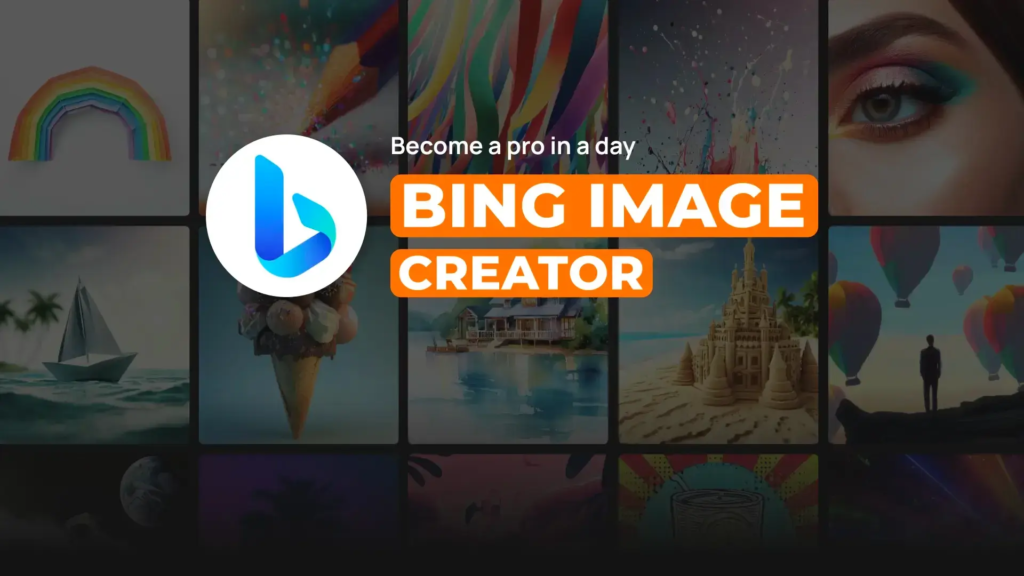
Powered by advanced image generation engines, Microsoft offers simple image creation for free. You get fast generation “boosts” that refresh daily, followed by unlimited standard-speed image requests.
- Best For: Quick illustrations, blog headers, and custom graphics.
15. Gamma App
Type in a simple topic, and Gamma creates a formatted presentation deck complete with layouts, text, and images in under a minute. The output looks professionally designed rather than generated from a basic template.
- Best For: Quick slide decks, project proposals, and student talks.
- Free Plan Reality: Gives you a starter package of 400 free credits, which covers several full presentation projects.
16. Napkin AI
Napkin turns plain text into visual diagrams. You paste a paragraph, and the tool analyzes the concepts to create flowcharts, mind maps, and infographics automatically.
- Best For: Explaining complex systems visually in documents or presentations.
Audio and Coding Helpers
17. ElevenLabs & Whisper
- ElevenLabs: Generates natural-sounding voiceovers from written text. The free plan provides 10,000 characters per month, which is plenty for short video clips or podcasts.
- Whisper: OpenAI’s open-source speech recognition system converts audio files into clean text transcripts with high accuracy across multiple languages.
18. Google Antigravity & Coding Assistants
For developers, modern code assistants suggest fixes, autocomplete functions, and explain error logs. Google Antigravity provides generous free access for coding tasks, while tools like GitHub Copilot offer lightweight free tiers to help you debug scripts faster.
How to Mix and Match Tools for Maximum Productivity
You don’t need to stick to just one tool. The smartest strategy is to combine them based on what each one does best:
- Step 1: Outline and Research: Use Perplexity to find facts with clear citations, or upload your reference PDFs into Google NotebookLM.
- Step 2: Draft and Refine: Take your notes to Claude for smooth long-form writing, or use ChatGPT to generate quick structure outlines.
- Step 3: Polish and Format: Run your final text through Grammarly or QuillBot to catch awkward sentences, then paste the key points into Gamma or Napkin AI to build visuals.
Frequently Asked Questions
Are these free AI tools truly safe to use for work or school?
Yes, as long as you do not enter private or sensitive data. Free tools are completely fine for general research, learning, and public drafting. However, always review your company or school privacy rules before pasting internal code or personal records.
What happens when I hit a message limit on a free plan?
Most platforms use a temporary reset window. When you hit a limit on tools like ChatGPT or Claude, you simply need to wait a few hours for your quota to refresh. Alternatively, you can temporarily switch to an uncapped tool like DeepSeek to continue working.
Can I use AI-generated images or text for commercial projects?
It depends on the platform’s terms. Many tools allow commercial use on free plans, but others reserve commercial rights for paid subscribers. Always double-check the tool’s license page before selling generated graphics or publishing commercial copy.
Do I need to enter a credit card to sign up for these free tools?
No. All the tools listed above offer genuine free accounts that only require an email address to sign up. You do not need to enter credit card details unless you choose to upgrade to a paid subscription later.
How can I stop free AI tools from sounding robotic?
Provide detailed context in your prompts. Instead of asking for “a summary,” tell the AI who the target reader is, what tone to use (e.g., conversational, professional, direct), and ask it to avoid buzzwords or clichés. Tools like Claude naturally produce a more human tone out of the box.