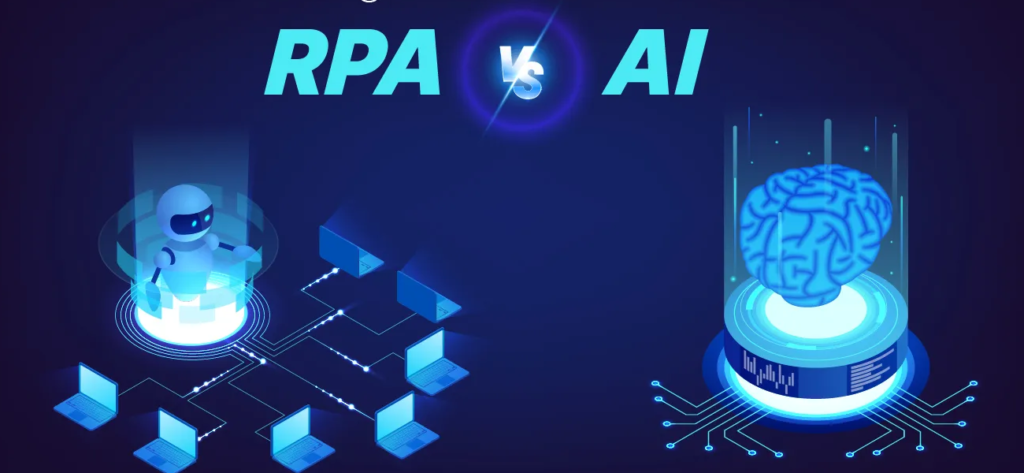
Enterprise operations are undergoing a fundamental structural transition.RPA vs AI Automation Organizations are moving away from tactical, localized task automation toward autonomous operational environments capable of interpreting complex inputs, evaluating context, adapting to real-time variables, and executing multi-system workflows with minimal manual oversight.
At the core of this operational transformation are two foundational technologies: RPA vs AI Robotic Process Automation (RPA) and Artificial Intelligence (AI) Automation.
While frequently conflated in executive discussions, RPA and AI Automation operate on distinct architectural paradigms and address fundamentally different operational challenges.
- RPA acts as an enterprise’s digital muscle, executing deterministic, rule-based, user-interface-driven tasks with high precision and speed.
- AI Automation serves as the cognitive layer, processing unstructured inputs, recognizing patterns, inferring intent, and executing probabilistic decisions.
RPA vs AI Navigating this technological landscape requires an in-depth understanding of the technical mechanics, architectural trade-offs, and strategic integration patterns that define modern Intelligent Automation (IA).
RPA vs AI Deep Dive: Robotic Process Automation (RPA)
RPA vs AI Architectural Mechanics and Interaction Layers
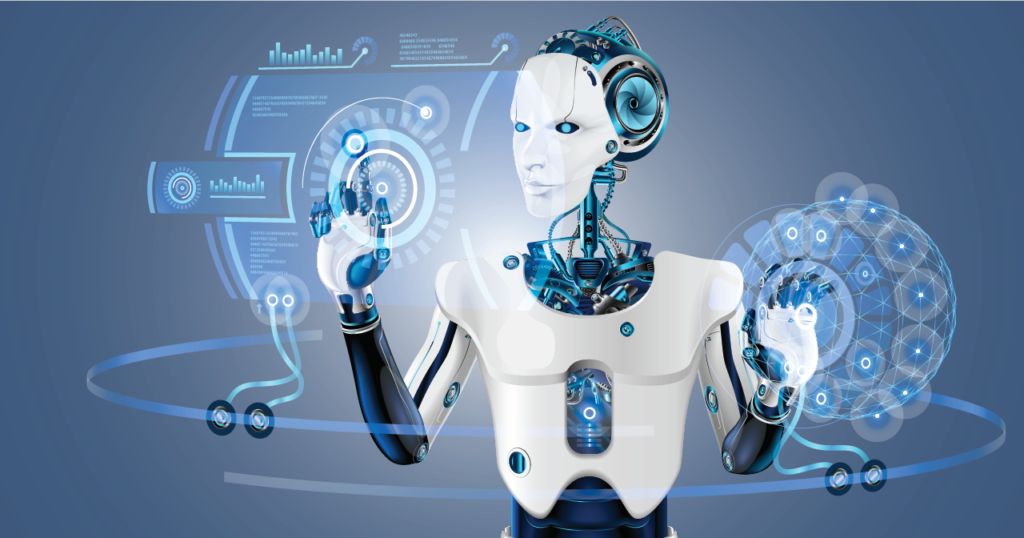
A RPA is a software technology that emulates human interactions with graphical user interfaces (GUIs) and digital systems.RPA vs AI At an architectural level, RPA operates primarily at the presentation layer (UI level) rather than deep integration layers (such as database or API levels), though modern enterprise RPA platforms natively support backend API orchestration as well.
RPA vs AI An enterprise RPA deployment typically consists of three primary architectural components:
- The Developer Studio: An Integrated Development Environment (IDE) where developers model workflows using visual sequence diagrams, state machines, and code scripts.
- The Orchestrator / Control Tower: A centralized management plane that handles bot deployment, credential management (integrating with enterprise vaults like CyberArk or Azure Key Vault), job scheduling, resource allocation, and immutable audit logging.
- The Runtime Execution Engine (The Bot): The agent operating on a virtual machine (VM) or containerized environment that executes instructions by driving target applications.
- Attended Bots: Run on a user’s local workstation, triggered by human events, acting as co-pilots for desktop tasks.
- Unattended Bots: Run autonomously on isolated server environments or cloud VMs, handling high-volume background batch processes without human intervention.
UI Automation Mechanisms: Selectors vs. Surface Automation
To interact with applications, RPA bots rely on object identification protocols rather than hardcoded screen coordinates whenever possible:
- Object Selectors: The bot parses the underlying Document Object Model (DOM) of web applications, the UI Automation framework of Windows applications, or Java Access Bridges. It locates UI elements via unique attributes (e.g.,
id,name,XPath,AutomationId). This allows the bot to locate input fields reliably even if the application window is resized or moved. - Surface Automation and Computer Vision: When interacting with virtualized environments (such as Citrix, VMware, or Remote Desktop Protocols) where the underlying code framework is stripped away, traditional selectors fail. RPA engines fall back on surface automation—using optical character recognition (OCR) and deep learning-based visual object anchors to calculate pixel coordinates dynamically and trigger click or keystroke events.
Core Strengths and Inherent Structural Fragility
RPA delivers high ROI in environments characterized by high volume, strict rule sets, and system stability. Because it interacts at the UI layer, it requires zero modifications to underlying legacy enterprise architecture, circumventing long IT development backlogs.
However, RPA possesses an inherent brittleness:
- UI Mutation Drift: If an underlying enterprise application updates its interface—such as changing an input field ID, altering DOM depth, or shifting a button location—a deterministic selector breaks, causing the bot to fail immediately.
- Lack of Exception Handling for Variance: If an input data field contains an unexpected character format or an unmapped business exception occurs, an RPA bot cannot infer intent. It must either trigger a fatal exception, abort the item, or route the case to a human queue.
Deep Dive: AI Automation and Cognitive Workflows
Technological Stack and Component Architecture
RPA vs AI Unlike the deterministic execution of RPA, AI Automation integrates probabilistic software models to parse ambiguous inputs, reason over context, and synthesize outputs.RPA vs AI It shifts automation from rigid execution to continuous interpretation.
Core Components of the AI Automation Stack
- Intelligent Document Processing (IDP): Replaces legacy rule-based OCR with multimodal deep learning architectures (such as LayoutLM or Transformer-based vision models). These models evaluate spatial document positioning, typography, and semantic context simultaneously, extracting structured data fields from variable invoices, receipts, and medical forms without requiring pre-defined coordinate templates.
- Natural Language Processing (NLP) & Named Entity Recognition (NER): Extracts structured entities (e.g., monetary values, dates, policy numbers, customer names) from unstructured free text. Transformer architectures evaluate the surrounding semantic context to differentiate between an invoice sender, a billing contact, and a remittance recipient.
- Machine Learning (ML) Classification & Predictive Analytics: Uses supervised learning algorithms (e.g., XGBoost, Random Forests) and deep neural networks to score risk, predict customer churn, classify support tickets by sentiment, or detect transaction fraud based on historical patterns.
- Generative AI & Retrieval-Augmented Generation (RAG): Integrates Large Language Models (LLMs) connected to enterprise knowledge bases via vector embeddings. This allows automated workflows to read complex multi-page legal contracts, generate compliant response drafts, synthesize unstructured technical support histories, and produce structured JSON payloads from raw conversational data.
Deterministic vs. Probabilistic Paradigms
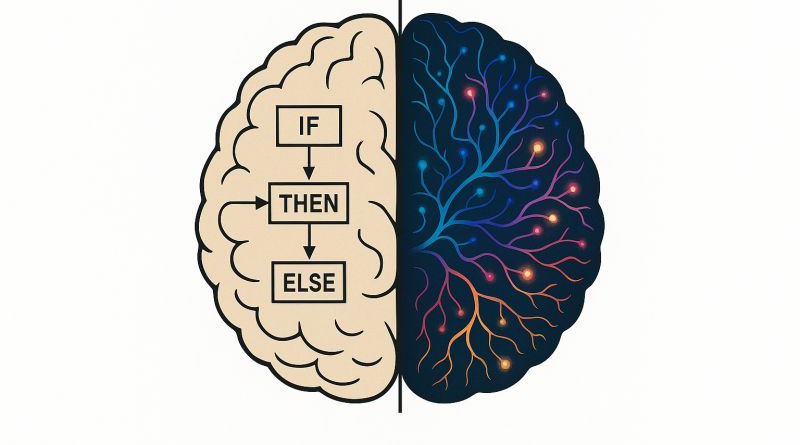
The fundamental engineering divide between RPA and AI automation rests on mathematical output:
RPA Environment: f(x)→y(Where x is constant, y is deterministic and binary)
AI Environment: P(y∣x)=argymaxP(Outcome∣Context)(Probabilistic confidence scoring)
An AI automation system evaluates probabilities. Rather than guaranteeing a hardcoded execution step, an AI model yields an output accompanied by a confidence score (e.g., extracting an invoice total with 94.2% statistical confidence). Enterprise AI workflows utilize these confidence thresholds to govern execution:
- High Confidence (≥90%): Automated execution continues to downstream systems.
- Low Confidence (<90%): The item is routed to a Human-in-the-Loop (HITL) validation interface, where a human subject matter expert confirms or corrects the extraction, simultaneously providing active learning feedback to fine-tune the underlying AI model over time.
RPA vs AI Direct Technical Comparison
| Technical Attribute | Robotic Process Automation (RPA) | AI Automation / Cognitive Workflows |
|---|---|---|
| Primary Architectural Layer | Presentation / User Interface (UI Layer) & API | Data, Model Inference, & API Integration Layers |
| Execution Paradigm | Deterministic (If-Then-Else hardcoded logic) | Probabilistic (Pattern recognition & inferential scoring) |
| Input Data Requirements | Strictly Structured (Databases, CSVs, Standardized Forms) | Unstructured & Semi-Structured (Emails, PDFs, Audio, Images) |
| System Adaptability | Fragile; fails on UI or schema mutations | Resilient; generalizes across spatial and structural variance |
| Handling Process Exceptions | Halts process; throws unhandled exception errors | Uses confidence scores; routes to Human-in-the-Loop (HITL) queues |
| Implementation Lifecycle | Short (Weeks); high accessibility via low-code studios | Medium to Long (Months); requires data curation & model validation |
| Infrastructure Overhead | High VM dependency for desktop interface emulation | Compute-heavy inference (GPUs/Cloud APIs) & Vector DBs |
| Underlying Standard Protocol | DOM Selectors, Native Accessibility APIs, OCR | Transformers, Embeddings, REST APIs, Neural Frameworks |
RPA vs AI Architectural Convergence: The Hybrid Intelligent Automation Model
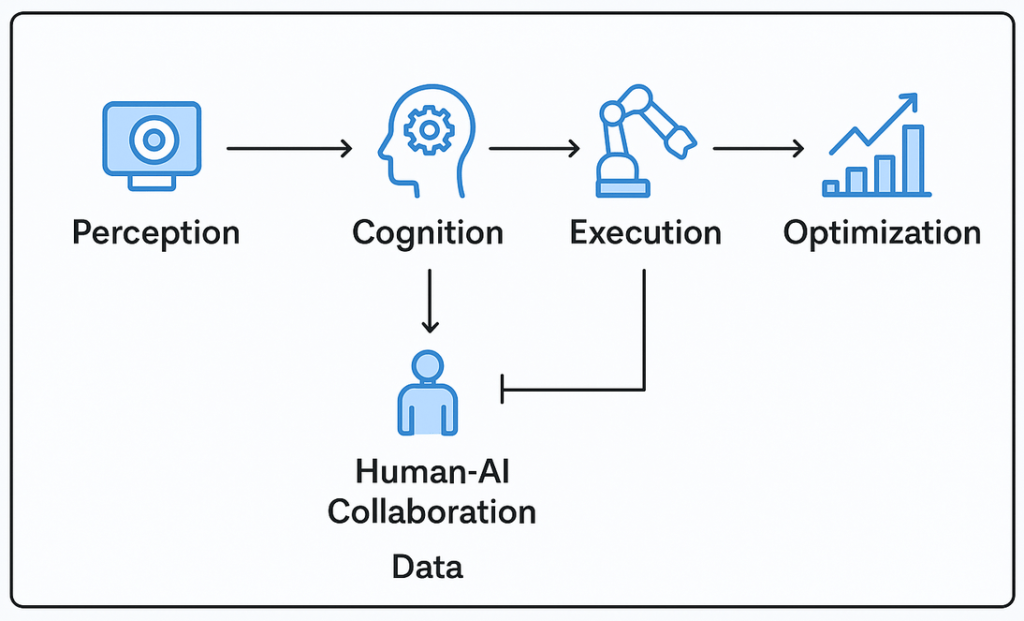
Leading enterprises rarely choose between RPA and AI in isolation; instead, they architect Intelligent Automation (IA) frameworks that combine both capabilities.
In a hybrid architecture, AI provides the cognitive reasoning engine, while RPA acts as the execution engine that updates legacy backend systems where APIs are unavailable.
End-to-End Enterprise Scenario: Commercial Loan Origination
- Intelligent Ingestion (AI): A commercial bank receives a package containing handwritten bank statements, tax documents, unstructured corporate balance sheets, and identification scans. An IDP pipeline extracts tabular financial metrics, normalizes multi-year financial statements, and outputs structured JSON data.
- Cognitive Fraud & Credit Risk Assessment (AI): Machine learning models score the applicant’s default risk against historical portfolio performance and perform automated identity verification. Simultaneously, an LLM scans the business plan to flag regulatory compliance risks.
- Core Banking System Mutation (RPA): Once the credit risk model generates a passing score, an unattended RPA bot opens the bank’s legacy mainframe system, navigates through several green-screen terminal interfaces, inputs the approved loan parameters, provisions the new account, and attaches the generated digital credit memo.
- Closing Communication (AI/RPA): The system automatically drafts a personalized loan agreement using Generative AI, while RPA routes the contract through an electronic signature API and archives the completed file in the enterprise document repository.
The Paradigm Shift: Agentic Automation vs. Deterministic RPA
The emergence of Agentic AI represents a major shift from pre-programmed workflows to goal-driven autonomy.
Deterministic Scripting vs. Goal-Oriented Reasoning
- Traditional Automation (RPA & Standard Scripts): Requires engineers to explicitly code every single execution step, branching pathway, and error state:
Step A -> Step B -> If Error, Step C. If the path changes, execution stops. - Agentic Automation: The system is provided with a high-level objective, access to a registry of tools (APIs, database drivers, web browser instances, RPA bots), and a set of operational boundaries.
Using design patterns such as ReAct (Reasoning + Acting) or Plan-and-Solve, the AI agent continuously loops through a cognitive cycle:
- Analyze: Assess the current state relative to the objective.
- Plan: Determine the next necessary action step.
- Select Tool: Choose the appropriate API, SQL query, or RPA bot execution payload.
- Execute & Observe: Run the tool, parse the output payload, evaluate success or failure, and adjust the operational strategy dynamically if an error occurs.
Enterprise Considerations for Agentic Deployment
While AI agents offer high flexibility, they introduce governance challenges that deterministic RPA avoids:
- Nondeterministic Execution Paths: The agent may take different valid paths to achieve the same goal, complicating traditional static audit trails.
- Loop Traps and Token Consumption: Poorly bounded agents can enter infinite reasoning loops or trigger expensive cascading API calls if tool outputs are ambiguous.
- Granular Permission Guardrails: Agents must operate under strict Identity and Access Management (IAM) permissions, preventing them from taking destructive system actions (e.g., executing unvalidated
DROP TABLEorDELETEdatabase mutations) during autonomous problem-solving.
Total Cost of Ownership (TCO) and Lifecycle Economics
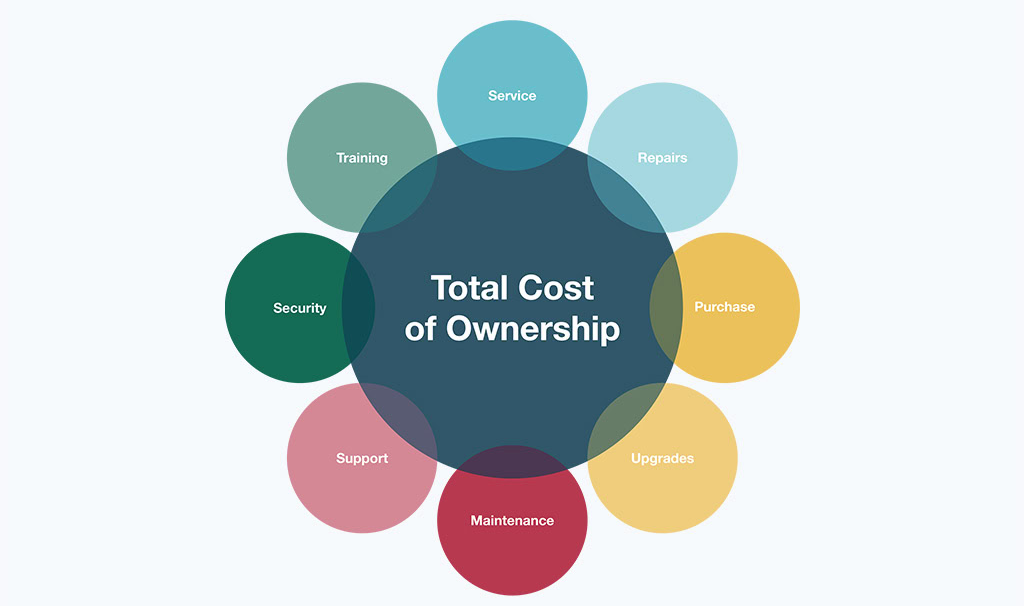
A comprehensive evaluation of automation technologies requires evaluating total financial impact across the software development lifecycle, rather than focusing solely on upfront software licensing.
Cost Components Breakdown
- Licensing & Compute Infrastructure:
- RPA: Driven by the number of concurrent bot runners (Attended vs. Unattended license seats) and virtualized desktop infrastructure hosting the execution environments.
- AI Automation: Driven by API token consumption (for commercial LLMs/Vision models), GPU compute clusters for on-premise model hosting, and storage scaling for high-dimensional vector databases.
- Implementation and Data Engineering:
- RPA: Rapid initial deployment via low-code drag-and-drop studios. Low initial engineering bar for structured processes.
- AI Automation: High initial engineering investment. Requires pipeline creation for data normalization, prompt engineering, vector database indexing, continuous fine-tuning, and robust evaluation harness testing (e.g., RAG triad evaluations).
- Ongoing Maintenance and Maintenance Drift:
- RPA: High long-term maintenance overhead. Frequent application updates, security patches, and interface redesigns break selectors, requiring developer intervention to re-map interfaces and fix broken flows.
- AI Automation: Lower maintenance overhead from UI shifts due to underlying model generalization. However, it introduces Model Drift and Data Drift, requiring ongoing monitoring to ensure inference accuracy, semantic alignment, and extraction performance do not degrade over time.
Strategic Decision Matrix & Selection Framework
To select the optimal technology stack for a process, enterprise architects should pass the workflow through a structured decision tree.
Process Assessment Checklist
Choose RPA When:
- The input data arrives in standardized formats (e.g., CSV, SQL queries, structured Excel templates).
- The workflow follows unambiguous rules without reliance on subjective judgment or interpretation.
- Transaction volumes are high, predictable, and run on stable target applications with infrequent UI updates.
- The system must interact directly with legacy desktop applications lacking backend REST or SOAP APIs.
Choose AI Automation When:
- Inputs are unstructured (e.g., customer support emails, unstructured legal contracts, physical document scans).
- The workflow requires probabilistic evaluation, intent classification, sentiment analysis, or contextual decisioning.
- The business logic must adapt dynamically to variable inputs without failing on unmapped edge cases.
- Process outcomes require generative capabilities, such as synthesizing multi-source data into written responses.
Choose a Hybrid Architecture When:
- The end-to-end process begins with unstructured inputs but requires updates to legacy enterprise software lacking accessible APIs.
- High-volume transactional data requires cognitive parsing (AI), data validation against enterprise business rules, and multi-system UI entry (RPA).
- Human experts must supervise low-confidence probabilistic outputs before executing deterministic downstream tasks.
Enterprise Risk, Governance, and Lifecycle Management
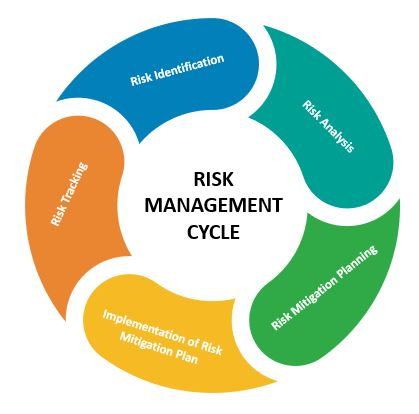
As automation environments expand across business units, maintaining centralized control, security compliance, and operational resilience requires establishing a formal Automation Center of Excellence (CoE).
1. Identity and Access Management (IAM)
Automated systems must be treated as non-human identities subject to strict Principle of Least Privilege controls:
- RPA Bots: Must utilize unique, dedicated domain service accounts with credentials stored in enterprise key vaults. Under no circumstances should bots run under personal employee accounts or share static credentials.
- AI Agents: Must operate within strictly bounded API permissions, preventing autonomous models from accessing data stores or executing destructive actions beyond their operational scope.
2. Regulatory Alignment and Algorithmic Auditability
With emerging regulatory frameworks such as the European Union AI Act, enterprises using AI for high-stakes decisions (e.g., automated credit scoring, hiring screening, or insurance underwriting) face strict compliance mandates:
- Explainability: AI-assisted decision points must provide an audit trail detailing how a specific inference was generated, including underlying feature weights and confidence thresholds.
- Deterministic Fallback: Workflows affecting critical financial or legal status must maintain a deterministic fallback path or mandate a Human-in-the-Loop review step when risk thresholds are breached.
- Immutable Logging: Enterprise control towers must log every input payload, model version ID, generated confidence score, human override event, and downstream system mutation to maintain audit readiness.
3. Continuous Performance and Lifecycle Monitoring
To prevent operational degradation, the Automation CoE must continuously track operational metrics across both technologies:
- RPA Operational Metrics: Bot utilization rates, average execution duration per item, selector exception frequency, and target application downtime tracking.
- AI Model Operational Metrics: Inference latency, confidence score distributions, Human-in-the-Loop escalation ratios, data drift metrics, and API token cost efficiencies.
The Horizon: Hyperautomation and the Autonomous Enterprise
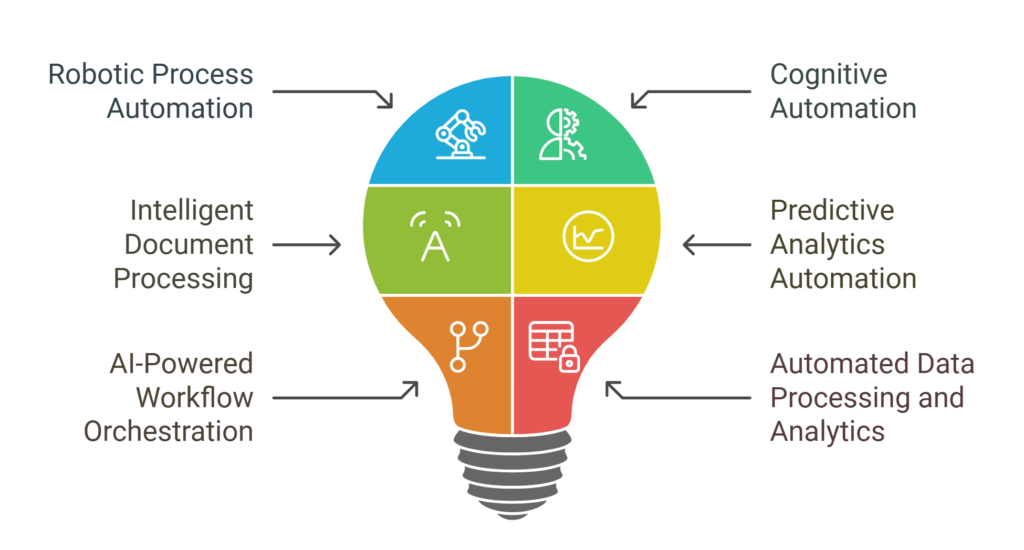
The artificial boundary between RPA and AI automation is disappearing.RPA vs AI The enterprise automation landscape is consolidating into a unified paradigm often called Hyperautomation—the strategic integration of multiple technologies, including RPA, AI, Intelligent Document Processing, Process Mining, and Workflow Orchestration.
Future operational environments will rely on Process Mining algorithms that analyze system logs and UI interactions in real time to discover automation candidates automatically. Once identified, generative AI models will construct initial workflow skeletons, deploy cognitive parsing tools for unstructured inputs, assign RPA bots for legacy systems, and route complex edge cases to human managers.
RPA vs AI The enterprise of the future will not be defined by whether it uses RPA or AI Automation. It will be defined by how effectively it integrates deterministic execution, cognitive interpretation, and agentic orchestration into a secure, scalable, and self-optimizing operational fabric.
Frequently Asked Questions
Is RPA the same as AI automation?
No. RPA primarily automates predefined, rule-based tasks, while AI automation uses artificial intelligence to interpret information, identify patterns, and support more dynamic workflows.
Which is better, RPA or AI automation?
Neither is universally better. RPA is often better for predictable repetitive tasks, while AI automation is more suitable for processes involving unstructured information, interpretation, or intelligent decision support.
Can RPA and AI work together?
Yes. AI can interpret information and make recommendations while RPA executes predefined actions across business applications.
Is RPA becoming obsolete because of AI?
Not necessarily. RPA remains useful for reliable execution of structured tasks. AI can expand what automation systems are capable of doing rather than simply replacing every RPA use case.
What is intelligent automation?
Intelligent automation combines automation technologies with AI and related technologies to automate processes that require both execution and some level of interpretation, analysis, or decision support.