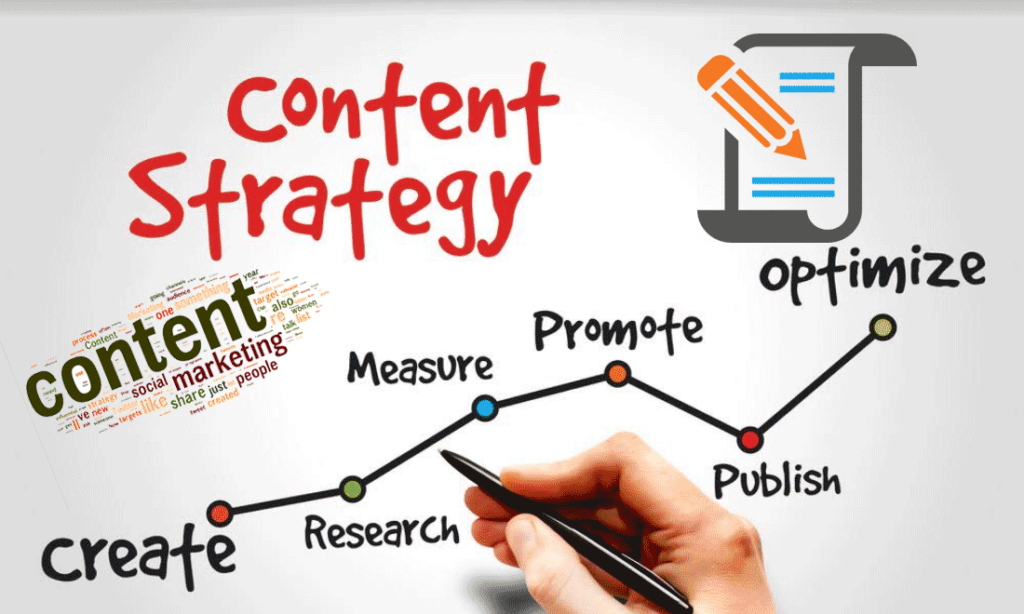
Acontent marketing strategy is a documented plan that defines how content Marketing will be created, distributed, and measured to support business objectives. It outlines what topics to focus on, who the target audience is, which channels to use, and how success will be tracked. A strong strategy ensures that every piece of content serves a clear purpose and contributes to growth.
To create a content marketing strategy, set clear goals, define your target audience, choose the right formats and channels, plan a content calendar, and measure your results. Focus on solving real problems for your readers or viewers rather than just pushing products.
The Importance of the Content Marketing Strategy

A good content strategy vitally gives marketing teams structured direction around business goals, which are informed by big-picture research that lets them orient towards success. Without it, campaigns are often misaligned and resources go to waste.
According to our 2025 Creative Operations Trend Report, creative teams are increasingly expanding from small groups of 10–20 to 30–100+ members, putting pressure on the industry to find structure. When left unmanaged, on the other hand, increased output often leads to what industry leaders call “chaos content.”
Strategy provides the frameworks and central systems needed to reduce duplication and leverage content for alignment, efficiency, and resilience to creative operations.
How Strategy Aligns Content with Business Drivers: A Hypothetical
Take a skincare company, for example. Without a guiding strategy, they might focus on writing blogs explaining what skincare products were, which get good visibility on Google, but their revenue growth is dismal. What’s more, is the countless decisions that are made on a case-by-case basis causes marketers to feel more overworked and their content disconnected from a central brand.

If this skincare company had a defined content strategy, however, they would have realised in advance that those blogs wouldn’t lead to long-term revenue growth. Rather, their high-value customers are well-informed skincare fans ages 18-30, who don’t need help defining toner, and instead seek comparison videos on TikTok.
By starting with this knowledge, the brand would be creating content that’s directed at the right audience from the start, making each moment in content creation count. This direction will also naturally simplify decisions (video length, influencer to hire, tone of voice), saving effort for the creators.
Core Components of a Successful Content Marketing Strategy
Audience, Objectives, and Messaging

A strong strategy starts with defining your target audience segments, understanding their pain points, and mapping content to each stage of the buyer journey.
This ensures relevance and helps avoid misalignment between marketing and sales.
Objectives should be specific and measurable. Whether it’s increasing demo requests, improving campaign ROI, or educating stakeholders, every piece of content should serve that purpose.
Formats and Channels
Identify the formats your audience consumes – articles, videos, webinars, whitepapers – and where they engage most. Your strategy should include tailored plans for each key distribution channel: social media, website, email, or partner networks.
1. Identify your content goals.
Your content strategy will be most effective when based on clear, specific, outcomes-oriented goals to guide your team. Here are some examples to draw from:
- Generate 50 per cent more qualified leads in 90 days.
- Double the number of social media followers in 60 days.
- Get 100+ new email subscribers in 30 days.
2. Create content marketing personas.
A content marketing persona is similar to a buyer persona in that it’s a fictional representation of a target customer that you can use to guide your content creation process. Developing personas can make reflecting on target customers’ needs easier, and how your content specifics can meet them.
Here, you’ll review (or begin) your market research and any buyer personas you’ve created and add details that address how your target customers consume content. Here are some questions to get you started:
- What are the demographics and psychographics of your target customers?
- How do target customers search for information, including internet searches or scrolling social media?
- What hashtags, search terms, and keywords do they use to narrow their searches?
- What sources of information do they trust?
- Which marketing channels do your target customers use the most, including social media, email, and offline channels?
- What types of content do they engage with the most? How do they engage?
- What actions do they take when engaging with content?
- What’s their preferred method of communication?

3. Refine your SEO practices.
Search engine optimisation (SEO) is the process of improving your website and its content to increase your visibility when a potential customer searches related keywords on a search engine, such as Google or Yahoo. SEO includes the strategic development and structuring of content, use of search queries or keywords, adjustments to your site’s source code, and more to ensure that your site ranks high in a search engine result page (SERP).
Explore the following tactics to optimise your website, create compelling content, and generate more organic traffic:
- Use SEO tools like Semrush or Google Keyword Planner to gather keyword and related data.
- Discover and analyse high-volume keywords your target audience would use to find products like yours that you’ll build content around. For example, if you have an online maths tutoring business, relevant keywords might include “online maths tutors” or “online maths tutoring.” If you sell graphic t-shirts, relevant keywords might be “graphic t-shirts” or “women’s graphic t-shirts.”
- Discover searchers’ intent for each keyword. Are they searching for information in general, information to learn more about a brand, a specific website, or ways to make a purchase? When you know searcher intent, you can design content to satisfy that intent and establish your content and brand as authoritative, trustworthy, and relevant.
- Review search engine result page details. What kinds of content do top-ranking articles produce? What do these content creators do well? What opportunities exist to create better content?
4. Analyse competitors’ content and marketing strategy.
Evaluating competitors’ content can help reveal industry standards and opportunities to create fresh content that fills gaps and serves customers.
- Where do competitors publish content, including websites, landing pages, social media platforms, and email?
- How do followers and subscribers engage with this content?
- What topic areas do competitors cover?
- What type of content do you see, including articles, videos, eBooks, reports, and short-form content?
- What pain points does this content solve?
- What topics and customer pain points can you cover that your competitors don’t?
- What fresh approaches can you take to generating content that exceeds industry standards?
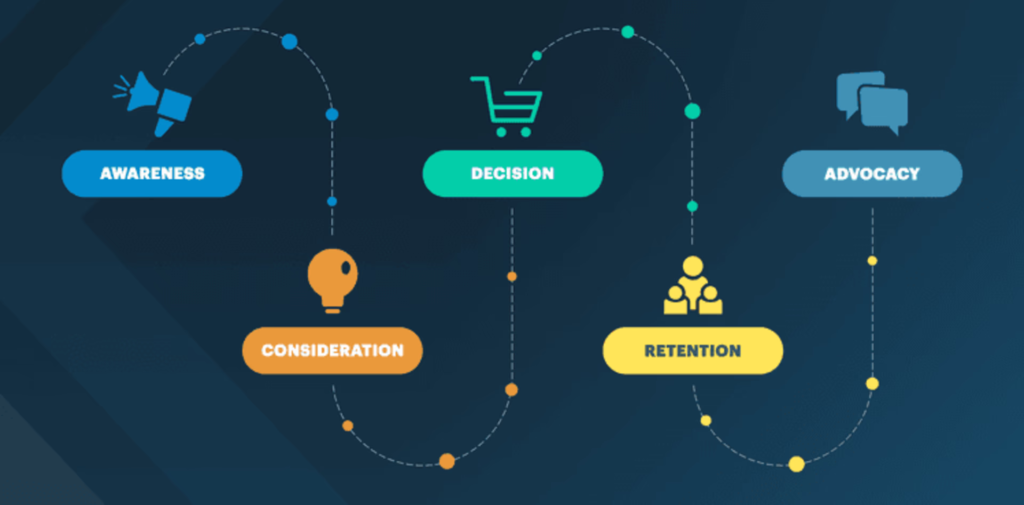
5. Design a content-focused customer journey.
In this step, your goal is to create content to guide customers through each stage of the buyer’s journey. Important questions include:
- What do customers need at each stage?
- What are the touchpoints at each stage?
- What kinds of content will best serve customers at each touchpoint?
- How will each content piece help you achieve your content goals?
The table below offers a guide for laying out your content-focused customer journey.
| Buyer’s journey stages | Touchpoints | Content |
| Awareness | Social media posts; blog articles in SERPs | Common challenges target audience faces and ways to address them; common pre-purchase concerns; infographics, videos, and quizzes |
| Consideration | Social media; landing pages optimised for email capture (lead magnets); email | Lead magnets; welcome packets; emails that educate subscribers |
| Purchase decision | Email; sales and product pages; social media; in-app checkout; digital and social media ads | Emails with promotions, deals, and offers; sales copy that includes benefits of products, testimonials, and how to purchase |
| Retention | Email; social media pages; private social media groups; mobile app; community forums; events | How to get the most out of product experience; upsells to other products and subscriptions; invitations to events |
| Loyalty | Social media pages and private groups; email; customer support desk; mobile app; community forums; events | Invitation to request new features; invitations to join affiliate, brand ambassador, referral programmes; loyalty rewards offers; customer shout-outs; customer-generated content |
6. Develop a process to generate content.
Meet your goals and make your customer journey successful by generating content regularly. A streamlined process can make it easier to develop ideas and build content that serves target customers at all touchpoints over time.
Here’s an example of a content creation process you could adopt:
- Track topics that are trending amongst your target customers.
- Discover relevant, high-volume keywords using your SEO tool.
- Brainstorm content topics with the customer’s journey in mind.
- Determine the types of content you’ll generate for each topic, including blog articles, eBooks, videos, podcasts, polls, quizzes, email campaigns, and more.
- Fill in a content calendar for each week, month, or quarter.
- Draft, review, and edit content.
- Publish and distribute content across channels.
7. Measure the success of your content
Once your content is published and your audience begins engaging with it, you’ll need a plan to measure how well it performs. Most websites, social media platforms, and email systems report metrics, like the number of views or clicks a piece of content gets and how many people subscribe or follow over a period. You can also set up a content management system (CMS), such as Salesforce or HubSpot, to streamline your efforts across all platforms.
- Determine the metrics you’ll monitor on each platform or CMS.
- Decide how often you’ll take insights from these metrics, such as weekly, monthly, or quarterly.
- Once you see how your content is performing, this will provide you with a basis for adjusting individual pieces or content or the strategy as a whole.

FAQ’S
1. What is content marketing?
Content marketing is a strategy that involves creating and sharing valuable content to attract, engage, and retain a target audience.
2. Why is content marketing important?
It helps build brand awareness, improve search engine rankings, generate leads, and establish trust with potential customers.
3. What types of content are used in content marketing?
Common formats include blog posts, videos, infographics, social media posts, podcasts, email newsletters, and case studies.
4. How long does content marketing take to show results?
Content marketing is a long-term strategy. Most businesses start seeing measurable results within 3 to 6 months, depending on consistency and SEO efforts.
5. How can I measure the success of content marketing?
You can track success using metrics such as website traffic, keyword rankings, engagement, lead generation, conversion rates, and return on investment.