
We have spent the last decade staring directly at our smartphone screens, completely mesmerized by the explosion of mobile apps, high-definition streaming, and cloud ecosystems. Yet, almost no one looks at the quiet, unglamorous piece of hardware that actually makes the entire digital matrix possible: the SIM card. For decades, this tiny sliver of plastic with its gold-plated microchip has sat silently in the tray of our devices, acting as a digital passport. It holds our cryptographic identities, proves to cell towers that we are who we say we are, and grants us passage into the global network.
But as we navigate 2026, the classic, plastic SIM card is undergoing a radical evolutionary mutation. It is no longer just a passive vault for network keys. Driven by the rapid shift toward eSIMs, the immense bandwidth demands of global 5G networks, and the integration of Artificial Intelligence, the humble SIM is transforming into an active, highly intelligent node. The telecommunications landscape has grown far too massive and volatile for human engineering teams or rigid, hard-coded rules to manage. We have handed the keys of connectivity over to machine learning algorithms, turning our networks into self-healing, self-optimizing, and deeply protective ecosystems.
The Death of Plastic: The Rise of the Living eSIM
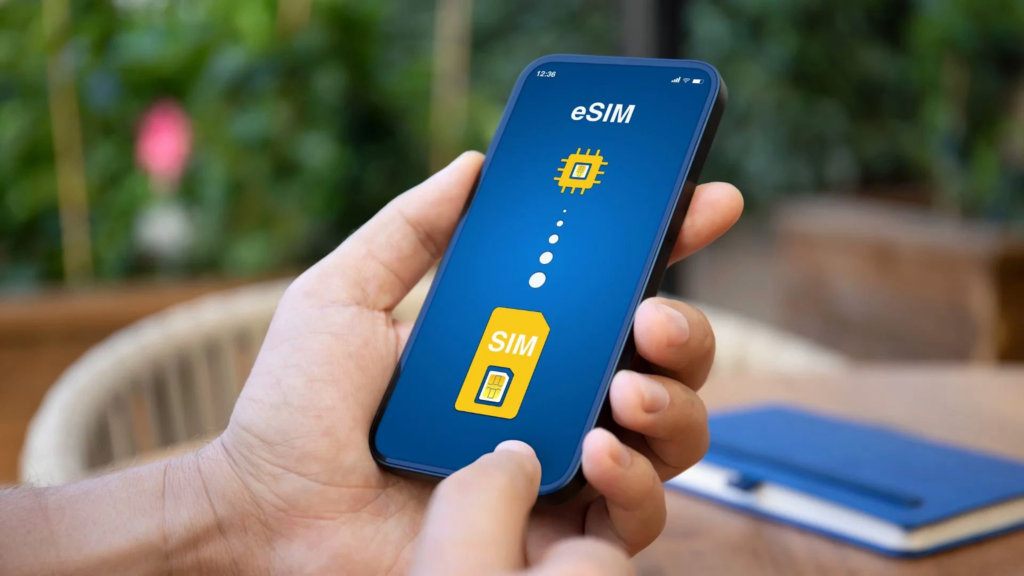
The traditional SIM card was built for an analog era—a physical token you had to wait for in the mail or pick up at a brick-and-mortar retail store. If you traveled internationally, you had to find a paperclip, pop open a fragile tray on the side of your phone, and swap out the plastic, terrified you’d drop the tiny chip into a storm drain.
The explosion of embedded SIM (eSIM) technology completely rewrote this script by vaporizing the physical card into software. But the real shift occurred when telecom providers injected AI into the eSIM provisioning architecture.
Today, managing your mobile connection isn’t about choosing a static plan; it is an optimized, automated dance. If you step off a plane in a foreign country, an AI-driven backend instantly evaluates local carrier tower loads, pricing structures, and signal degradation patterns, seamlessly pushing an optimized network profile to your device before you’ve even cleared customs. For global enterprises managing tens of thousands of shipping containers or industrial sensors across the globe, AI handles the logistical nightmare of profile deployment autonomously, ensuring that no device ever falls into a dead zone.
Autonomic Traffic Management: The Invisible Air Traffic Controller

Modern mobile infrastructure is a chaotic, high-stakes game of musical chairs. Every time thousands of people stream into a football stadium, cram into a subway terminal during rush hour, or look for a signal during a sudden power outage, local cell towers are battered by an overwhelming wave of data authentication requests. Under legacy systems, this led to the inevitable modern frustrations: dropped calls, spinning loading wheels, and data throttling.
AI has stepped in as an automated air traffic controller operating at the edge of the network. By analyzing millions of data points every millisecond—including historical usage trends, real-time spatial movement of users, and local atmospheric interference—predictive algorithms can see a network bottleneck forming minutes before it actually happens.
Instead of waiting for a crash, the network dynamically reconfigures its resources. It handles “network slicing” on 5G infrastructure, instantly carving out dedicated, high-priority lanes for emergency services and critical communication, while subtly rerouting casual background data traffic to distant towers. You don’t see the thousands of microscopic rerouting decisions happening every second; you just notice that your video call didn’t drop when you walked into a crowded terminal.
The Behavioral Shield: Weaponizing AI Against SIM Exploits

As our phones became the central repositories for our entire lives—housing bank accounts, two-factor authentication codes, private medical records, and corporate data—they became prime real estate for highly sophisticated cybercriminals. The most dangerous exploit of the modern era is SIM swapping: a social engineering attack where a criminal convinces a carrier to port your phone number onto a blank SIM card they control, instantly locking you out of your digital life and intercepting your security codes.
| The Security Model | Operational Logic | Defensive Capability |
| Legacy Static Rules | Relies on passwords, PINs, and standard security questions. | Vulnerable. Easily bypassed via social engineering or leaked database credentials. |
| AI Behavioral Telemetry | Monitors real-time usage patterns, travel physics, and hardware signatures. | Adaptive. Instantly blocks transactions that deviate from the user’s organic identity. |
AI has changed the defensive strategy from static gatekeeping to real-time behavioral telemetry. The network continuously learns what your organic identity looks like. It understands your typical geographic velocity (you cannot authenticate a device in London twenty minutes after using a cell tower in New York), your device’s unique hardware telemetry, and your baseline data consumption patterns.
If a hacker attempts a SIM swap, the AI catches the digital fingerprint mismatch instantly. Before the malicious port can finalize, the system flags the transaction as an anomaly, locks down the credential pathway, and forces a multi-layered verification process. It turns security from an annoying barrier into an invisible, adaptive shield.
Industrial Nervous System: Automating the Internet of Things
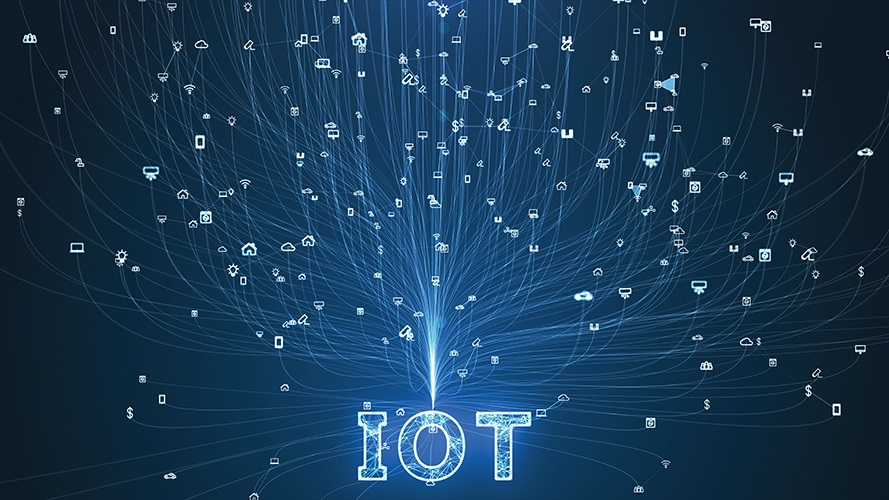
The true scale of the AI-SIM convergence becomes apparent when you look past consumer smartphones and look at the vast machine landscape of the Internet of Things (IoT). We are living in a world populated by billions of connected devices: autonomous agricultural drones monitoring crop health, smart pacemakers streaming cardiac data to hospitals, fleets of electric delivery vans, and massive arrays of city utility sensors.
Managing this massive infrastructure manually is a human impossibility. If an industrial sensor array in a remote desert experiences a software fault or a connection dropout, sending a technician out to swap a card is a financial disaster.
AI acts as the central nervous system for these machine ecosystems. It continuously tracks the vitals of millions of micro-SIM profiles simultaneously. If an anomaly is spotted—such as a smart water meter suddenly burning through its battery or sending corrupted packets—the AI doesn’t just flag the error; it runs diagnostics, isolates the compromised connection, and pushes a targeted, over-the-air firmware patch to the embedded chip. It creates an infrastructure that can heal its own connections without a human engineer ever having to touch a keyboard.
The Green Machine: Carbon Mitigation via Smart Silicon

Beyond the metrics of speed, latency, and bulletproof security, the marriage of AI and SIM tech is quietly tackling one of the telecom industry’s dirtiest secrets: its massive carbon footprint. The infrastructure required to keep the world hyper-connected is an energy hog. Thousands of base stations, massive data routing centers, and cell towers run at maximum power twenty-four hours a day, generating immense heat and burning through fossil fuels regardless of whether anyone is actually using them.
AI-driven energy management has transformed these networks from static power drains into breathing, dynamic structures. By tracking real-time user connections via local SIM telemetry, the system knows exactly when a commercial district empties out for the night or when a residential area goes to sleep.
“True network sustainability isn’t about buying carbon offsets; it’s about building intelligent silicon that knows exactly when to sleep and when to wake up.”
Instead of leaving massive multi-input antenna arrays (MIMO) running at full capacity in an empty business park at 3 AM, the network autonomously puts redundant hardware layers into a deep-sleep state. The moment the morning commute begins and SIM cards begin registering on the local perimeter, the system brings those sectors back online in milliseconds. This smart automation slashes operational overhead for providers while systematically reducing the global environmental impact of our digital addictions.
The Privacy Paradox: The Horizon of Autonomous Telecom
As we look toward the inevitable deployment of 6G networks down the line, the integration of AI into our connective tissue will only deepen. We are moving toward a future of entirely autonomous network choices. Your future device won’t ask you to pick a mobile carrier or choose between Wi-Fi and cellular networks. The AI embedded within your secure identity module will negotiate connections constantly on a sub-perceptual level, buying micro-packets of bandwidth from shifting orbital satellites, local mesh networks, and fiber-backed towers to give you an uninterrupted stream of data.

Yet, this hyper-connected future forces us to confront a profound ethical dilemma. For an AI to optimize your connection, protect your identity, and predict network bottlenecks, it must have access to a vast stream of your real-time behavioral data. It knows where you go, how fast you move, when you sleep, and what devices you interact with.
The great challenge of the coming era will not be technological capacity—we have already proven we can build world-spanning, intelligent machines. The real test will be structural governance. Telecom giants and regulators must implement strict architectural boundaries, using decentralized machine learning models and zero-knowledge encryption to ensure that the intelligent system protecting our connections never transforms into an omniscient apparatus of mass surveillance. The future of our connectivity must be built on a foundation that respects our anonymity just as much as it values our speed.
FAQ’S
1. How is AI improving SIM technology?
AI enhances SIM technology by improving network performance, increasing security, and automating mobile network management.
2. What is an eSIM, and how does it work?
An eSIM is a built-in digital SIM that allows users to activate or switch mobile plans without inserting a physical SIM card.
3. Can AI help prevent SIM fraud?
Yes, AI detects unusual activity, identifies potential fraud, and helps protect users from SIM-related security threats.
4. Why is AI important for 5G networks?
AI helps manage network traffic, optimize connectivity, and ensure faster and more reliable 5G performance.
5. What are the benefits of AI-powered SIM technology?
It offers better security, improved network efficiency, faster connectivity, seamless eSIM management, and an enhanced user experience.