
Almost overnight, a company that used to be known primarily by PC gamers and graphic designers transformed into the undisputed engine of the global economy. As the world rushed to build generative AI systems, tech giants, governments, and startups scrambled to get their hands on Nvidia’s graphics processing units (GPUs). For a while, AI owning Nvidia stock felt like holding the only pickaxe supplier during the biggest gold rush in a century.
But gold rushes don’t last forever in their initial, chaotic phase.
As the initial wave of frantic buying settles, a much bigger, far more interesting question is emerging across Wall Street, Silicon Valley, and executive boardrooms: What happens next?
Can Nvidia remain a runaway growth story once everyone has built their initial AI server racks? Or can the company pull off its next big trick—transitioning from a hardware company that sells insanely fast chips into an indispensable, everyday platform that powers the physical and digital world?
To understand where Nvidia goes from here, we have to look past the hardware headlines and explore how the company is quietly positioning itself for the next decade of computing.
The Reality of the Hardware Boom
To appreciate Nvidia’s future, you have to understand why its present has been so lucrative.
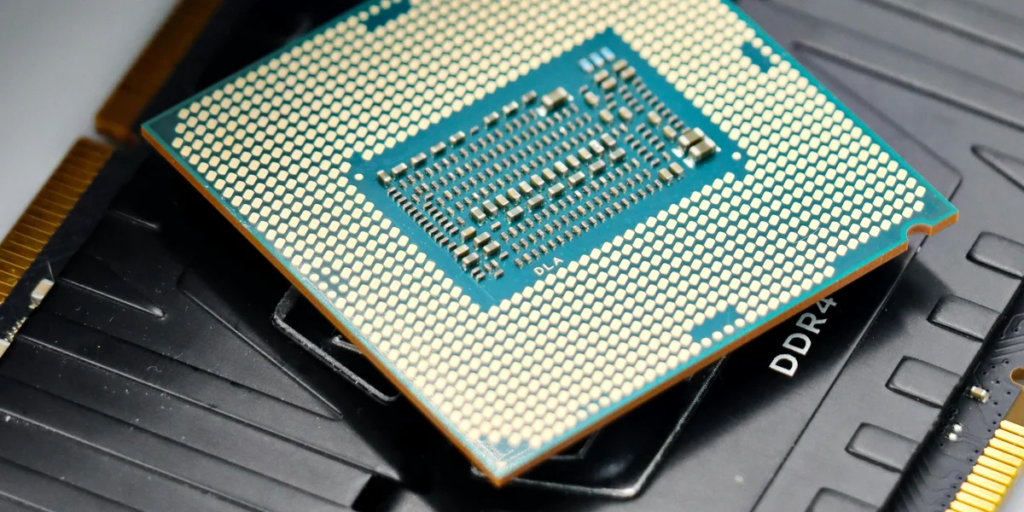
Building modern artificial intelligence isn’t like writing traditional software. You can’t just run it on a standard computer processor. Training massive large language models (LLMs) requires crunching staggering amounts of data simultaneously. Nvidia’s GPUs were originally designed to render millions of 3D pixels at once for video games—a task that required parallel processing. It turned out that the exact same mathematical architecture needed to light up virtual landscapes was perfect for training neural networks.
[ Traditional CPU ]  ──► Processes tasks one by one (Sequential)   ──► Great for general computing
[ Nvidia GPU ]       ──► Processes thousands of tasks at once     ──► Perfect for AI & parallel math
Nvidia didn’t just get lucky with hardware, though. Over fifteen years ago, its CEO, Jensen Huang, made a multi-billion-dollar bet on a software platform called CUDA. CUDA allowed programmers to easily write software for GPUs.
While rival chipmakers focused solely on silicon, Nvidia built an entire ecosystem of software tools, libraries, and developer frameworks. By the time the AI wave hit, every AI researcher on the planet had spent a decade learning how to build on Nvidia’s tools. Trying to switch to a rival chip wasn’t just a matter of buying different hardware—it meant completely rewriting millions of lines of code.
┌────────────────────────────────────────────────────────────────────────┐
│                        THE NVIDIA ECOSYSTEM                            │
├────────────────────────────────┬───────────────────────────────────────┤
│  Hardware Layer                │  GPUs, Superchips, Custom Systems     │
├────────────────────────────────┼───────────────────────────────────────┤
│  Interconnect & Networking     │  Quantum InfiniBand, Spectrum Ethernet│
├────────────────────────────────┼───────────────────────────────────────┤
│  Software & Developer Platform │  CUDA, TensorRT, NeMo, Omniverse      │
├────────────────────────────────┼───────────────────────────────────────┤
│  Enterprise Services           │  Nvidia AI Enterprise, Cloud API Access│
└────────────────────────────────┴───────────────────────────────────────┘
Why the Market Is Asking: “What Have You Done for Me Lately?”
Despite its current dominance, relying solely on hardware sales is a risky long-term strategy for any business.
Sustaining rapid growth requires constantly finding new avenues for expansion. Investors and industry analysts are beginning to look past the initial infrastructure build-out and ask hard, practical questions:
- The ROI Problem: Tech companies are spending hundreds of billions of dollars on AI servers. Eventually, their shareholders are going to demand real, bottom-line business value. If companies struggle to turn AI into actual profit, hardware spending will naturally slow down.
- The In-House Threat: Nvidia’s biggest customers—cloud giants like Amazon, Google, Microsoft, and Meta—are actively designing their own custom AI chips to cut costs and reduce their reliance on a single supplier.
- The Efficiency Wave: AI researchers are working tirelessly to make models smaller, cheaper, and more efficient. If future AI models require a fraction of the computing power to run, businesses won’t need to buy as many massive server farms.
This is why Nvidia’s next chapter cannot simply be about selling more GPUs. It has to be about becoming the foundational layer for everything that comes after the initial AI hype.
Pillar 1: Software as a Subscription
If you ask industry insiders what Nvidia’s most underrated asset is, they won’t say the H100 or Blackwell chips. They will say Nvidia AI Enterprise.
Nvidia is aggressively expanding its software-as-a-service (SaaS) offerings. Instead of just selling a piece of hardware once and walking away, Nvidia wants businesses to pay a recurring annual fee per GPU to access their specialized enterprise software stack.
[ One-Time Hardware Sale ] ──► Buy GPU once ──► Revenue stops
[ Modern Platform Model ]   ──► Buy GPU + Pay Annual Software License ──► Recurring Revenue
Think of it like the iPhone model: Apple makes great hardware, but it locks in long-term value through the App Store, iCloud, and service subscriptions.
By offering turnkey software solutions for industries like healthcare (drug discovery), finance (fraud detection), and retail (inventory tracking), Nvidia makes it easy for a non-tech company to deploy AI without hiring a team of expensive machine-learning PhDs. Once an enterprise integrates Nvidia’s software directly into its daily operations, switching to a competitor’s cheaper chip becomes almost impossible.
Pillar 2: Owning the Data Center Highway (Networking)

When people think of AI data centers, they picture rows of glowing graphics cards. But putting 10,000 GPUs into a single room creates a massive logistics problem: how do you get those chips to talk to each other fast enough so they aren’t sitting around waiting for data?
A bottleneck in data transmission can render expensive GPUs useless. This is why Nvidia acquired Mellanox in 2020 for nearly $7 billion—a move that raised eyebrows at the time, but now looks like a stroke of genius.
  [ GPU 1 ] ──┐                                   ┌──► [ GPU 3 ]
              ├─► High-Speed Interconnect Highway ┤
  [ GPU 2 ] ──┘   (Quantum InfiniBand / Spectrum) └──► [ GPU 4 ]
Nvidia doesn’t just sell the engine (the GPU); it sells the high-speed highway, traffic lights, and toll booths (InfiniBand and Spectrum-X networking technologies).
By offering a complete, pre-packaged infrastructure stack—chips, cooling, wiring, and networking—Nvidia solves a massive headache for data center operators. It shifts the conversation from “How much does this chip cost?” to “How quickly can you deliver an entire operational AI factory?”
Pillar 3: The Age of AI “Agents”
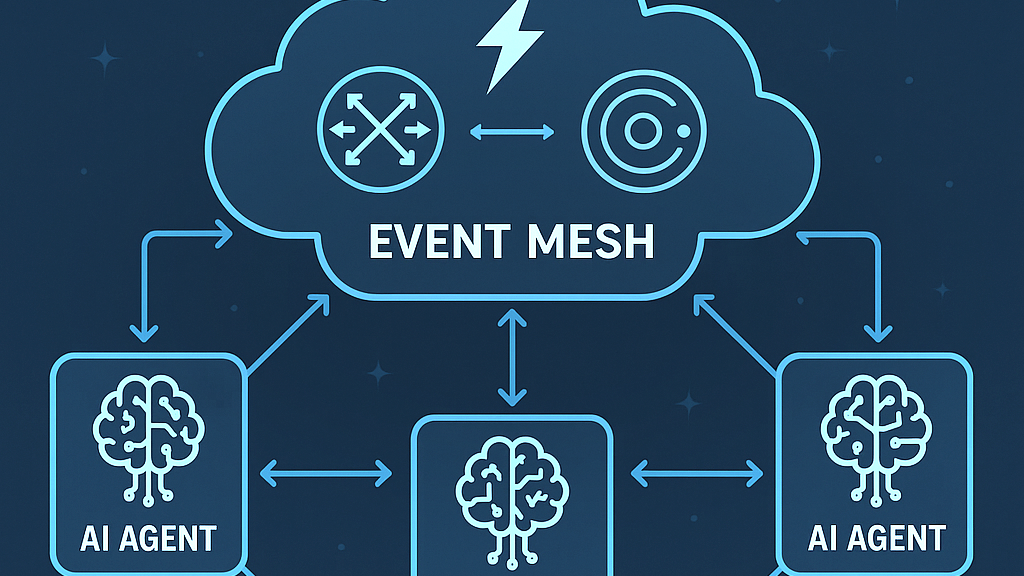
The first phase of generative AI was mostly conversational: you typed a prompt into a box, and a chatbot gave you an answer, a poem, or a block of code. It was impressive, but human interaction remained the bottleneck.
The next major evolution is Agentic AI—autonomous systems that don’t just answer questions, but actively perform complex, multi-step jobs on your behalf.
An AI agent doesn’t sit idle waiting for a human prompt. It continuously monitors data, makes decisions, interacts with other software systems, and executes tasks around the clock:
- In Logistics: Automatically rerouting shipments, placing purchase orders, and negotiating with suppliers in real time.
- In Software Development: Continuously writing, testing, updating, and debugging code behind the scenes.
- In Finance: Monitoring global markets, detecting fraud instantaneously, and executing complex risk adjustments 24/7.
[ Old Chatbot Model ]  ──► Human gives prompt ──► AI answers ──► Work stops
[ Agentic AI Model ]   ──► Continuous loop: Monitor ──► Analyze ──► Execute ──► Repeat
For Nvidia, the rise of agentic AI is a game-changer. Chatbots only use computing power when a human types a prompt. Autonomous AI agents run continuously. That shift from occasional usage to non-stop background processing will require a massive, perpetual baseline of computing infrastructure worldwide.
Pillar 4: Physical AI and the Robotics Explosion

If you want to see what Jensen Huang is genuinely passionate about, watch any of his recent keynotes. He rarely stops talking about Physical AI—bringing artificial intelligence out of the cloud and into the real, physical world.
We are quickly moving toward a future where millions of physical machines will need high-performance AI brains:
- Humanoid robots working on factory assembly lines
- Autonomous forklifts and sorting systems navigating chaotic warehouses
- Surgical robots assisting doctors with millimetric precision
- Autonomous agricultural machinery harvesting crops day and night
┌─────────────────────────────────────────────────────────────────────────┐
│                      NVIDIA'S ROBOTICS TRIFECTA                         │
├─────────────────┬───────────────────────────────────────────────────────┤
│  Nvidia Isaac   │  Software platform for building & training robots     │
├─────────────────┼───────────────────────────────────────────────────────┤
│  Nvidia Thor    │  Supercomputer chip inside the physical machine       │
├─────────────────┼───────────────────────────────────────────────────────┤
│  Omniverse      │  Photorealistic digital twin for safe virtual testing │
└─────────────────┴───────────────────────────────────────────────────────┘
Training a physical robot in the real world is dangerous, slow, and expensive. If a prototype humanoid robot makes a mistake while learning to walk, it breaks its limbs or damages expensive factory equipment.
Nvidia solved this with Omniverse—a platform that lets companies build hyper-accurate “digital twins” of their real-world factories.
Inside Omniverse, a company can deploy thousands of virtual robots, run them at 100x speed in a physics-accurate simulation, and let them fail millions of times until they master their tasks. Once the robot is smart enough in the virtual world, its neural network is downloaded directly into a physical machine powered by Nvidia’s specialized edge-computing chips (like Nvidia Thor).
If robotics turns out to be the next multi-trillion-dollar industry, Nvidia has already built the construction site, the simulation chamber, and the brain.
Pillar 5: Autonomous Vehicles & Edge Computing
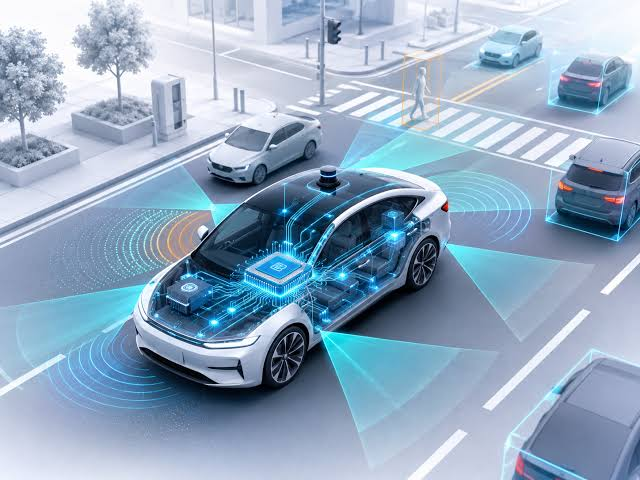
For years, full self-driving technology felt like it was perpetually “five years away.” But autonomous vehicle (AV) technology is finally maturing into real-world commercial viability, from robotaxis roaming city streets to long-haul autonomous trucking corridors.
An autonomous car is essentially a high-performance data center on wheels. It has to process feeds from dozens of cameras, radar units, and lidar sensors in milliseconds, making split-second life-or-death decisions without waiting for a slow cloud server to respond.
[ Camera / Lidar Data ] ──► Local Edge Processing (Nvidia Drive) ──► Instant Braking/Steering
This requires Edge AI—powerful, highly specialized processors installed directly inside the vehicle.
Nvidia’s Drive platform is already integrated into the next-generation fleets of major automakers around the globe. As cars transform into software-defined machines, automotive chips represent a massive, long-term revenue stream that operates on an entirely different business cycle than enterprise cloud servers.
The Massive Risks Nvidia Must Navigate

Despite this impressive vision for the future, Nvidia’s path forward isn’t without significant obstacles. To maintain its legendary status, the company has to clear several major hurdles:
1. The Threat of Competition
Nvidia’s absurdly high profit margins are a massive target on its back. Traditional rivals like AMD and Intel are pouring billions into catching up with hardware that offers competitive performance at lower price points. At the same time, tech giants like Amazon, Google, Microsoft, and Meta are actively pushing custom silicon (like Google’s TPUs or Amazon’s Trainium) to lower their reliance on Nvidia.
2. The Geopolitical Tightrope
Semiconductor manufacturing is inextricably tied to global politics. Most of Nvidia’s advanced chips are manufactured in Taiwan by TSMC. Any major geopolitical disruption or supply chain bottleneck in East Asia could instantly cripple Nvidia’s ability to deliver products to its global customers.
3. Tech Fatigue and Spending Audits
If Fortune 500 companies don’t see tangible revenue gains from their initial generative AI investments over the next couple of years, enterprise tech budgets will face intense scrutiny. A temporary pullback in AI infrastructure spending could hit Nvidia’s quarterly numbers hard, testing investor patience.
The Bigger Picture: From Chipmaker to Everything-Engine
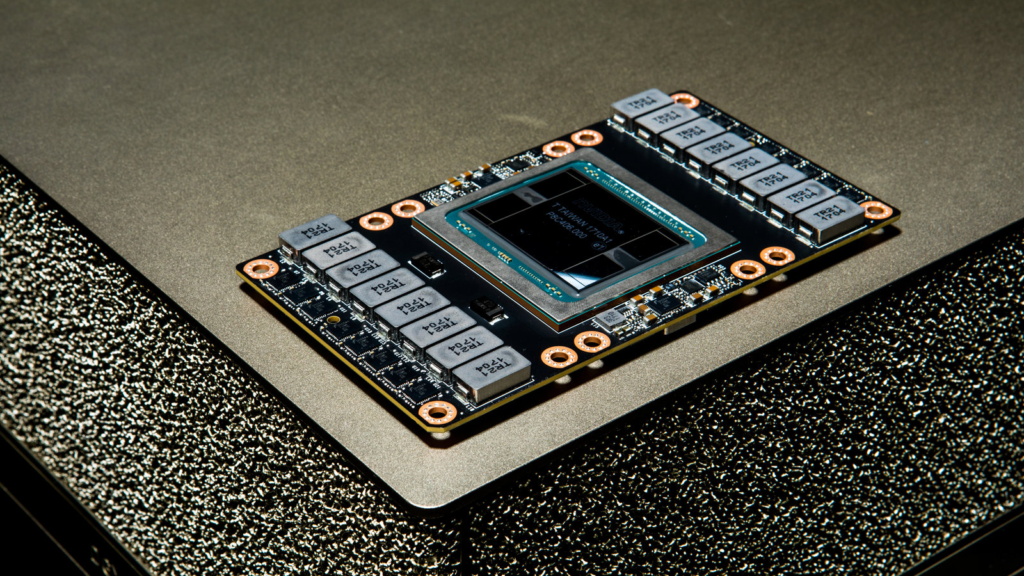
It is easy to categorize Nvidia as just another semiconductor stock that happened to be in the right place at the right time. But looking at Nvidia through that narrow lens misses the forest for the trees.
Nvidia isn’t just selling chips. It is building the foundational platform for the next computational era—an era where computing isn’t defined by typing commands into a screen, but by intelligent software and physical machines acting autonomously in the real world.
| Expansion Area | What Success Looks Like | Why It Matters for Investors |
| Enterprise Software | High-margin subscription revenue per active GPU | Creates stable, predictable cash flow |
| Data Center Networking | Selling complete “AI Factories” instead of loose chips | Captures more value per server rack |
| Agentic AI & Automation | Powering non-stop, continuous background workloads | Drives steady baseline computing demand |
| Robotics & Digital Twins | Becoming the default platform for physical automation | Unlocks massive new industrial markets |
| Autonomous Vehicles | Powering self-driving software and local vehicle chips | Secures long-term automotive market share |
Nvidia’s future growth won’t be driven solely by how many GPUs it can ship next quarter. It will be defined by whether it can successfully transition from being the engine builder to owning the entire transportation network of the modern digital economy.
If Jensen Huang and his team can execute on software, networking, robotics, and edge computing with the same relentless focus they brought to graphics chips, Nvidia won’t just be a beneficiary of the AI boom—it will be the bedrock on which the automated world is built.