A small business hiring a few employees each year has very different needs from a large organization filling hundreds of positions.AI Tools So instead of asking, “What’s the best AI tool?”, start with a more useful question:AI Tools “What’s taking up the most time in our hiring process?”
Once you know that, finding the right type of solution becomes much easier.
1. AI-Powered Applicant Tracking Systems
An applicant tracking system, or ATS, is often the central hub of a recruitment team’s workflow.
Modern ATS platforms can do much more than store resumes. Many now include AI Tools features for candidate searches, resume analysis, candidate matching, workflow automation, and recruitment reporting.
Useful features include:
- AI candidate matching
- Resume parsing
- Candidate search
- Automated workflows
- Interview scheduling
- Recruitment analytics
- HR software integrations
Best for: Companies that want one organized place to manage their recruitment pipeline.
2. AI Resume Screening AI Tools

Imagine receiving 300 resumes for one position.
Reading every application carefully could take most of the day.
AI resume screening tools can help organize applications and identify information such as:
- Relevant skills
- Previous experience
- Education
- Certifications
- Job history
- Qualifications
This can make the first stage of recruitment much easier.
But AI should be treated as a helper rather than a judge. A candidate who doesn’t look perfect on paper may still have exactly the qualities a company needs.
Best for: Businesses dealing with a high volume of applications.
3. AI Job Description AI Tools
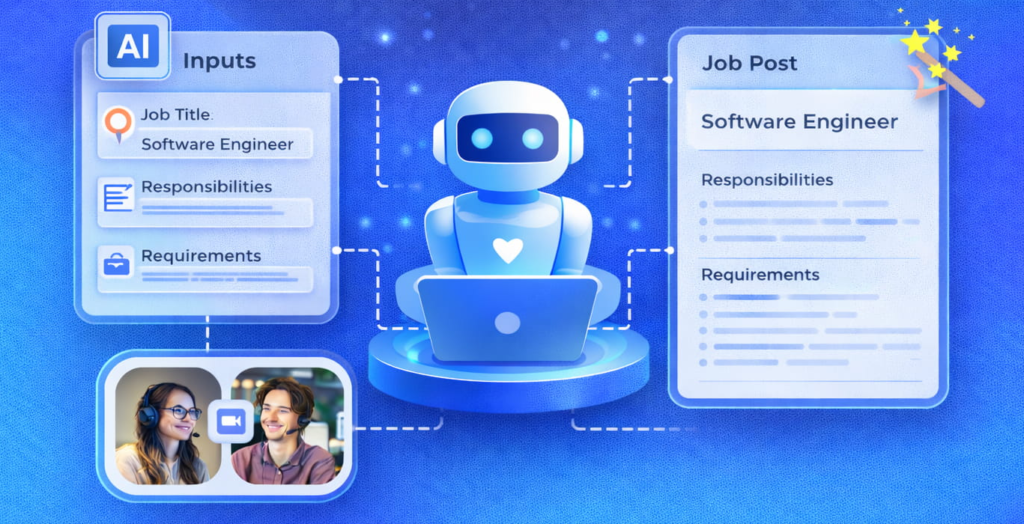
Starting a job description from a blank page can be surprisingly difficult.
AI Tools can turn a few basic details about the role into a structured first draft.
It can help organize:
- Role responsibilities
- Required skills
- Preferred qualifications
- Benefits
- Company information
- Application instructions
Recruiters can then edit the content and add the details that make the role unique.
Best for: HR teams that frequently create job advertisements.
4. AI Candidate Sourcing AI Tools
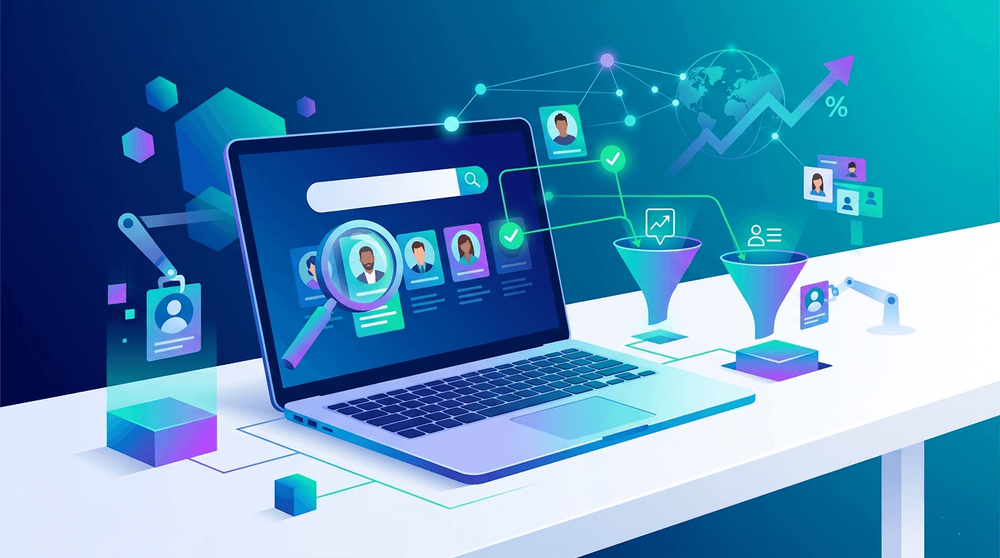
Finding the right candidate can sometimes feel like searching for a needle in a haystack.
AI Tools sourcing platforms can help recruiters discover potential candidates based on skills, experience, previous roles, and other relevant criteria.
This can be particularly useful when hiring for technical or specialist positions.
Best for: Recruiters who need to proactively find talent rather than wait for applications.
5. AI Interview Assistants AI Tools

Interviews require concentration.
The interviewer needs to listen carefully, ask good questions, take notes, and remember important details—all at the same time.
AI interview assistants can help with some of the administrative work by:
- Suggesting interview questions
- Creating interview guides
- Organizing notes
- Summarizing conversations
- Structuring candidate feedback
- Creating follow-up tasks
That can leave interviewers with more time and attention for the actual conversation.
Best for: AI Tools Teams that conduct interviews frequently.
6. AI Interview Scheduling AI Tools
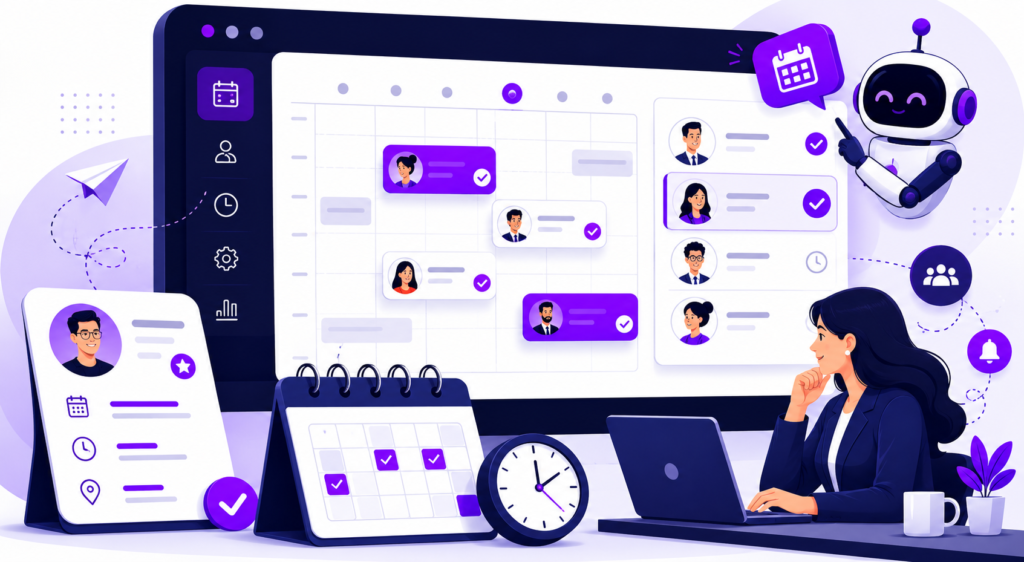
Coordinating calendars shouldn’t take longer than the interview.
AI scheduling tools can check availability across calendars and help find times that work for everyone.
Some can also send reminders and handle rescheduling.
Best for: Companies with multiple interview stages or busy recruitment teams.
7. AI Recruitment Chatbots AI Tools
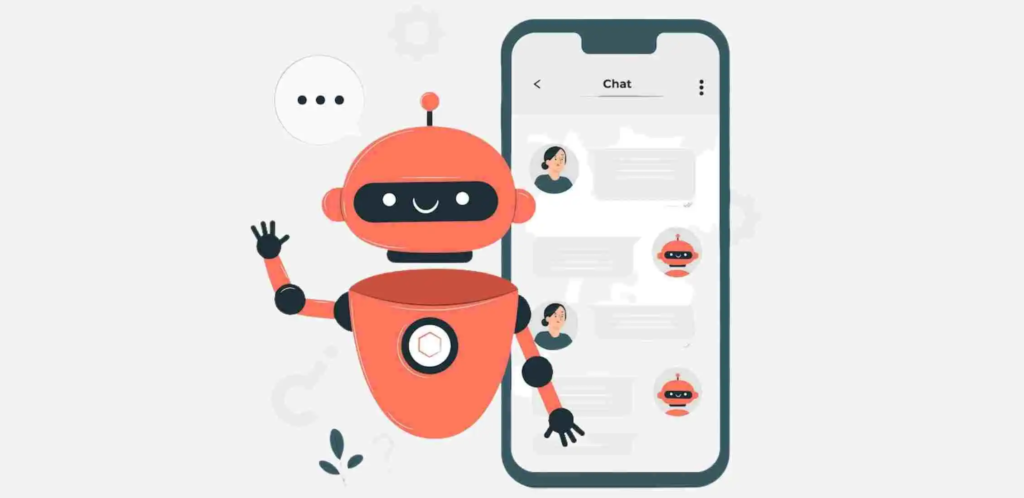
Candidates often have simple questions during the application process.
For example:
- How do I apply?
- What qualifications do I need?
- What happens after I apply?
- How many interview rounds are there?
- When should I expect an update?
A recruitment chatbot can answer many common questions immediately.
This can give candidates quicker access to information while reducing repetitive questions for recruiters.
Best for: Companies receiving large numbers of applications.
8. AI Candidate Communication AI Tools

Candidates want to know what’s happening with their applications.
AI can help recruiters prepare messages for different stages of the hiring process, including:
- Interview invitations
- Follow-ups
- Application updates
- Interview reminders
- Offer communications
- Rejection emails
The recruiter should still review important messages before sending them.
A candidate should feel like they’re communicating with a company that cares—not receiving an automated response from a machine.
9. AI Onboarding Tools
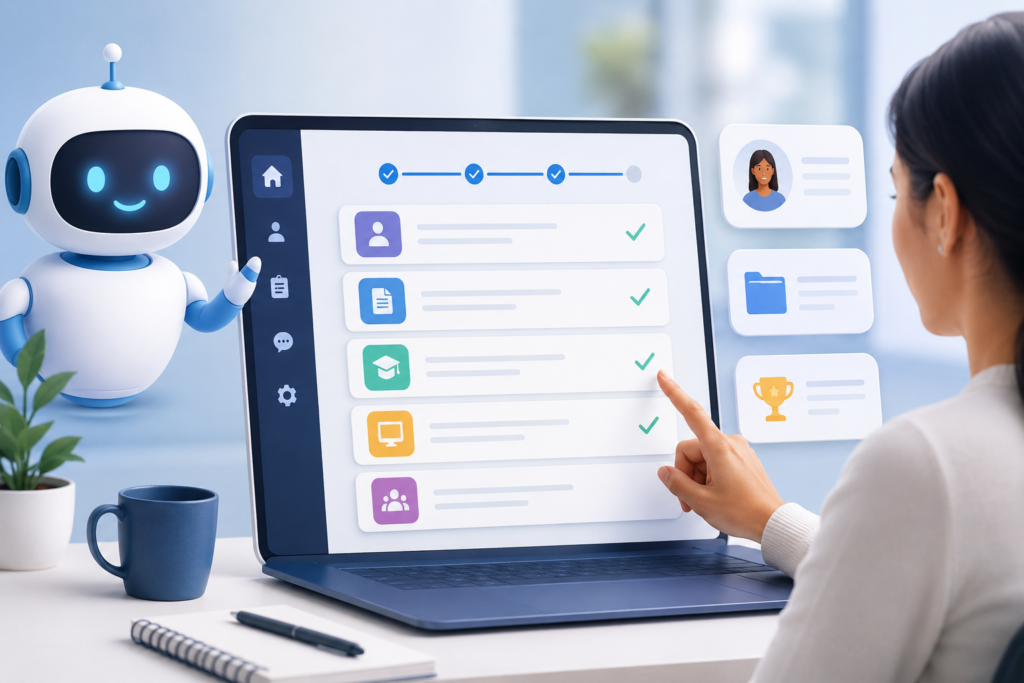
The recruitment process doesn’t really end when someone accepts an offer.
The first few days at a new company usually come with plenty of questions.
Where is the employee handbook?
How do I access my email?
How do I request time off?
Who do I contact about payroll?
AI-powered onboarding tools can help employees find answers to routine questions and navigate basic company processes.
Best for: Growing companies that want a smoother and more consistent onboarding experience.
10. AI HR Assistants
HR teams answer the same questions surprisingly often.
An AI HR assistant can help employees find information about company policies, benefits, procedures, and internal resources.
Instead of answering the same basic question repeatedly, HR professionals can spend more time on employee situations that genuinely require their experience and attention.
11. AI Skills Assessment Tools
A resume only tells part of the story.
Someone may have taken a nontraditional career path and still have exactly the skills a company needs.
Skills assessment tools can give employers another way to evaluate candidates through:
- Practical exercises
- Simulations
- Coding challenges
- Writing tasks
- Job-specific tests
Depending on the platform, AI may help organize or analyze the results.
Best for: Companies moving toward skills-based hiring.
The important thing is to make sure the assessment measures something that actually matters for the job.
12. AI Workforce Analytics Tools
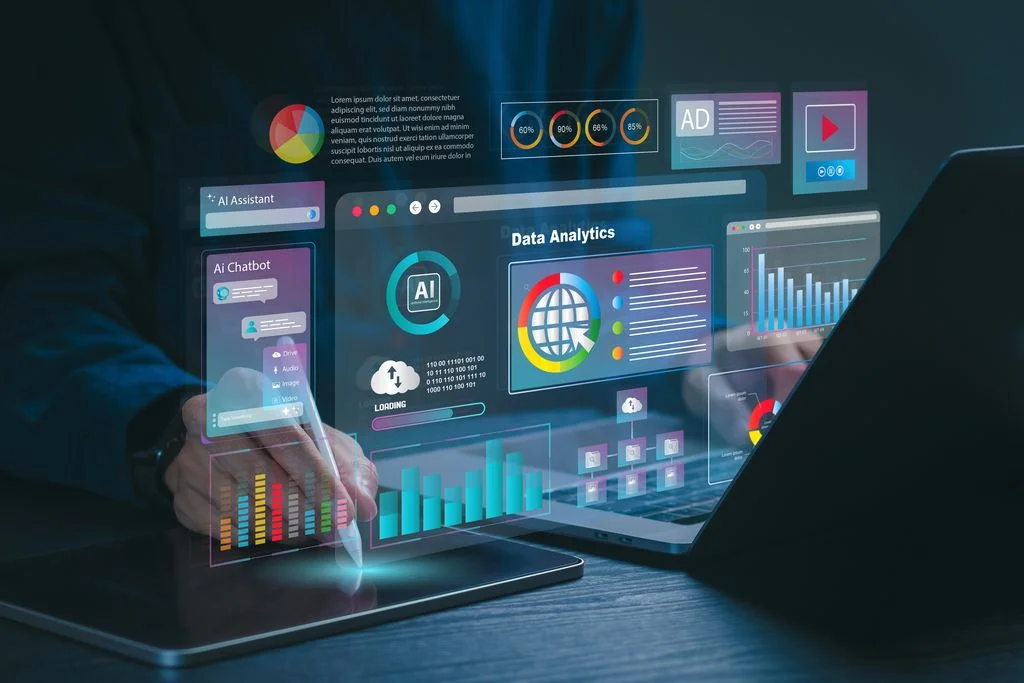
HR teams collect plenty of recruitment data.
The difficult part is turning all those numbers into useful information.
AI-powered analytics tools can help HR teams understand:
- Time to hire
- Cost per hire
- Candidate sources
- Offer acceptance rates
- Hiring funnel performance
- Employee turnover
- Workforce trends
This can help answer practical questions:
Where are candidates dropping out?
Which hiring channels are producing good results?
Why is one position taking longer to fill?
Those answers can help HR teams improve their recruitment strategy.
13. AI for Employer Branding
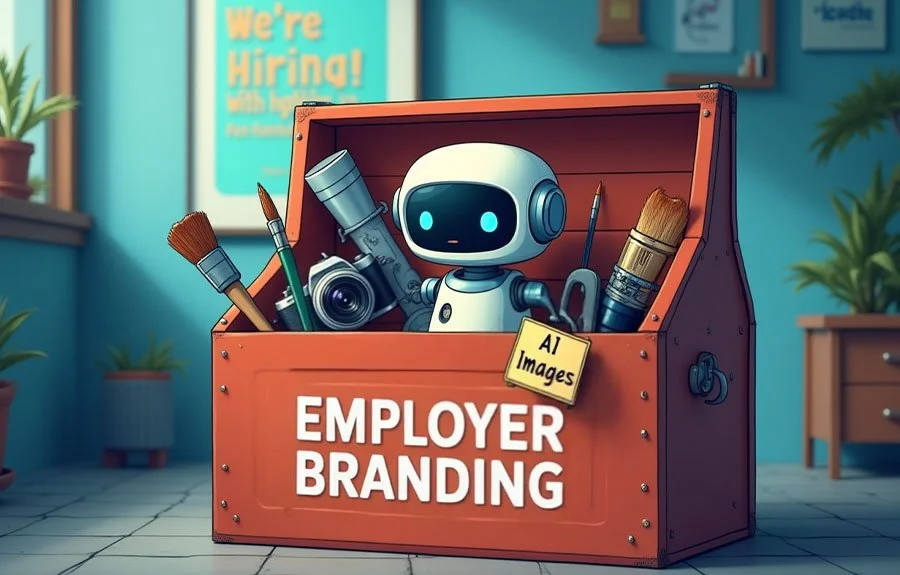
Candidates often research a company before applying.
They may visit the careers page, browse social media, read employee reviews, or search for information about the workplace.
AI can help HR teams create initial drafts for:
- Careers pages
- Recruitment campaigns
- Social media posts
- Employee stories
- Job advertisements
- Candidate emails
But don’t let AI completely take over your employer brand.
The final content should include real experiences, real people, and the company’s actual personality. Otherwise, every company starts sounding exactly the same.
14. AI for More Inclusive Hiring

AI can also help recruiters review job descriptions and recruitment processes for potentially exclusionary wording.
For example, a tool might flag language that could unnecessarily discourage qualified candidates from applying.
But there’s an important warning:
AI isn’t automatically unbiased.
If an AI system is built using biased information or poorly designed processes, it can reproduce those problems.
That’s why human oversight is especially important whenever AI influences hiring.
15. Generative AI Assistants for HR
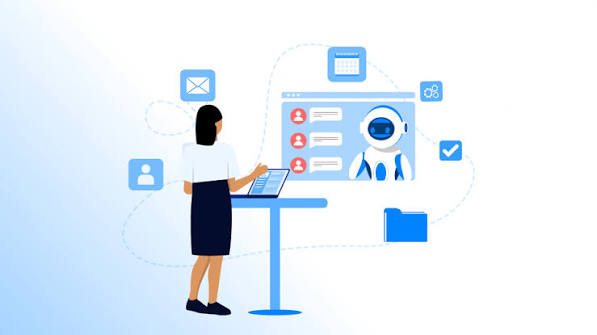
Not every HR department needs a specialized recruitment platform.
A general-purpose generative AI assistant can still be useful for everyday work.
HR professionals can use AI to help:
- Draft job descriptions
- Create interview questions
- Brainstorm recruitment campaigns
- Prepare interview scorecards
- Summarize non-sensitive notes
- Create onboarding checklists
- Draft HR templates
- Analyze appropriate recruitment data
There is one rule that should never be overlooked:
Don’t put confidential employee or candidate information into an AI system without understanding how that service handles the data.
Privacy, security, retention, and data-sharing practices all deserve careful attention.
How AI Fits Into the Hiring Process
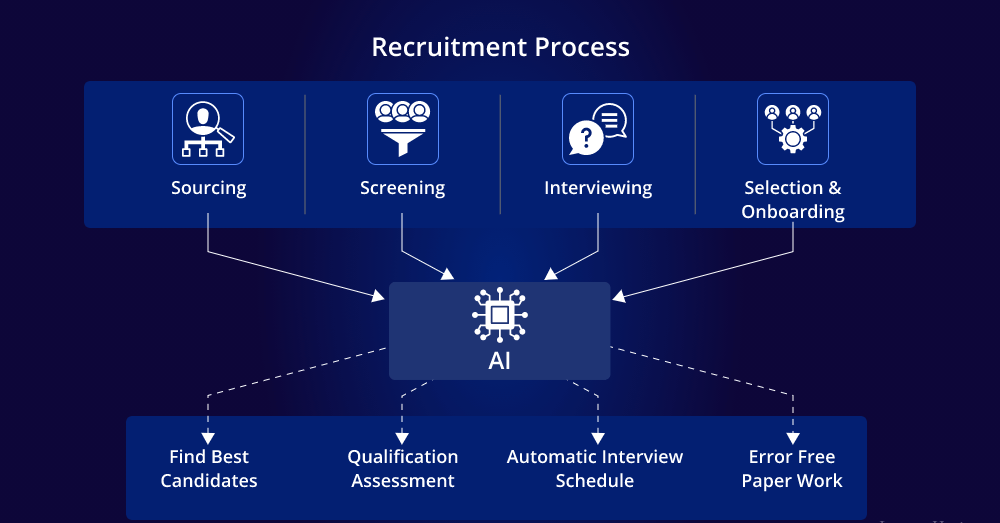
AI doesn’t need to run the entire hiring process.
It can simply step in wherever it makes the most sense.
Write the Job Description
Give AI the real responsibilities and requirements of the role and use it to create a starting draft.
Promote the Position
AI can help adapt the job description for different recruitment channels.
Find Candidates
Sourcing tools can help recruiters discover people with relevant skills and experience.
Review Applications
AI can organize applications and highlight candidates who appear to meet the basic requirements.
Schedule Interviews
Automated scheduling can remove much of the unnecessary back-and-forth.
Prepare Interview Questions
AI can help create questions based on the actual responsibilities of the position.
Organize Feedback
Structured notes and scorecards can make it easier for hiring teams to compare candidates consistently.
Keep Candidates Updated
AI can help draft messages while recruiters maintain the personal connection.
Make the Hiring Decision
This is where human judgment matters most.
AI can provide information and suggestions, but important hiring decisions should involve people.
Start Onboarding
Once the candidate joins, AI can help answer routine questions and guide them through basic onboarding tasks.
Benefits of AI for HR & Recruitment
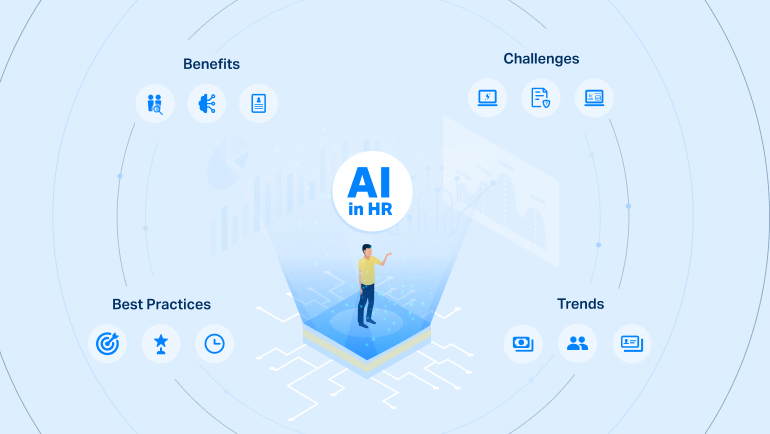
The biggest benefit of AI isn’t simply that it works quickly.
It’s the time it can give back to recruiters.
Less Time on Repetitive Tasks
Sorting resumes, scheduling meetings, and writing similar emails can take up a surprising part of the day.
AI can handle some of that work.
More Time With Candidates
When recruiters aren’t buried in administration, they can spend more time talking with candidates and building relationships.
Faster Candidate Searches
AI-powered search and matching can help recruiters discover potentially suitable candidates more efficiently.
A Better Candidate Experience
Faster responses, simpler scheduling, and clearer communication can make the hiring journey feel more organized.
Better Use of Recruitment Data
Analytics can show HR teams what’s working, what’s not, and where candidates are leaving the hiring process.
Easier Scaling
As a company grows, recruitment naturally becomes more complicated. AI can help teams handle more hiring activity without turning every new position into hours of additional administrative work.
What Are the Risks of Using AI in Recruitment?
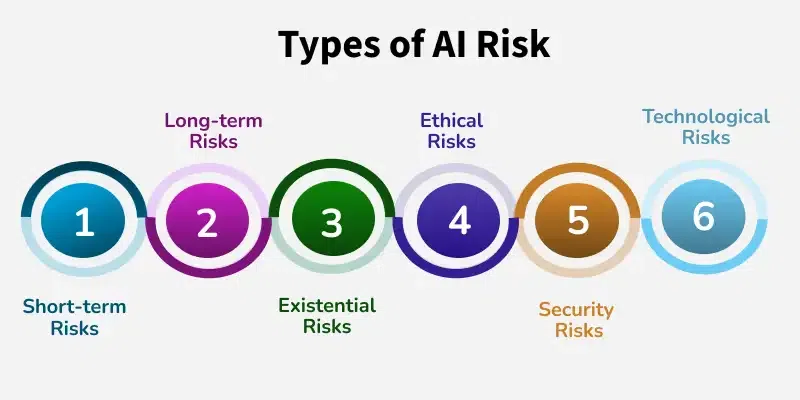
AI can make recruitment easier, but it’s not something HR teams should adopt without thinking carefully about the risks.
Bias
AI can reflect biases present in its data, design, or implementation.
If recruiters rely too heavily on automated recommendations, qualified candidates could potentially be overlooked.
Human review is essential.
Lack of Transparency
It isn’t always obvious why an AI system has recommended one candidate over another.
Recruiters should understand how a tool works and how much influence it has over hiring decisions.
Privacy Concerns
Recruitment involves personal information such as resumes, contact details, employment history, and other candidate data.
Companies should understand how an AI platform collects, stores, processes, and protects that information.
Too Much Automation
There is a difference between making recruitment efficient and making it feel robotic.
Candidates still appreciate personal communication, particularly when they’re making an important decision about their career.
AI Can Make Mistakes
AI can misunderstand context, make assumptions, or generate inaccurate information.
Important content and recommendations should always be reviewed before they are used.
How to Choose the Right AI HR Tool
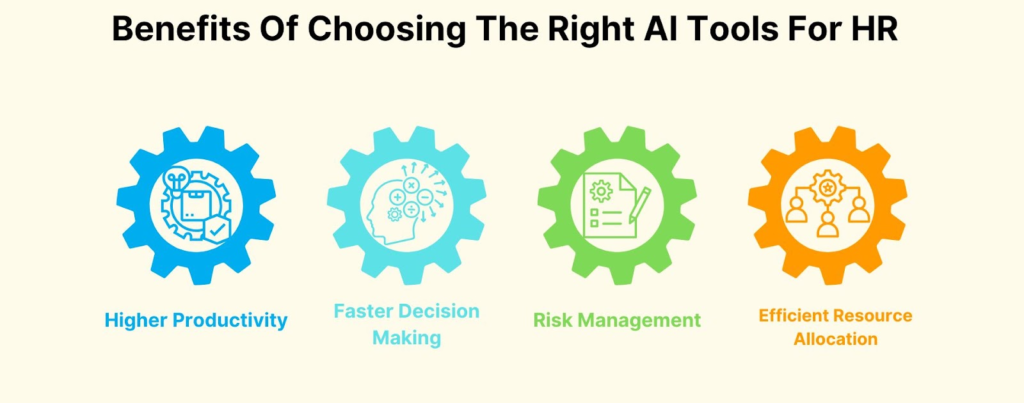
With so many AI products available, choosing one can feel like another job.
The easiest place to start is with the problem you’re trying to solve.
1. Find Your Biggest Bottleneck
Don’t buy AI simply because it’s popular.
Ask what’s taking the most time.
Is it resume screening?
Interview scheduling?
Candidate communication?
Recruitment reporting?
Start there.
2. Check Your Existing Software
A new AI tool should ideally work with the systems your HR team already uses.
Look for integrations with your ATS, HRIS, calendar, communication platforms, and other essential tools.
3. Understand How Candidate Data Is Handled
Before choosing a platform, look at:
- Data security
- A Data storage
- Data retention
- Access controls
- Privacy policies
- Third-party data sharing
This becomes particularly important when the tool handles candidate or employee information.
4. Make Sure Humans Can Step In
Recruiters should be able to review, question, and override AI recommendations.
Technology should support the hiring team—not prevent them from using their own judgment.
5. Measure the Results
Don’t choose a tool simply because its demo looks impressive.
Look at whether it actually improves metrics such as:
- Time to hire
- Recruiter productivity
- Candidate response rates
- Cost per hire
- Quality of hire
- Offer acceptance rates
6. Choose Something People Will Actually Use
A platform can have dozens of impressive AI features and still fail if recruiters find it confusing.
Sometimes a simple tool that solves one real problem is far more valuable than a complicated platform packed with features nobody uses.
AI vs. Human Recruiters: Which Is Better?

Will AI replace recruiters?
It’s an understandable question, but there’s probably a better one:
What can AI take off a recruiter’s plate?
AI is good at processing information, recognizing patterns, creating drafts, organizing data, and handling repetitive work.
Humans are better at understanding context, building trust, reading emotions, having difficult conversations, and making decisions that require nuance.
That’s why the future of recruitment isn’t necessarily AI versus humans.
It’s AI working alongside humans.
AI handles some of the busywork.
Recruiters focus on the people.
And that’s probably where AI creates its greatest value in HR—not by making recruitment less human, but by giving recruiters more time to actually be human.
AI Recruitment Trends to Watch in 2026
A AI in HR is continuing to evolve, and several trends are becoming particularly interesting.
AI Agents
AI agents are moving beyond simple chatbots. They’re increasingly being used to complete multiple steps in a workflow with less manual input.
Skills-Based Hiring
Companies are paying more attention to what candidates can actually do instead of relying entirely on degrees, job titles, or traditional career paths.
More Personalized Candidate Experiences
AI can help recruiters tailor messages and interactions based on where each candidate is in the hiring process.
Connected Recruitment Workflows
Sourcing, screening, scheduling, interviewing, and onboarding are becoming more connected, reducing the number of separate manual steps recruiters have to manage.
Human-Centered AI
As AI becomes more common in HR, companies are also paying greater attention to privacy, fairness, transparency, accountability, and human oversight.
Frequently Asked Questions
1. How can AI help with recruitment?
AI can help recruiters with repetitive tasks such as resume screening, candidate sourcing, job description writing, interview scheduling, candidate communication, and recruitment data analysis. This gives HR teams more time to focus on candidates and hiring decisions.
2. Can AI replace recruiters?
AI is unlikely to replace the human side of recruitment. It can automate repetitive work and organize information, but recruiters are still needed to assess candidates, build relationships, understand context, and make thoughtful hiring decisions.
3. What are the best AI tools for HR in 2026?
The right tool depends on what a company needs. Common categories include AI-powered applicant tracking systems, resume screening tools, candidate sourcing platforms, interview assistants, scheduling tools, HR chatbots, workforce analytics platforms, and generative AI assistants.
4. Is AI resume screening accurate?
AI resume screening can make the initial review process faster, but it isn’t perfect. Candidates with unconventional experience or transferable skills may be missed, so recruiters should review AI-generated recommendations rather than relying on them blindly.
5. Is it safe to use AI with candidate information?
It can be, but HR teams should first understand how the AI provider handles personal information. Before using a tool, review its data security, storage, retention, access controls, privacy practices, and third-party data-sharing policies.