Creativity has always been the quiet engine driving innovation, but in 2026, the landscape of digital expression has undergone a massive transformation. The line separating the technical professional from the passionate amateur has worn incredibly thin, changing how we interact with technology to tell our stories. Whether you are a dedicated graphic designer, a solo content creator managing multiple social channels, a corporate marketer, an independent photographer, or a business owner, your toolkit dictates your daily peace of mind. In a digital market where the sheer volume of content demanded is almost overwhelming, modern software has evolved to meet us halfway. The best platforms today are designed to absorb the friction of repetitive, monotonous chores, leaving you with the energy required to focus purely on imagination and authentic human storytelling.
The Co-Pilot Paradigm of Modern AI

The defining story of creative software in 2026 is the maturity of artificial intelligence as a supportive partner rather than a replacement. A few years ago, AI in design was mostly a novelty used to generate strange, dream-like images or clumsy paragraphs that required immediate rewriting. Today, machine learning functions as a highly cooperative studio assistant that handles the tedious groundwork. Modern tools excel at taking care of the mechanical overhead that used to eat up hours of our days. They can clean up echoey audio in a podcast recording, isolate a complex subject from its background in a fraction of a second, suggest visual layout variations based on your brand colors, or organize massive batches of raw footage so you can start editing the actual story faster.
This technological leap has changed our relationship with our work, shifting our role from technical operators to creative directors. Instead of spending half a day masking hair in Photoshop or manually aligning video subtitles, we are free to think about the emotions we want to evoke and the messages we want to send. The intelligence built into modern creative applications acts as a bridge, translating rough ideas into polished drafts within seconds. This allows small teams and solo creators to produce work at a scale and quality that once required a full-scale agency, leveling the playing field for independent voices.
Redefining Graphic Design and Layout
The world of visual design has become incredibly accessible without losing its professional depth or artistic integrity. For decades, graphic design was locked behind complex interfaces with steep learning curves that discouraged beginners and slowed down business owners. Today, drag-and-drop design hubs have democratized the process, allowing almost anyone to build presentations, business proposals, social media banners, and posters with zero background in color theory or typography. By taking care of the complex underlying geometry of a layout, these systems give creators of all skill levels the confidence to publish visually stunning assets.
This change has been largely driven by platforms that combine ease of use with robust, background-processing power. A non-designer can open a modern browser-based app, input a basic prompt or select a template, and receive a beautifully balanced design that respects their brand colors and font selections. At the same time, advanced collaborative design tools have revolutionized the professional workspace. These platforms provide a shared, open canvas where product design teams can build intricate user interfaces and design systems together in real time. They recognize that professional design is no longer a solitary task but a continuous, fluid conversation between designers, writers, managers, and clients, all of whom can leave feedback directly on the active canvas.
The Video Editing Revolution and Social Algorithms
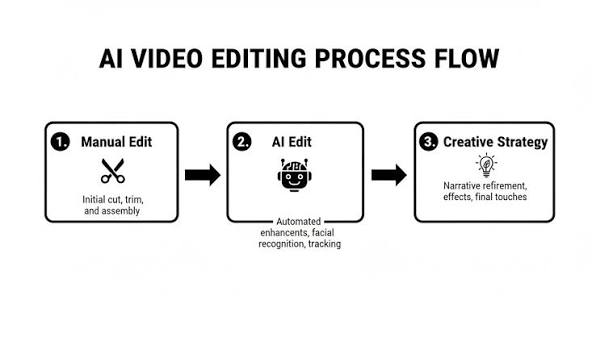
Video continues to be the most demanding format on the internet, which has forced editing software to evolve at a breakneck pace to keep up with changing social algorithms. Modern video production is no longer just about slicing clips on a traditional timeline; it is about pacing, accessibility, and multi-platform optimization. Because different social platforms demand different dimensions, visual hooks, and editing styles, creators need tools that can adapt video assets instantly without requiring them to rebuild every project from scratch.
To solve this, modern editing software has embraced text-based editing and generative assets. By automatically turning video audio into a text transcript, these programs allow creators to edit video files simply by deleting or rearranging words on a page, making rough-cut editing as simple as editing a text document. This is paired with automated caption generators, smart noise-reduction systems, and cropping software that can automatically identify high-impact moments in long-form videos and slice them into vertical clips designed for mobile feeds. For high-end productions, generative video tools are reshaping pre-production, allowing directors to generate high-fidelity background elements and test color palettes before ever setting foot on a physical set.
Elevating Written Content and Brand Strategy
Even in a highly visual world, the written word remains the foundation of communication, advertising, and user trust. The way we write has shifted from a process of staring at a blank page to a process of collaborative refinement. Modern writing partners do not just write for you; they help you structure your thoughts, challenge your arguments, check your tone, and ensure your messaging aligns with your target audience. This collaborative dynamic preserves the writer’s unique voice while accelerating the research and drafting phases of the writing process.
Writers frequently use these tools to break through creative blocks, organize chaotic research notes, and generate dozens of headlines for an article to see what resonates best. For those who write extensive newsletters, detailed essays, or in-depth guides, advanced language models have become invaluable due to their natural, highly readable tone and their ability to keep track of the complex narrative arc of a long document. In marketing and agency environments, specialized copywriting platforms are used to maintain a consistent brand voice across dozens of campaigns. These systems learn the specific terminology, values, and guidelines of a company, ensuring that every product description and email sequence sounds like it came from the exact same team. The magic happens when human experience and real-world anecdotes are layered on top of these structured outlines, creating pieces that perform well on search engines while feeling deeply personal to the reader.
Precision Photography and the Digital Canvas

For photographers and digital artists, the focus of modern software has shifted toward reducing the hours spent on tedious physical cleanup and technical correction. The post-processing of images used to require long hours of meticulous manual work with cloning and healing brushes. Today, professional photography suites use intelligent layers to handle complex lighting corrections, noise reduction, and atmospheric adjustments automatically, preserving the raw quality of the photo while cutting down editing time.
Generative fill and expansion features allow photographers to seamlessly remove unwanted background elements from a portrait, expand the background of a horizontal landscape to fit a vertical layout, or adjust lighting long after the photo has been taken. This level of precision is incredibly valuable for e-commerce businesses that need to clean up thousands of product photos, or travel creators who need to edit large galleries of images on tight deadlines. In the realm of digital illustration, mobile drawing programs offer a highly tactile, natural painting experience on tablets. Artists can sketch freely on a mobile screen, relying on cloud synchronization to instantly push their work to high-powered desktop workstations where they can finalize their files with no loss in detail.
The Crucial Art of Creative Collaboration
Creation is rarely a solo endeavor anymore, making the shared workspace just as important as the design canvas itself. The struggle of sending large email attachments, dealing with corrupted files, and trying to track down which version is the absolute final draft has been replaced by fluid, real-time collaboration platforms. These cloud-based environments ensure that everyone involved in a project is working on the same active file, eliminating communication gaps and version control issues.
Modern collaboration tools permit writers, visual artists, and clients to play inside the same project file at the exact same time, seeing changes as they happen. For video teams, specialized feedback networks let clients leave timestamped notes directly on a video timeline, even drawing on the screen to show an editor exactly which color to adjust or where to crop a frame. These integrated feedback loops significantly reduce communication delays, prevent costly misunderstandings, and keep creative projects moving smoothly from the initial brainstorm to the final sign-off.
Striking the Perfect Balance in Your Workspace

When assembling your personal suite of creative tools, it is easy to get caught up in flashy features and expensive subscriptions. However, the most successful creators build their workflows around practical usability, budget, compatibility, and safety. A highly advanced program with thousands of deep menus is of little use if it takes months to learn and slows down your daily output. The goal is always to find software that balances robust capabilities with an approachable interface that gets out of your way and lets you work.
For beginners and small business owners, starting with free or freemium tools is often the smartest move. Many entry-level platforms offer incredibly powerful design and video features that require no financial commitment, allowing you to build your skills without financial pressure. As your business grows, your needs change, and your budget expands, you can selectively upgrade to premium tiers to unlock things like team asset sharing, deeper integrations, and higher export resolutions. Furthermore, you must ensure your tools support widely used file formats so you do not run into compatibility issues when sharing work with clients or moving assets between different programs. Finally, in an environment where proprietary assets and client confidentiality are paramount, choosing tools with secure cloud backups and permission controls is essential to protect your hard work.
The Human Core of the Future
Looking forward, the technology we use to express ourselves will only continue to become faster, smarter, and more intuitive. Artificial intelligence will get better at predicting our stylistic preferences, personalizing marketing content at scale, and automating the technical mechanics of design. Yet, despite these massive leaps in software capability, the human heart remains entirely irreplaceable.
Tools can generate a flawless layout, clean up audio, or write a clean piece of marketing copy, but they cannot live life, feel emotion, or understand the subtle nuances of human connection. The most beautiful art, the most compelling stories, and the most successful marketing campaigns will always be built on a foundation of genuine human perspective and lived experience. Technology is at its best when it serves as a bridge between your mind and your medium, taking over the heavy lifting so that you have the time and space to create something truly original.
Frequently Asked Questions
What are creative tools?
Creative tools are software applications, mobile apps, and online platforms designed to help people build visual designs, edit videos, write articles, compose audio, illustrate artwork, and manage collaborative media projects.
Are free creative tools good enough for beginners?
Free creative platforms offer incredibly sophisticated features that are more than enough for beginners, freelancers, and small businesses starting out. As your client base or production demands grow, you can transition to paid plans to access expanded cloud storage, advanced brand kits, and faster processing speeds.
How do AI creative tools improve productivity?
They eliminate tedious, repetitive work by automating background extraction, generating subtitles, suggesting initial layouts, organizing raw files, and drafts of copy, which allows you to spend your time refining the core concept rather than doing manual cleanup.
Bennett University
How do I choose the best creative tool?
Select your software based on your immediate creative goals, your budget, how easily you can learn the interface, and how well the application integrates with the other programs you use to share and export your work.