
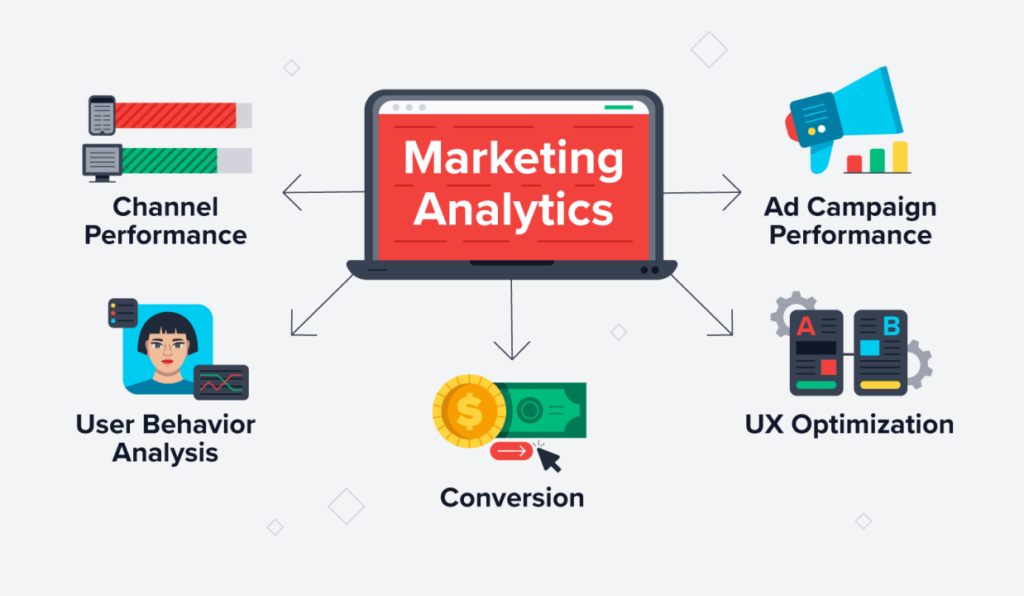
This image illustrates Marketing Analytics and how businesses use analytics to measure campaign performance, understand customer behavior, track key marketing metrics, optimize ROI, and make data-driven business decisions for sustainable growth in 2026.
Marketing analytics is the process of collecting, measuring, and analyzing marketing data to understand what is working and what needs improvement. Instead of relying on assumptions, businesses can use real insights to make informed decisions, optimize campaigns, and achieve better results.
Whether you’re a small business owner, a digital marketer, or a student learning about marketing, understanding analytics is essential in 2026. This guide explains how marketing analytics works, why it matters, and how businesses can use data to make better decisions.
What Is Marketing Analytics?
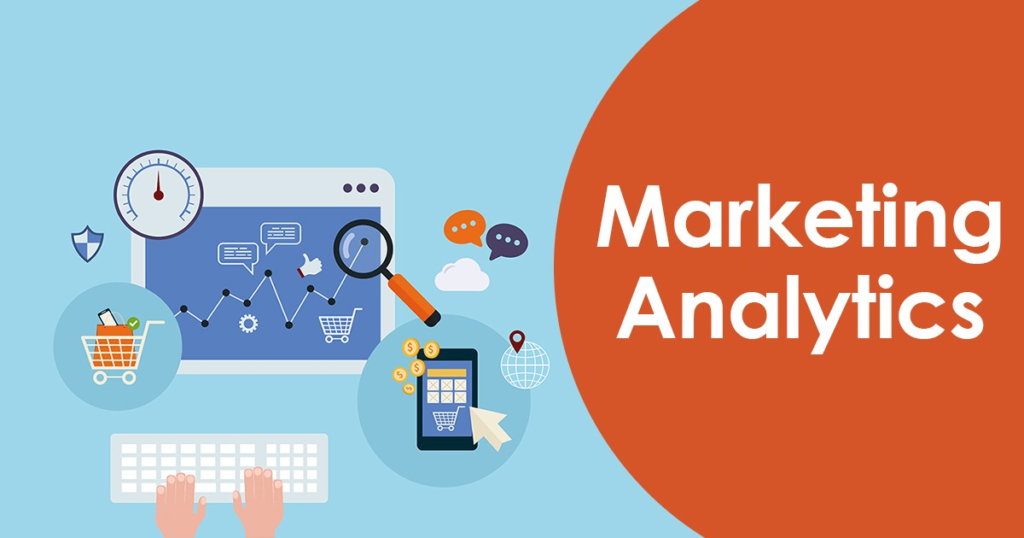
Marketing analytics is the practice of tracking and analyzing data from different marketing channels to evaluate campaign performance and customer behavior. It helps businesses understand how their marketing efforts contribute to sales, brand awareness, customer engagement, and overall business growth.
By collecting information from websites, social media platforms, email campaigns, search engines, and advertising channels, marketers can identify patterns, measure success, and improve future campaigns.
Why Marketing Analytics Is Important

Some of the biggest benefits include:
- Improves decision-making using real data.
- Measures campaign performance accurately.
- Increases return on investment (ROI).
- Identifies customer preferences and behavior.
- Optimizes marketing budgets.
- Improves customer engagement and satisfaction.
- Supports long-term business growth.
Without analytics, businesses would struggle to understand whether their marketing efforts are effective. Marketing analytics provides valuable insights that help organizations make informed decisions instead of relying on assumptions.
Businesses that regularly analyze their marketing performance are better equipped to respond to changing customer needs and market trends.
Types of Marketing Analytics
Different types of analytics help businesses understand various aspects of their marketing performance.
| Analytics Type | Purpose | Example |
| Website Analytics | Measures website traffic and user behavior | Page views, bounce rate |
| Social Media Analytics | Tracks engagement on social platforms | Likes, shares, comments |
| Email Analytics | Evaluates email campaign performance | Open rate, click-through rate |
| SEO Analytics | Measures search engine performance | Organic traffic, keyword rankings |
| Advertising Analytics | Monitors paid campaign results | Cost per click (CPC), conversions |
| Customer Analytics | Understands customer behavior | Purchase history, retention rate |
Using multiple types of analytics gives businesses a complete view of their marketing performance.
Key Marketing Metrics to Track

Tracking the right marketing metrics is essential for understanding how well your campaigns are performing and where improvements can be made. By monitoring key performance indicators (KPIs), businesses can measure success, make informed decisions, and optimize their marketing strategies for better results. One of the most important metrics is website traffic, which shows how many visitors are coming to your website and helps you evaluate the effectiveness of your online presence.
Another crucial KPI is the conversion rate, which measures the percentage of visitors who complete a desired action, such as making a purchase, signing up for a newsletter, or filling out a contact form. The click-through rate (CTR) indicates how many users click on your advertisements, emails, or links, helping you understand how engaging your content and campaigns are. Similarly, the bounce rate measures the percentage of visitors who leave your website after viewing only one page, providing insight into user engagement and website experience.
How Businesses Use Marketing Analytics
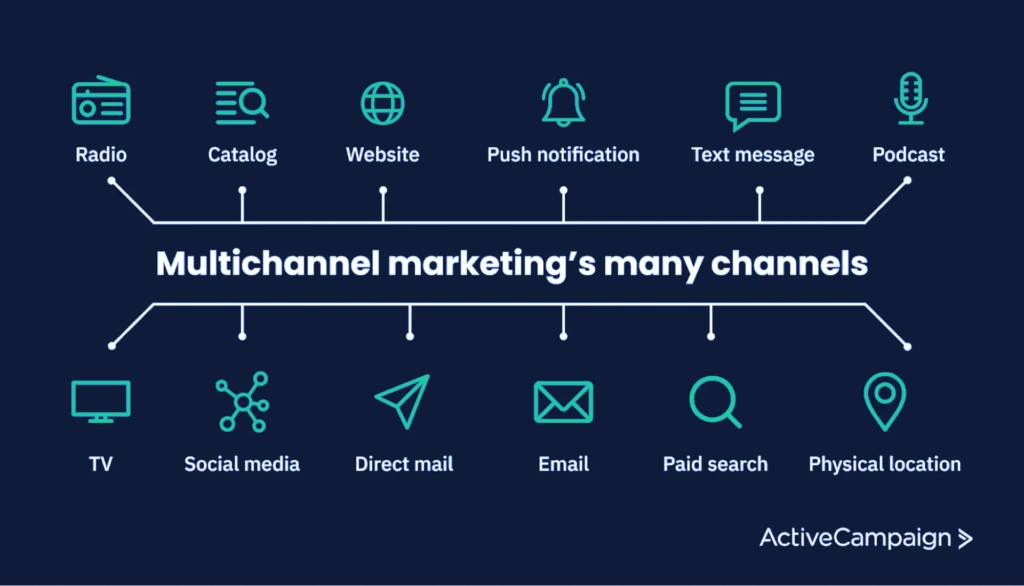
Marketing analytics plays a vital role in helping businesses make smarter decisions throughout every stage of a marketing campaign. By collecting and analyzing data from websites, social media platforms, email campaigns, search engines, and online advertisements, businesses gain valuable insights into customer behavior and campaign performance. These insights allow companies to understand what is working well, identify areas that need improvement, and make informed decisions based on real data rather than assumptions.
One of the primary uses of marketing analytics is identifying the most effective marketing channels. Businesses can compare the performance of different platforms, such as search engines, social media, email marketing, and paid advertising, to determine which channels generate the highest traffic, leads, and sales. This information helps marketers invest their time and budget in the channels that deliver the best results.
Popular Marketing Analytics Tools
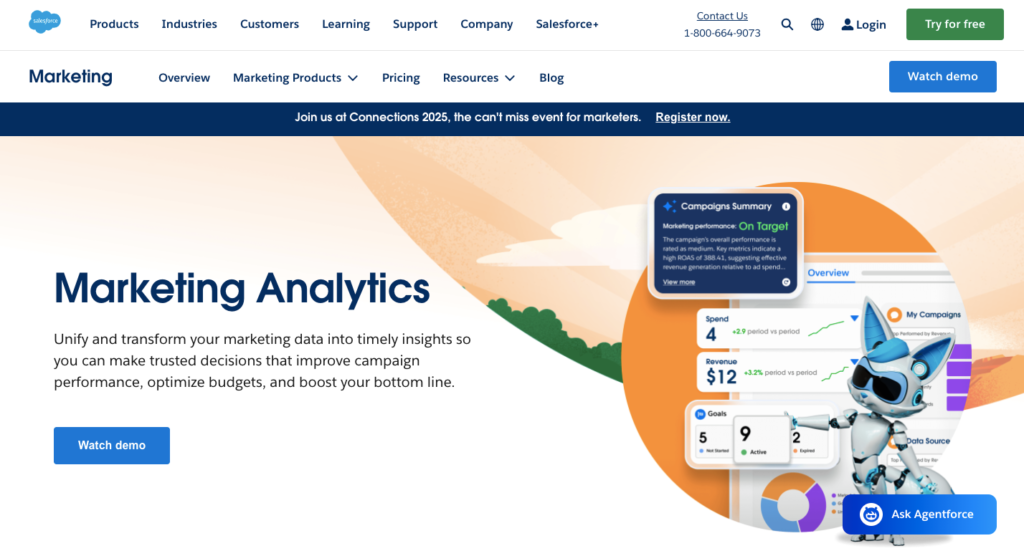
Many tools help marketers collect and analyze data more efficiently.
| Tool | Primary Use |
| Google Analytics | Website traffic and user behavior |
| Google Search Console | SEO performance monitoring |
| HubSpot | Marketing automation and CRM analytics |
| Semrush | SEO and competitor analysis |
| Ahrefs | Backlink and keyword research |
| Meta Business Suite | Facebook and Instagram analytics |
| LinkedIn Analytics | Business page performance |
| Mailchimp Analytics | Email marketing reports |
Choosing the right tool depends on your marketing goals and business size.
Best Practices for Marketing Analytics
To get meaningful insights from marketing data, businesses need more than just analytics tools—they need a clear strategy for collecting, monitoring, and interpreting data. Following best practices ensures that the information gathered is accurate, relevant, and useful for making informed business decisions. A well-planned approach helps organizations improve marketing performance, optimize budgets, and achieve long-term growth.
The first step is to set clear marketing goals before launching any campaign. Whether the objective is to increase website traffic, generate leads, improve brand awareness, or boost sales, having specific goals makes it easier to measure success. Once your objectives are defined, focus on tracking only the metrics that align with those goals. Monitoring too many unrelated metrics can create confusion, while tracking the right key performance indicators (KPIs) provides valuable insights into campaign performance.
Common Challenges in Marketing Analytics
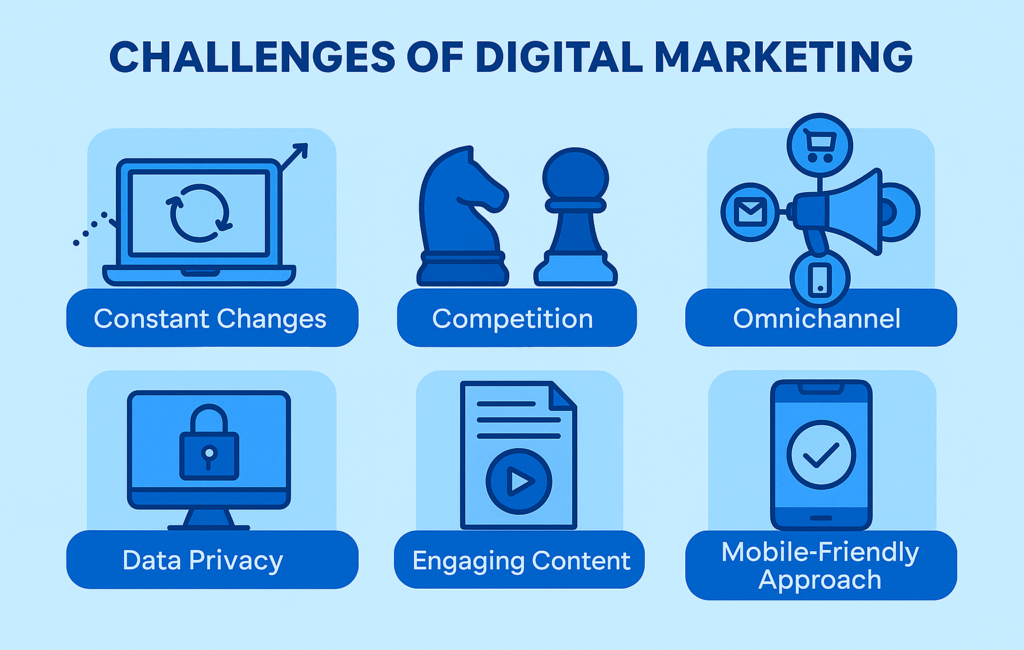
Although marketing analytics offers valuable insights, businesses may encounter challenges such as:
- Collecting data from multiple platforms.
- Maintaining accurate and consistent data.
- Understanding complex reports.
- Choosing the right performance metrics.
- Protecting customer privacy.
- Adapting to changes in marketing technology.
Investing in training and using reliable analytics tools can help overcome these challenges.
The Future of Marketing Analytics
Marketing analytics is becoming more advanced with the help of Artificial Intelligence (AI) and machine learning. Modern analytics platforms can identify patterns, predict customer behavior, automate reporting, and provide real-time recommendations.
As businesses continue adopting AI-powered marketing tools, analytics will become faster, more accurate, and increasingly valuable for making strategic decisions.
Organizations that embrace data-driven marketing are likely to gain a competitive advantage in the years ahead.
Frequently Asked Questions (FAQs)
1. What is marketing analytics?
Marketing analytics is the process of collecting, measuring, and analyzing marketing data to evaluate campaign performance, understand customer behavior, and improve business decisions.
2. Why is marketing analytics important?
It helps businesses measure the success of their marketing efforts, optimize campaigns, improve customer experiences, and increase return on investment (ROI).
3. Which metrics should businesses track?
Some of the most important metrics include website traffic, conversion rate, click-through rate (CTR), bounce rate, customer acquisition cost (CAC), customer lifetime value (CLV), and ROI.
4. What are the best marketing analytics tools?
Popular tools include Google Analytics, Google Search Console, HubSpot, Semrush, Ahrefs, Meta Business Suite, LinkedIn Analytics, and Mailchimp Analytics.
5. How does marketing analytics improve business decisions?
By providing real-time insights into customer behavior and campaign performance, marketing analytics helps businesses make informed decisions, allocate budgets effectively, and improve marketing strategies.