There is a distinct, quiet magic to running a small business. AI & Automation It is a world built on late nights, early mornings, and a level of grit that most people only ever read about.AI & Automation It is the florist who remembers exactly which flowers someone bought for their anniversary last year. It is the local accountant who stays up past midnight helping a client sort through a messy tax season because they AI & Automation genuinely care about that family’s livelihood. It is the independent online boutique owner packing every single box by hand, writing a handwritten “thank you” note on tissue paper.
AI & Automation That spirit—that deeply human, fiercely resilient core—is the heartbeat of small business. AI & Automation And that part of the story never changes.
But let’s be entirely honest with each other: the world around that spirit is moving at a terrifyingly fast pace.
Today, running a small business doesn’t just mean being good at what you do. AI & Automation It means wearing ten different hats at the exact same time. One minute you are the CEO making big financial decisions. The next, you are the copywriter trying to think of something clever to post on social media, the customer support agent replying to frantic emails, the inventory clerk counting boxes in the back room, and the janitor sweeping the floor. AI & Automation You are expected to be everywhere, know everything, and respond to everyone instantly.
Customers want responses within minutes. They expect the slick, flawless digital experience of a multi-billion-dollar corporation, but they still want the cozy, personalized warmth of a neighborhood shop. Trying to deliver both on a limited budget with a tiny team (or no team at all) doesn’t feel like running a business anymore—it feels like trying to water an entire garden during a Category 5 windstorm. You are constantly moving, constantly reacting, and always running out of hours before you run out of things to do.
This is exactly where the conversation around artificial intelligence (AI) and automation needs a massive reframe.
For a long time, tech companies marketed these tools with slick, futuristic jargon that made them feel cold, corporate, and incredibly intimidating. They made it sound like AI was designed to replace humans, cut costs by cutting people, and turn businesses into unfeeling machines.
But for small businesses, the exact opposite is true. AI and automation aren’t here to replace the heart of your business. If anything, they are here to protect it. They are the quiet, invisible partners working in the background, handling the repetitive, soul-crushing tasks that drain your energy, so you can actually show up and be human again.
Stripping Away the Jargon: What Do These Tools Actually Mean
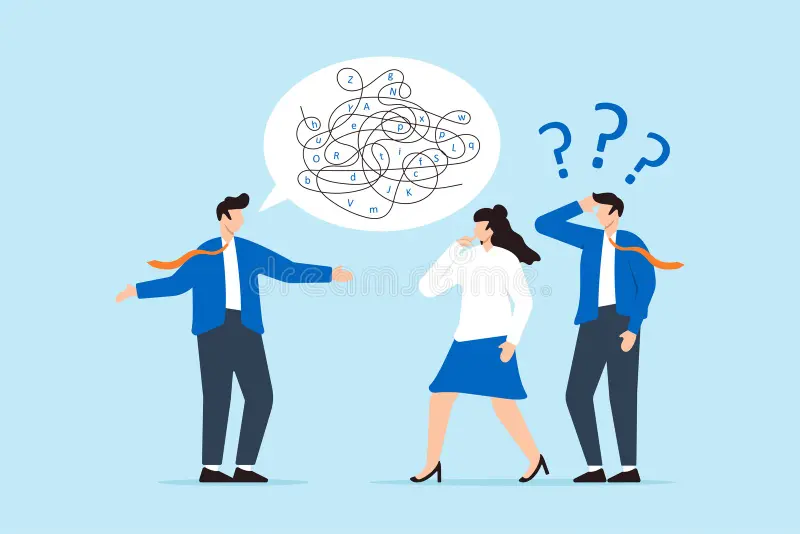
Before we look at how to use these tools without losing your mind, let’s strip away the tech-bro buzzwords and look at what this stuff actually does in the real world. You don’t need a degree in computer science to understand it. In fact, it breaks down into two very simple categories.
1. Automation (The Hands)
Think of automation as a set of rules you create to handle tasks that require zero imagination. It is the digital equivalent of a conveyor belt. You tell the system: “When X happens, always do Y.”
- A customer fills out a contact form on your website, and a beautifully written welcome email instantly lands in their inbox.
- An order is placed on your online store, and an invoice is automatically generated, filed in your accounting software, and sent to the printer.
- A client books a coaching session on your calendar, and the system automatically sends them a Zoom link and reminders two hours before the meeting.
The system isn’t “thinking.” It is just following your orders, quietly running in the background while you sleep, eat dinner with your family, or work on a project that actually requires your brain.
2. Artificial Intelligence (The Assistant)
AI goes a step further. If automation handles the muscle, AI provides a bit of the mind. It doesn’t just follow a straight line; it looks at data, recognizes patterns, and makes suggestions or creates text based on what it learns.
- Instead of staring at a blank screen for three hours trying to write a product description, you give an AI tool a few bullet points, and it spits out three different creative drafts in thirty seconds.
- Instead of manually sorting through hundreds of customer reviews to figure out why people are complaining, an AI & Automation tool can read them all instantly and tell you, “Hey, it looks like people love the product, but they hate the new packaging material.”
- Instead of guessing how much inventory to order for the holidays, an AI tool can look at your past three years of sales data and give you a highly accurate prediction of what you’ll actually need.
When you marry these two things together—the predictable hands of automation and the quick mind of AI—something incredible happens. You build a protective barrier around your time. You stop playing catch-up, and you start playing strategy.
Why Small Businesses Need This Transition More Than Anyone Else

There is a common misconception that advanced technology is a luxury reserved for massive corporations with deep pockets and entire IT departments. That is completely backwards.
If a multi-national corporation loses an hour of productivity due to a manual mistake, it’s a rounding error on a balance sheet. But if you lose an afternoon fixing a broken spreadsheet, chasing a missed lead, or manually copying and pasting data from one app to another, that is a massive blow. That is an afternoon you didn’t spend pitching a high-value client, designing a new product, or simply being present with your kids after school.
Small businesses need automation and AI more than corporations do because for a small business, every single minute carries a human cost.
When you are stretched too thin, your business begins to suffer from what I call “micro-leaks.” A lead comes in through your website while you are busy helping a customer in person. By the time you sit down to reply five hours later, that person has already moved on to a competitor who answered faster. Or maybe you forget to follow up on an unpaid invoice because you lost the sticky note it was written on. These aren’t failures of character or hard work; they are the natural consequence of being a human being running on empty.
Implementing these tools is like patching those leaks. It brings a profound sense of calm into the chaotic daily rhythm of entrepreneurship. AI & Automation It allows you to build a business that is steady, predictable, and resilient, without requiring you to sacrifice your mental health or your personal life to keep it afloat.
Bringing AI into Your Growth Strategy (Without Feeling Awkward)

The biggest hurdle for most small business owners isn’t the technology itself—it’s the fear that using it will make their business feel cold, clinical, and robotic. You’ve probably received those bizarre, clearly AI-generated LinkedIn messages or read those hollow, lifeless blog posts that sound like they were written by a lawnmower. It’s natural to look at that and say, “I never want my brand to sound like that.”
But here is the secret: you are the supervisor of the tool. The AI doesn’t hold the pen; it holds the shovel.
Content Creation and Brainstorming
The blank page is the enemy of momentum. If you are trying to write a newsletter, an Instagram caption, or a blog post, don’t ask AI to write the final version for you. Instead, use it to break the ice.
Tell the AI: “I run a local bakery, and I want to write a funny email to my customers about how we accidentally used salt instead of sugar in a test batch this morning. Give me five different funny subject lines and a rough outline.”
In seconds, you have options. Are they perfect? Probably not. But now you aren’t staring at a blinking cursor. You take the best elements, inject your own unique voice, add that specific piece of inside-joke humor your customers love, and hit send. You just saved two hours of agonizing over a draft, and the final product still sounds exactly like you.
Customer Support with a Soul
No one wants to talk to a broken, frustrating chatbot that loops the same three useless answers. AI & Automation But think about the questions filling up your inbox every day:
- “What are your hours?”
- “Where is my order tracking number?”
- “Do you offer gift cards?”
Answering these over and over isn’t customer service; it’s data entry. By letting a smart, AI-driven assistant handle these purely informational questions instantly—even at 2:00 AM—you are actually providing a better experience. And when a customer has a complex, emotional, or deeply specific issue? That’s when the system smoothly hands the conversation over to you. AI & Automation Because you aren’t exhausted from answering the first fifty basic questions, you have the emotional bandwidth to show up with genuine empathy, patience, and care.
The Hidden Engine: Streamlining Everyday Operations
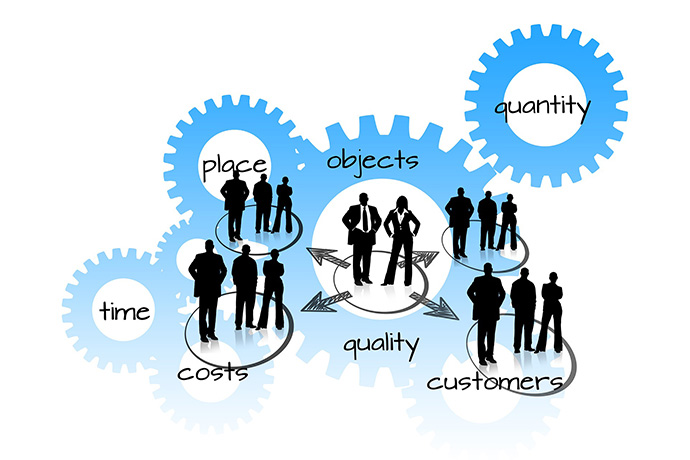
While AI gets all the glamorous headlines, simple automation is the quiet workhorse that keeps your business alive. It is the framework that allows you to scale without hiring a massive team before you can afford one.
Let’s look at how a seamless operational flow looks in a service-based business, like an interior design studio or a consulting practice:
| Stage of the Journey | The Manual Way (Friction & Stress) | The Automated Way (Ease & Flow) |
|---|---|---|
| The Initial Inquiry | Client emails you. The email sits in your inbox for a day while you finish a project. You reply asking for their availability. | Client fills out a form. A beautiful scheduling link is sent immediately. They pick a time that works for both of you. |
| The Prep Work | You manually email them a questionnaire, remind them to fill it out, and hunt for their files right before the call. | The system sends the questionnaire automatically and stores their answers directly in their client profile. |
| The Money Conversation | You spend an hour drafting a contract from an old template, manually create an invoice, and follow up when it’s late. | A template auto-populates with their details. They sign electronically, the invoice triggers, and late reminders handle themselves. |
Look at the difference between those two realities. In the manual column, you are spending hours acting as a secretary, administrator, and collections agent. In the automated column, you haven’t lost a single drop of your personal touch—the client still gets a beautiful, high-end experience—but you have protected hours of your time. You step into the actual meeting feeling calm, prepared, and ready to give them your absolute best creative energy.
Marketing That Runs Itself (So You Don’t Have To)

Marketing is often the first thing that gets abandoned when a small business gets busy. When you have a rush of clients or a surge in product orders, you focus entirely on fulfillment. But then, a few weeks later, the work dries up, and you realize you haven’t posted an update, sent an email, or generated a new lead in a month. AI & Automation This creates the exhausting “feast or famine” cycle that keeps business owners awake at night.
Automation breaks this cycle by keeping your marketing engine running at a slow, steady purr, regardless of how busy you are.
The Power of the Nurture Sequence: Imagine a local fitness trainer. AI & Automation A potential client downloads a free “7-Day Home Workout Guide” from their website. Instead of that being the end of the interaction, an automated sequence takes over.
- Day 1: The system delivers the guide with a warm, encouraging note.
- Day 3: The system sends a quick tip on how to stay motivated, along with a success story from a real client.
- Day 5: The system checks in: “How did the workouts go? Here is a common mistake most people make when starting out.”
- Day 7: The system offers a link to book a free 15-minute consultation call.
This entire sequence is written once, set up once, and then left alone. AI & Automation can run for months, or even years, building trust, showing expertise, and warming up leads while the trainer is busy working with clients in the gym. It turns marketing from a frantic scramble into a sustainable, ongoing asset.
How to Choose the Right Path Forward (Without the Overwhelm)
If you open the internet today, you will be bombarded by thousands of tools promising to revolutionize your business.AI & Automation It is incredibly easy to fall into the trap of shiny object syndrome—buying software subscriptions, spending three weeks trying to set them up, getting frustrated, and abandoning them altogether.
To avoid this, you need a highly intentional, grounded approach. Do not change your entire business overnight. Instead, take a deep breath and walk through three simple steps:
1: Audit Your Frustration
For the next one week, keep a small notepad next to your computer or on your phone. AI & Automation Every time you find yourself feeling annoyed, bored, or stressed by a task, write it down. If you say to yourself, “I cannot believe I am manually copying these email addresses into this spreadsheet again,” put it on the list.
2: Find the Single Greatest Bottleneck
Look at your list at the end of the week. AI & Automation Find the one recurring task that takes up the most time or causes the most mental friction. Do not look for ten things—just find one.
3: Solve That One Problem Beautifully
If your biggest bottleneck is scheduling meetings, look for a tool dedicated to fixing that single issue (like Calendly or Acuity). Set it up, test it with a friend, and use it until it feels like second nature. Only when that one system is running smoothly should you lift your eyes to look for the next friction point.
Your tools should feel like a perfectly tailored suit—comfortable, helpful, and designed to make you look and feel your best. AI & Automation a software tool makes your life more confusing or requires you to completely alter the natural, healthy rhythms of your work, it is the wrong tool for you. Simplicity will always beat complexity.
Common Pitfalls: Keeping the Balance Intact
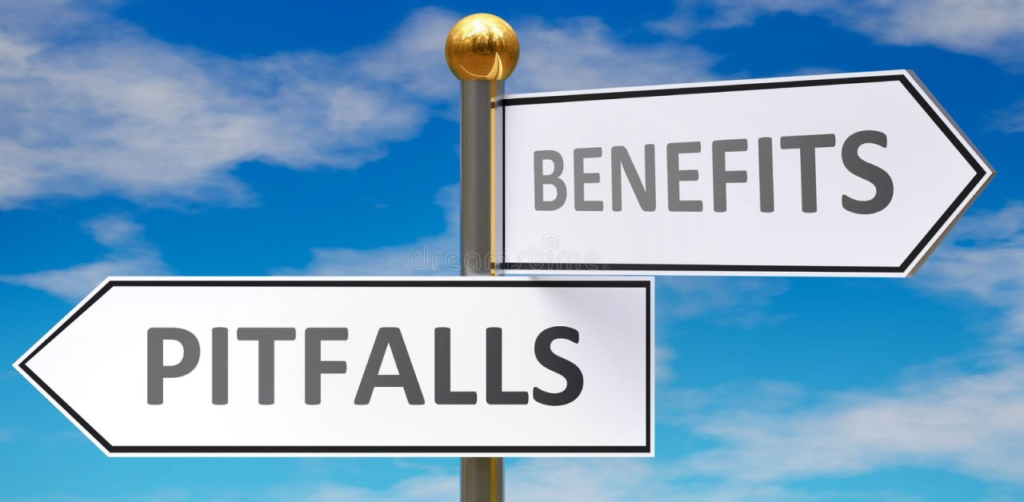
As you begin to step into this world, there are a few human traps you need to look out for.
First, do not automate things that require deep nuance or apology. If a customer has a terrible experience with your shipping or receives a damaged item, that is not the time for an automated response. That is the time for a real person to step in, look them in the eye (or write a deeply personal email), and say, “I am so incredibly sorry we messed up. Let me make this right for you immediately.” Technology cannot simulate genuine regret, and trying to do so feels profoundly insulting to a customer.
Second, never trust AI blindly. Think of AI as an incredibly enthusiastic, brilliant, but slightly naive intern. They can give you fantastic drafts, pull incredible insights out of data, and generate brilliant ideas—but you still need to check their work before it goes public. Always read through your copy, verify your facts, and ensure that whatever the tool produces aligns with your personal values, ethics, and brand identity.
The Human Future of Business

We are not heading toward a world where technology completely replaces the human element of commerce. We are actually heading toward a world where the human element becomes the ultimate premium product.
As the internet becomes increasingly crowded with generic, automated content and faceless storefronts, people are going to crave real connection more than ever before. AI & Automation They will seek out businesses that have a soul, a story, and a warm face behind the digital screen.
The true power of AI and automation isn’t that they make you bigger, faster, or louder. It’s that they handle the noise so you can focus on the music. They clear the administrative clutter out of your day so you can look your clients in the eye, listen to their stories, craft your products with love, and run your business with a clear mind and a full heart.
Growth doesn’t come from pushing yourself to the brink of burnout by trying to do every single task manually. True, sustainable growth comes from doing less of the work that drains you, and more of the work that truly matters. AI & Automation Take a step back, hand the heavy lifting over to the machines, and give yourself the space to do what you were always meant to do: build something beautiful, meaningful, and deeply human.
FAQs
1. What is AI and automation, and how can it help a small business?
AI (Artificial Intelligence) helps computers perform tasks that usually require human thinking, such as analyzing data, writing content, or answering customer questions. Automation takes care of repetitive tasks like sending emails, scheduling appointments, or updating records. Together, they help small businesses save time, reduce manual work, improve customer service, and focus on growth instead of routine tasks.
2. Is AI only meant for large companies with big budgets?
Not at all. Today, many AI and automation tools are designed specifically for small businesses and startups. There are affordable options, and some even offer free plans. Whether you own a local shop, an online store, or a small service business, you can start with simple tools and expand as your business grows.
3. Will AI replace employees in a small business?
In most cases, no. AI is designed to support people, not replace them. It handles repetitive and time-consuming tasks, allowing employees to spend more time solving problems, building customer relationships, and working on creative projects. The best results come when people and technology work together.
4. What are the easiest AI tools for beginners?
If you’re just getting started, look for tools that solve everyday problems. AI writing assistants can help create emails and blog posts, chatbots can answer common customer questions, and automation platforms can handle repetitive workflows like follow-up emails or appointment reminders. Start with one tool that addresses your biggest challenge before adding more.
5. Can AI improve customer service?
Yes. AI can provide instant responses to common questions, help customers find information quickly, and keep them updated on orders or appointments. This means customers receive faster service while your team has more time to handle requests that require personal attention and care.