Let’s be completely honest: few things are more frustrating than dropping hard-earned cash on a new tool, getting it home, and realizing it absolutely sucks at the one job you bought it for. That’s exactly why Expert Tool Reviews have become so important for professionals and everyday users alike.
Maybe you’ve been there. You spend an hour scrolling through options, read a couple of conflicting blurbs, buy the thing, and then halfway through your project, the motor starts smoking, the battery dies, or it just doesn’t have the muscle to get through a piece of basic hardwood. This is where Expert Tool Reviews can save you time, money, and frustration by helping you identify reliable products before you make a purchase.
Whether you’re a pro contractor whose livelihood depends on what’s in your truck, a weekend warrior building a backyard deck, or just someone trying to hang a shelf straight, having the right tool changes everything. It turns a miserable, exhausting chore into a smooth, satisfying project. The purpose of Expert Tool Reviews is to help you find tools that actually perform well in real-world situations, so you can work more efficiently, achieve better results, and get the job done right the first time.
But if you walk into a home improvement store or browse online today, the sheer volume of choices is enough to give anyone a headache. There are hundreds of brands, endless marketing jargon, and wildly different price points. How do you separate a genuinely rugged piece of machinery from a cheap plastic piece of junk dressed up in bright colors? That’s exactly why honest, real-world tool reviews are a lifesaver.
What Actually Separates a Good Review From Marketing Fluff?
We’ve all seen those lazy reviews that just copy and paste the manufacturer’s spec sheet. They tell you the voltage, the weight, and the RPMs, but they don’t tell you how it actually feels when you’re sweating in a hot garage trying to finish a project.
When you’re trying to figure out if a tool is worth your money, look for reviews that focus on four real-world pillars:
- Real-World Performance: Don’t tell me what the box claims the motor can do. Tell me what happens when it hits a thick knot in a pressure-treated 4×4. Does it bog down, or does it slice right through?
- The Build Quality: A tool can feel amazing on day one, but if the gears are made of cheap plastic, it’s going to fail in six months. A great review looks at the materials used and notes whether it can survive getting dropped off a ladder or tossed into the back of a truck.
- Ergonomics and Comfort: If a tool is incredibly powerful but vibrates so hard it makes your hands go numb after ten minutes, you’re going to hate using it. Balanced weight distribution, comfortable rubber grips, and intuitive triggers matter immensely.
- True Value for the Money: Price doesn’t always equal quality. Sometimes a premium, professional-grade brand is total overkill for a casual DIYer. On the flip side, buying the absolute cheapest option often means you’ll buy it twice. A good reviewer tells you exactly who the tool is for.
Power vs. Precision: Building Your Arsenal
Every solid setup relies on a tag-team dynamic between power tools and classic hand tools. Power tools (the ones running on batteries, cords, or air compressor hoses) are your muscle—they’re all about speed, efficiency, and heavy lifting. Hand tools (your trusty screwdrivers, wrenches, hammers, and pliers) are your brains—they give you the fine-tuned precision, control, and tactile feedback that a motor just can’t mimic.
The real game-changer over the last few years, though, has been the incredible leap in cordless technology.
The Death of the Extension Cord: Lithium-ion battery packs have completely closed the gap between battery power and wall outlets.
You no longer have to hunt for an outlet or drag a heavy cord across the yard. Modern cordless tools have insane runtimes, fast charging cycles, and brushless motors that pack just as much punch as their old-school, corded ancestors.
Decoding the Most Crucial Tool Categories
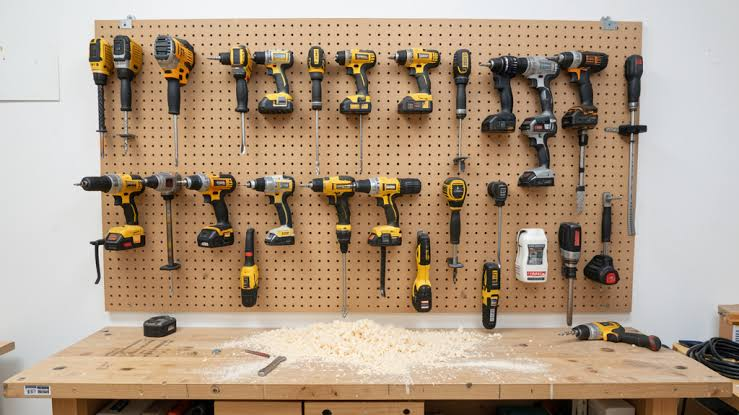
The Classic Duo: Impact Driver (top) vs. Standard Drill (bottom). Source: vadishzainer / Getty Images
Take a look at the image above—this highlights the most common point of confusion for buyers: Drills vs. Impact Drivers.
A standard drill (bottom) uses a classic chuck to hold various bits and is perfect for boring clean holes and light fastening. An impact driver (top), however, uses a hex clutch and combines high-speed rotation with rapid internal concussive blows. It gives you massive amounts of downward torque, allowing you to drive long lag screws into dense wood without stripping the heads or twisting your wrist.
Here is a quick breakdown of what to watch out for in other major categories:
| Tool Category | What Reviewers Look For | The Secret Red Flag |
|---|---|---|
| Circular Saws | Cutting depth accuracy, baseplate rigidity, clear line-of-sight to the blade. | A flimsy stamped-steel shoe that bends if you bump it. |
| Sanders | Effective dust collection, minimal hand-vibration feedback. | Dust bags that clog instantly and blow particles into your face. |
| Oscillating Multi-Tools | Tool-free blade changes, variable speed stability under load. | Extreme noise and hand-numbing vibrations at high speeds. |
Avoid These Classic Buying Traps
Most people stumble into the same few pitfalls when shopping for new gear.
The biggest mistake? Buying purely on price. Going for the absolute cheapest option usually ends in frustration, a ruined workpiece, and a second trip to the store to buy the tool you should have bought in the first place.
The opposite error is just as common: Over-buying. It’s easy to get seduced by a high-end commercial tool, but if you’re only using a tool three times a year to tighten loose cabinet hinges or put together flat-pack furniture, a mid-range DIY brand will do the job perfectly and save you hundreds of dollars.
The Ultimate Checklist: Trust, But Verify
To get the absolute clearest picture before clicking “Buy,” the smartest strategy is to blend two different types of feedback:
- Read the Expert Bench Tests: Look to dedicated tool reviewers for objective comparisons, torture tests, and technical teardowns. They’ll show you how a tool stacks up directly against its closest competitors.
- Scroll the User Comments: Check out what everyday buyers are saying after six months or a year of ownership. They are the ones who will flag weird design quirks, long-term battery degradation, or customer service nightmares.
At the end of the day, building a tool collection isn’t about owning the flashiest, most expensive setup on the block. It’s about curating a reliable, comfortable set of gear that fits your specific projects and your budget. By tuning out the marketing hype and relying on real, unvarnished reviews, you can buy with confidence and actually enjoy the work you do.
FAQ’s
1. Why are tool reviews important?
Tool reviews help buyers compare features, performance, durability, and value before making a purchase.
2. What should I look for in a tool review?
Focus on performance, build quality, ease of use, durability, and overall value for money.
3. Are expensive tools always better?
No. Many mid-range tools offer excellent performance and reliability at a more affordable price.
4. Should I read user reviews as well as expert reviews?
Yes. User reviews provide real-world experiences, while expert reviews offer detailed testing and analysis.
5. How can I choose the right tool for my needs?
Consider the type of projects you do, your budget, required features, and feedback from trusted reviews.