
In today’s competitive business world, understanding your financial performance is more important than ever. Whether you are running a startup, managing marketing campaigns, or investing in assets, knowing your Return on Investment (ROI) helps you make smarter decisions.
An ROI Calculator is a powerful financial tool that allows individuals and businesses to measure the profitability of an investment quickly and accurately. Instead of guessing whether a project is successful, you can rely on real numbers to guide your strategy.
Simply put, ROI shows how much profit you earned compared to how much you invested. The higher the ROI, the better your investment performed.
Let’s break it down step-by-step.
What Is an ROI Calculator?
An ROI Calculator is a financial tool used to calculate the percentage return earned on an investment. It helps determine whether an investment is profitable or not.
Businesses use ROI calculators for:
- Marketing campaign performance
- Real estate investments
- Stock market analysis
- Startup funding decisions
- Digital advertising performance
The tool works by comparing the net profit to the total investment cost.
ROI Formula Explained
Understanding the formula is very simple.
Basic ROI Formula
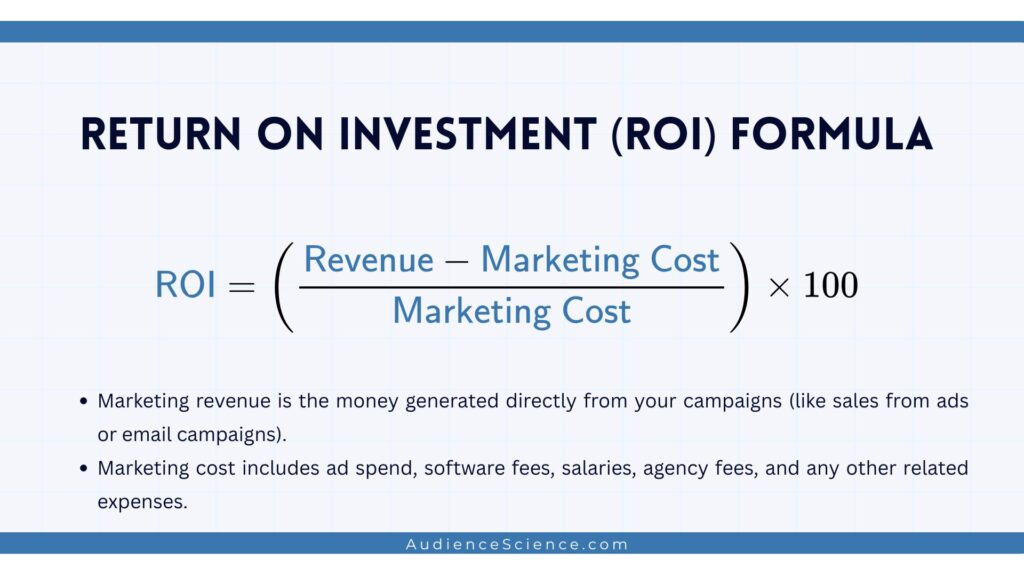
ROI = (Net Profit / Investment Cost) × 100
Where:
- Net Profit = Total Revenue – Investment Cost
- Investment Cost = Total money spent
This formula gives you a percentage value.
ROI Calculation Example
Let’s understand this with a simple example.
Imagine you invested $1,000 in a marketing campaign. After the campaign, you generated $1,500 in revenue.
Step 1: Calculate Net Profit
Net Profit = $1,500 – $1,000 = $500
Step 2: Apply ROI Formula
ROI = (500 / 1000) × 100 = 50%
Here’s a simple breakdown:
| Investment Cost | Revenue | Net Profit | ROI |
|---|---|---|---|
| $1,000 | $1,500 | $500 | 50% |
This means you earned a 50% return on your investment.
Why ROI Calculator Is Important for Businesses
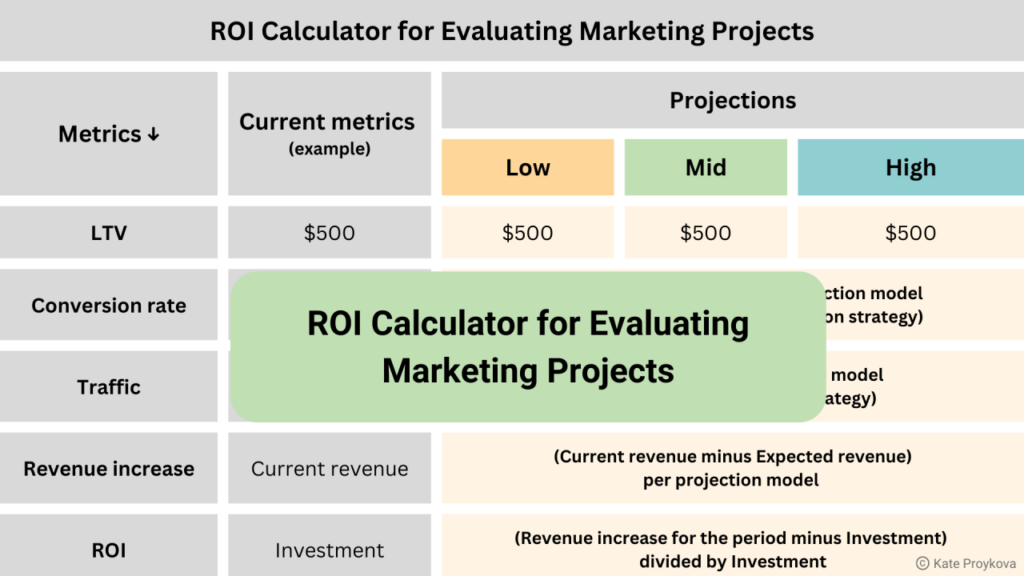
An ROI Calculator is not just a simple number-crunching tool — it is a powerful strategic decision-making asset that helps businesses measure profitability, improve planning, and reduce financial mistakes. In today’s competitive market, companies cannot rely on assumptions; they must rely on measurable data. That is where ROI plays a critical role.
• Better Financial Decisions
An ROI Calculator enables businesses to clearly identify which investments are generating real profits and which are draining resources. Instead of guessing whether a campaign, product launch, or expansion strategy is successful, companies can rely on concrete financial results. This leads to smarter budgeting, confident investments, and long-term financial stability.
• Marketing Performance Tracking
Businesses widely use ROI calculations to measure the effectiveness of Google Ads, social media advertising, email marketing campaigns, and digital promotions. By analyzing campaign ROI, companies can determine which marketing channels produce the highest returns and eliminate low-performing strategies. This ensures that marketing budgets are spent efficiently.
• Budget Optimization
ROI data provides a clear understanding of where money should be invested. By tracking performance, organizations can allocate resources more strategically, reduce wasteful spending, and improve overall cost efficiency. This helps maximize profits without increasing expenses.
• Risk Reduction
Before making major investments, businesses can calculate expected ROI to estimate potential outcomes. This reduces financial uncertainty and minimizes exposure to risky decisions. Data-driven ROI analysis allows companies to make informed, low-risk investment choices.
• Performance Comparison
One of the strongest advantages of an ROI Calculator is its ability to compare multiple opportunities. Whether choosing between marketing platforms, product lines, or real estate projects, ROI makes it easier to identify the most profitable option objectively.
Types of ROI Calculations
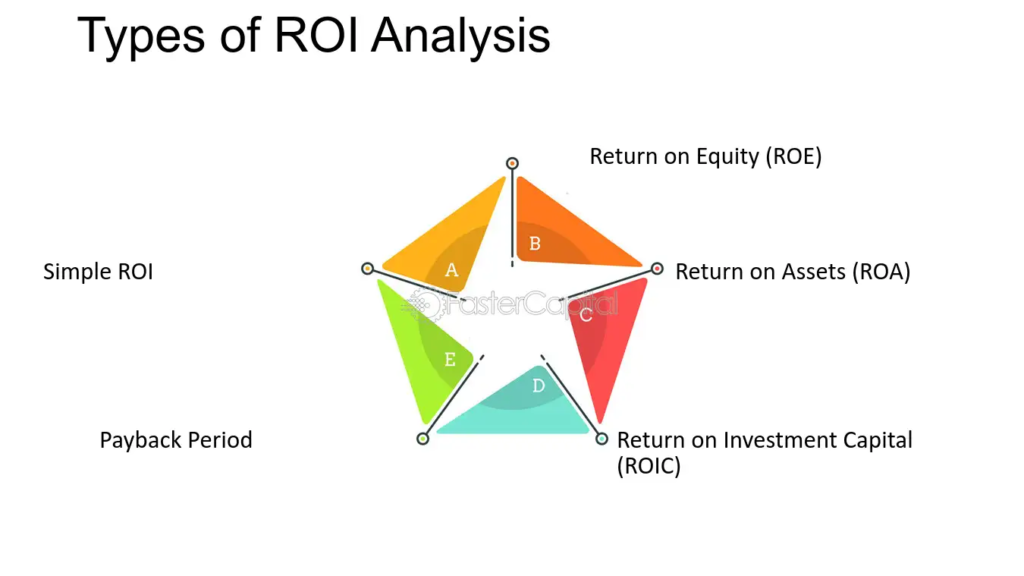
ROI is widely used across industries, and although the basic formula remains the same, the application varies depending on the sector and investment type.
• Marketing ROI
Marketing ROI measures the revenue generated from marketing campaigns compared to the cost spent on advertising. It helps businesses evaluate campaign effectiveness and refine marketing strategies for better profitability.
• Social Media ROI
Social Media ROI focuses specifically on returns from paid and organic social media activities. Businesses analyze engagement, conversions, and sales to determine how social platforms contribute to overall revenue growth.
• Real Estate ROI
Real Estate ROI calculates returns earned from property investments. It considers rental income, appreciation value, maintenance costs, and purchase price to determine long-term profitability.
• Startup ROI
Startup ROI evaluates business growth in relation to initial funding and operational investment. Investors and founders use this metric to measure scalability and financial sustainability.
• Digital Advertising ROI
Digital Advertising ROI measures returns from paid campaigns such as search ads, display ads, and video promotions. It helps businesses optimize ad spending and improve conversion rates.
Although each type may include additional cost variables like operational expenses or maintenance charges, the core ROI formula remains consistent across industries.
Limitations of ROI
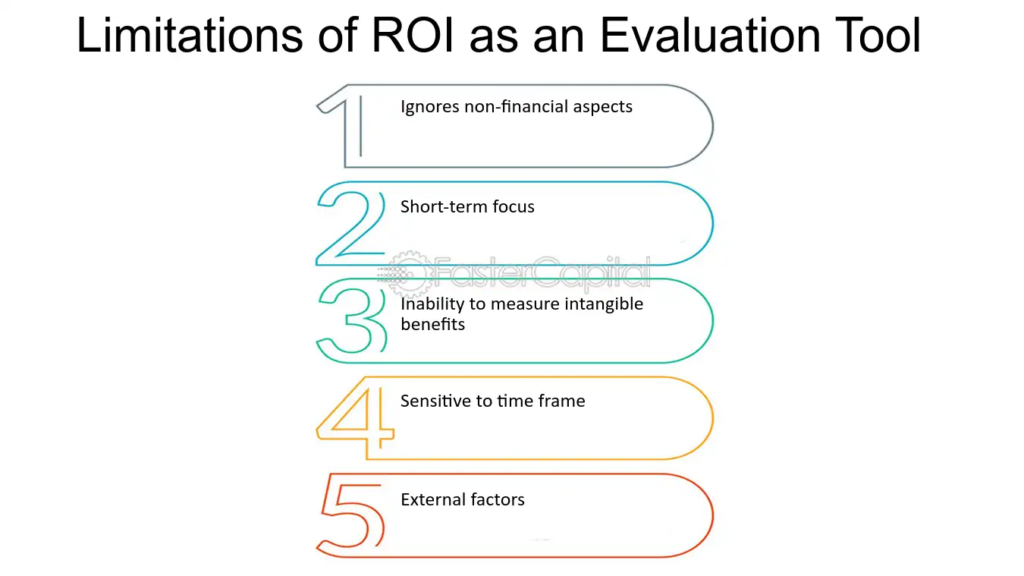
While ROI is a powerful financial metric, it does have certain limitations that businesses must understand before relying on it completely.
• Time Factor Ignored
ROI does not account for the duration of an investment. A 50% ROI achieved in one year is very different from the same ROI achieved over five years. Without considering time, comparisons may be misleading.
• Risk Not Included
The basic ROI formula does not measure investment risk. Two investments might have identical ROI percentages but very different levels of financial risk. Therefore, ROI alone cannot determine safety.
• Inflation Not Considered
For long-term investments, inflation can reduce the real value of returns. Since ROI does not factor in inflation, the actual purchasing power of profits may differ from the calculated percentage.
Because of these limitations, ROI should be combined with advanced financial metrics like Net Present Value (NPV) and Internal Rate of Return (IRR) to gain a more comprehensive financial analysis.
How to Improve Your ROI
Improving ROI requires strategic planning, continuous monitoring, and smart execution. Businesses that focus on efficiency and performance optimization often achieve stronger returns.
• Reduce Costs
By optimizing operational expenses, renegotiating supplier contracts, and eliminating unnecessary spending, companies can significantly increase net profit — which directly boosts ROI.
• Increase Revenue
Enhancing pricing strategies, introducing upselling techniques, improving customer experience, and expanding market reach can increase overall revenue and positively impact ROI.
• Optimize Marketing Campaigns
Using data analytics and performance tracking tools allows businesses to identify low-performing ads and focus only on high-converting campaigns. This ensures better use of marketing budgets.
• Focus on High-Performance Channels
Investing more in platforms and strategies that consistently deliver strong returns helps maximize profitability without increasing risk.
• Monitor Performance Regularly
Regular ROI tracking enables businesses to detect inefficiencies early and make timely improvements, ensuring sustainable financial growth.
ROI Calculator for Digital Businesses in 2026
In 2026, businesses operate in a highly data-driven environment where automation and analytics play a crucial role in decision-making. Modern ROI calculators are no longer standalone tools; they are integrated into advanced systems that provide real-time insights.
Today, ROI tracking is commonly embedded in:
• CRM software
• Marketing automation tools
• Accounting platforms
• Business intelligence dashboards
With the help of AI-powered analytics, companies can even predict ROI before launching campaigns. This predictive capability allows businesses to plan investments more accurately, reduce risk, and maximize profitability in a competitive digital economy.
Final Thoughts
An ROI Calculator is one of the most essential tools in business and finance. It provides a clear picture of investment profitability, helping individuals and organizations make smarter financial decisions.
However, remember that ROI should not be the only metric you rely on. Combining ROI with long-term financial analysis ensures sustainable growth.
If you want to grow your business strategically, start tracking ROI today.
Disclaimer: This content is for educational and informational purposes only and should not be considered financial or investment advice. Always consult a qualified financial professional before making investment decisions.
#ROICalculator #ReturnOnInvestment #BusinessFinance #InvestmentStrategy #Carrerbook #Anslation #MarketingROI #FinancialPlanning #StartupGrowth #ProfitOptimization #BusinessAnalytics